



Sep 22, 2026 5:33pm IST
‘The Love Hypothesis’ Review: Lili Reinhart and Tom Bateman’s Charming Rom-Com Adaptation Gets Almost Everything Right
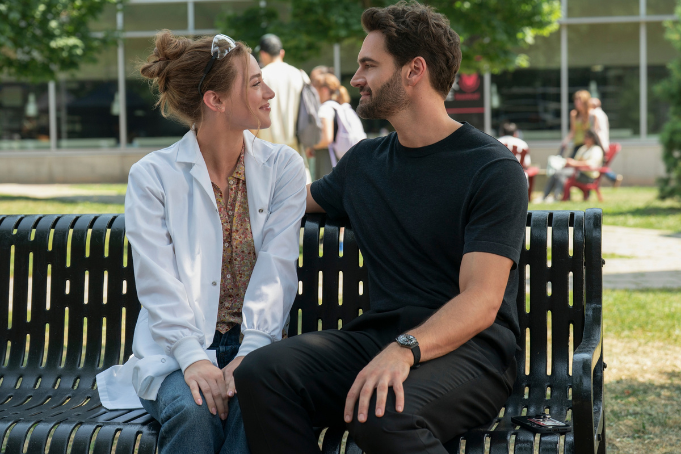
“The Love Hypothesis” on Prime Video is here to pick up its PhD in how to do rom-com adaptations right. Based on Ali Hazelwood’s romance novel of the same name and directed by Claire Scanlon, the film stars Lili Reinhart and Tom Bateman. With its fake-dating trope and dedicated fanbase, it is easily one of the year’s most anticipated streaming releases. And it almost lives up to the hype, barring a few kinks.
Lili Reinhart is biology PhD student Olive Smith, who begins fake-dating one of the scariest, most despised professors on campus, Dr. Adam Carlsen, played by Tom Bateman. Naturally, it sends out shockwaves across the campus and costs Olive some serious cred, especially with her friend and roommate, Malcolm (Jaboukie Young-White), who works under Adam and hates him. But Olive needs this to convince her best friend, Ahn (Rachel Marsh), that she can date Jeremy (Nicholas Duvernay), Olive’s crush, guilt-free since he is into her and not Olive. As for Adam, his motives are mostly to secure a university grant, but not entirely for business.
Related Stories



“The Love Hypothesis” is primed for a successful rom-com experiment. It looks pretty close to a reader’s imagination of what Olive and her world would look like. Its male lead, Dr. Adam Carlsen, is THE fictional boyfriend of many fangirl fantasies. But it is the casting of Tom Bateman, husband of actor Daisy Ridley, as Adam that is pretty much a coup. Ali Hazelwood’s beloved book is born of fan fiction written about “Star Wars” characters Rey (Ridley) and Kylo Ren (Adam Driver), with the douchey character even named Tom! So in certain scenes, when Bateman marches in determinedly, he gets his own theme, like Darth Vader. These are just things that make a fangirl giggle with glee, as if all her dreams are coming true. And then, the film outdoes that too, by setting its opening montage to “Mess It Up” by Gracie Abrams, whose father, J.J. Abrams, directed “The Rise of Skywalker” (2019).
Fan service aside, the film does a near-perfect job of adapting the source material, which is bound to make book fans happy. The way it takes time to develop Olive as a character, the beautiful friendship between Olive and Ahn and Olive’s feelings for Jeremy sell the premise and lend conviction to her decision to fake-date Dr. Evil for the non-readers who won’t be taking it on face value. It’s endearing when a rom-com can strike the balance between highlighting other relationships while doing justice to its core couple. Olive and Ahn’s friendship is going to make you want to hold your best friends closer.
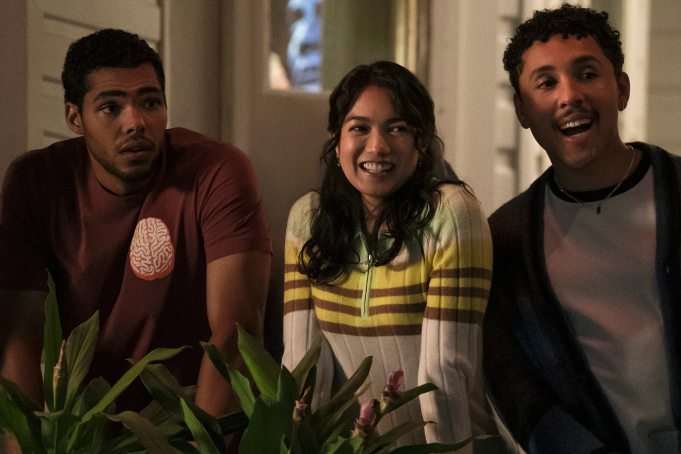
One of the USPs of Hazelwood’s stories is her heroines. They are smart, funny, incredible women in STEM, and her books don’t reduce them and their academic and professional struggles to a mere trait. The film adheres to that sentiment like a bible and achieves it through several scenes, like Malcolm’s super fun party, which gets high on mixing science with pleasure, or the misogyny against women scientists. It also shifts around a few things to make pivotal moments hit harder. For example, book fans might wonder why a certain traumatic incident with Olive shifts further down the timeline of events, but the place and time it is finally positioned in intensifies the emotional impact of what she has gone through.
Popular on Variety
Not all of the experiments yield success, though. Lili Reinhart as Olive seemed like a sure thing from the get-go, but this writer was cautiously optimistic about Bateman’s Adam. Blame it on the trailer playing off Adam as more awkward and Olive and Dr. Evil’s interactions as more “com” than “rom.” Turns out, you can never predict the final results with 100% accuracy. Bateman does end up delivering the fictional boyfriend that was promised, but it is Reinhart’s Olive whose feelings could’ve been written with some more fire.
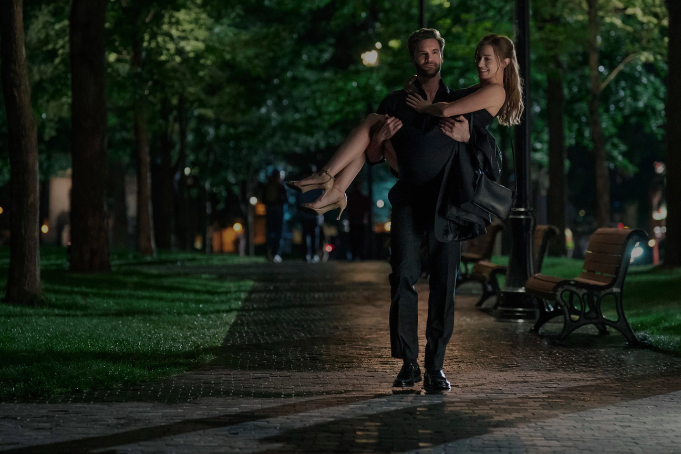
In the book, Ali Hazelwood underscores most of Olive and Adam’s scenes (like the ones at the coffee shop) with sexual tension and yearning that seemed missing here. “The Love Hypothesis” mostly does justice to the book fan’s Holy Grail, “Chapter 16”. It’s sensuous and sexy, with a great song choice. Bateman sounds like chocolate to the ears when he utters the one line from the book. And Reinhart is phenomenal. And yet, something feels missing, like it needed a buildup to their desire for each other to really hit the spot. Similarly, Adam’s “hero” moment in the climax might leave you wishing it had a bit more punch.
“The Love Hypothesis” has Claire Scanlon as its director, who possibly gave this genre one of its most defining new-age rom-coms: “Set It Up” (2018). The standards it set have made comparisons almost impossible to avoid. And while “The Love Hypothesis” doesn’t have the heart, warmth and rewatch value of “Set It Up,” it still makes for a pretty great hypothesis for the genre and an adaptation that will be loved.
“The Love Hypothesis” arrives on Prime Video on September 23, 2026.













Comments are moderated. They may be edited for clarity and reprinting in whole or in part in Variety publications.