



Nov 01, 2026 1:05pm IST
‘Akka’ Review: Radhika Apte, Keerthy Suresh Shine In A Visually Rich But Uneven Gangster Saga
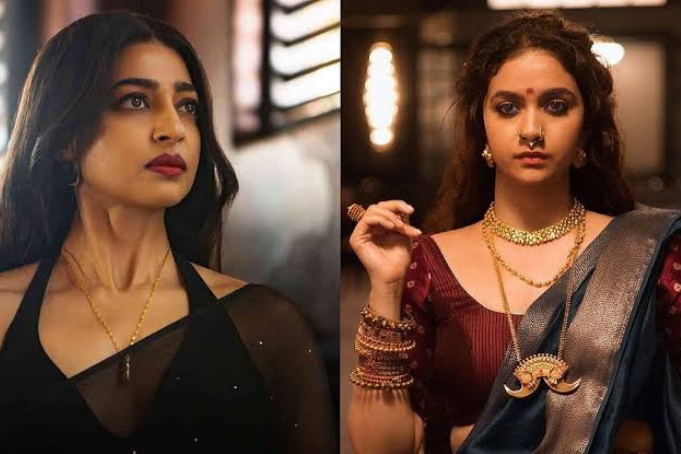
There is something instantly intriguing about a gangster drama where women call the shots, control territories and settle scores on their own terms. Netflix's “Akka” builds an entire world around this idea, taking viewers to a fictional South Indian town where criminal power has been passed down through generations of women.
Headlined by Keerthy Suresh and Radhika Apte, the five-episode series has an intriguing premise, a striking visual identity and two performers who make for an engaging face-off. However, while its world is fascinating to explore, the storytelling doesn't always live up to the scale of its ambition.
Related Stories
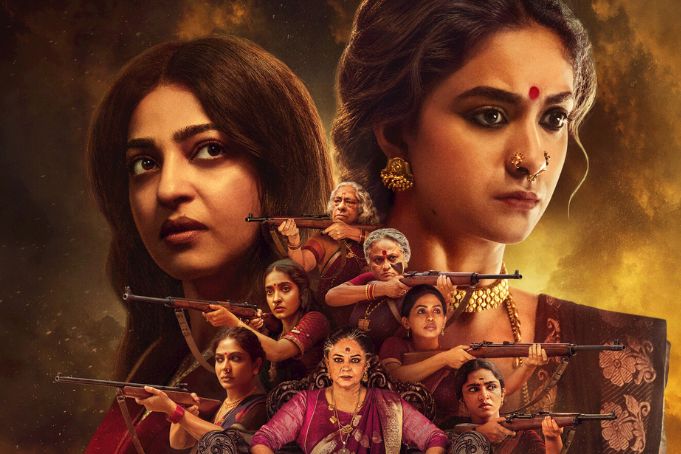

Created and directed by debutant Dharmaraj Shetty, “Akka” is set in Pernuru, a fictional town somewhere near India’s west coast. For nearly 800 years, it has been ruled by a powerful sisterhood that took charge after the men of the kingdom went away to war. The women assumed control, mastered combat and built an empire around the gold and liquor trades. The territory was eventually divided into three regions, Malemar, Herkada and Perplady, each governed by an Akka who inherited her position through the female lineage.
The series moves between timelines to explore the origins of this unusual social order. In 1985, Bhavani (Keerthy Suresh) is the reigning Akka of Malemar, tasked with protecting an empire governed by strict rules: no marriage, absolute loyalty to the clan and no division of territory. But preserving an 800-year-old legacy becomes difficult when Rudra (Radhika Apte), a mysterious newcomer with ambitions of her own, arrives.
Their clash drives the story. While Bhavani is determined to protect the institution and everything it represents, Rudra has a deeply personal agenda. One relies on authority and established relationships, while the other favours manipulation and calculated moves. The involvement of Bombay-based criminal figure Shankar Anna (Mahesh Manjrekar) adds another layer to the conflict. However, the connections between these characters could have been better established. The narrative gradually shifts towards Rudra's personal motivations, leaving the larger power struggle somewhat underexplored.
The performances are among the show's biggest attractions. Keerthy Suresh brings a quiet authority to Bhavani, playing her as a leader who doesn't need to constantly assert herself to command respect. Beneath that composed exterior is a woman struggling with the weight of protecting her family and territory. Radhika Apte is equally engaging as Rudra, bringing an unpredictable edge to a character driven by ambition and hurt. Their confrontations are easily the show's highlights, with both actors making their contrasting approaches to power interesting to watch.
“Akka” is at its most impressive when it comes to creating its world. Production designer Laxmi Keluskar gives Pernuru a distinct identity through its architecture, homes, landscapes and everyday customs. Sheetal Sharma's costumes deserve special mention, too. The traditional sarees and elaborate jewellery beautifully reflect the women's status, creating an arresting contrast with their ruthless approach to business. The music and period detailing add to the atmosphere, giving the series a strong cultural identity.
In fact, there are moments when the influences behind “Akka” are difficult to miss. Certain character arcs, power struggles and sequences seem straight out of “Game of Thrones”, while the cultural detailing, clan politics and larger-than-life treatment of traditions bring “Kantara” to mind. The inspiration is practically staring you in the face. These references aren't necessarily a drawback, particularly when the series manages to create such a visually rich and distinctive setting. The problem is that not every character or storyline rises to meet the expectations this elaborate world creates.
The fictional society also offers an interesting inversion of familiar gender roles. Here, the birth of a girl is celebrated, women enjoy economic independence and marriage is hardly considered a necessity. Yet, the world isn't without its contradictions. A system that discourages marriage but depends on female heirs to preserve its lineage raises questions that the writing never quite addresses. Rudra's backstory and motivations could also have been fleshed out better.
Spread across five half-hour episodes, “Akka” is a brisk watch, with the action picking up considerably towards the end. The final stretch delivers memorable face-offs and stylish action sequences featuring women who are just as comfortable wielding guns as they are running an empire. However, frequent timeline shifts and underdeveloped character arcs occasionally affect the momentum. The climax leaves several questions unanswered, hinting at the possibility of another chapter.
Ultimately, “Akka” is a case of a world being more compelling than the people inhabiting it. Its production design, cultural detailing and ambitious premise deserve credit, as does the pairing of Keerthy Suresh and Radhika Apte. But when you build a universe this rich, its characters need to be equally layered and its conflicts need to carry more weight. “Akka” comes tantalisingly close to delivering a gripping gangster saga, but doesn't quite get there.













Comments are moderated. They may be edited for clarity and reprinting in whole or in part in Variety publications.