



Jul 05, 2026 2:00pm IST
From Shah Rukh Khan to Rohit Sharma: How the IPL Rewired India’s Celebrity Culture
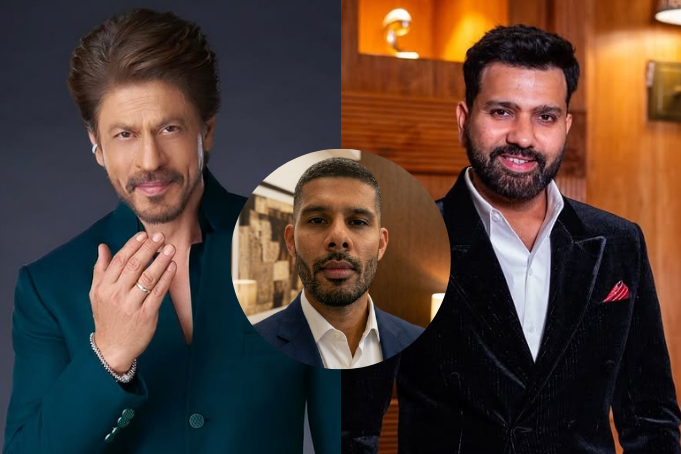
When the Indian Premier League (IPL) launched in 2008, it borrowed heavily from Hindi cinema’s playbook. The league arrived with franchise owners who were as (if not more) famous as some of the players on the field. Shah Rukh Khan became the face of Kolkata Knight Riders, while Preity Zinta and Shilpa Shetty brought star power to their respective teams. Celebrity ownership generated headlines. Cricket was the product, but Hindi cinema helped sell the dream.
Nearly two decades on, the relationship has evolved. The IPL no longer relies on movie stars to command attention. Instead, it has created its own ecosystem of celebrities, storylines and fandoms. The league remains a sporting competition, but it has also become a cultural platform that shapes conversations around fame, branding and influence in modern India.
Few have witnessed that transformation as closely as Shiv Burman. Before founding and launching sports marketing consultancy Burman Sports in 2021, he spent more than 15 years across the Indian sports industry. His career has placed him at the intersection of brands, franchises and fan engagement during a period when the league evolved from a cricket tournament into one of India's most influential cultural properties.
Related Stories
From National Heroes to Franchise Loyalty
For decades, cricket fandom in India revolved around the national team. The emotional connection was immense, but it was tied to India as a whole rather than a specific club or community. The IPL changed that dynamic. "For most of cricket's history in India, the sport was a national religion, not a local one. You had heroes like Sunil Gavaskar, Sachin Tendulkar, etc, but fandom was at the country level, not at a city or a community level. The IPL fundamentally changed that. It gave Indian fans something football has had for a century: a local club to belong to, a local culture to be part of."
That shift may be the league's most significant contribution. National teams create moments. Franchises create identity. A fan may celebrate India's World Cup triumph, but supporting Mumbai Indians, Chennai Super Kings or Royal Challengers Bengaluru becomes part of everyday life. The relationship extends beyond a tournament.
Burman believes that generational loyalty has transformed the nature of Indian sports fandom. "You now have fans who have grown up their entire lives supporting MI or RCB. Some of them have parents who supported the same franchise. That's when fandom stops being passive and becomes identity and it creates culture and strong conversations." In many ways, that is the hallmark of modern entertainment.
More Than Cricket Teams
The league's biggest franchises increasingly operate like entertainment brands rather than seasonal sports teams. Their influence extends beyond matchdays. The goal is to remain culturally relevant throughout the year.
Burman sees this evolution as inevitable. He says, "The smartest franchises have understood this for a while. MI, RCB, CSK; these aren't just cricket teams anymore. They're year-round global fan communities, original content, experiential IPs, merchandise lines and business extensions that go beyond the two-month season."
Like major film franchises, IPL teams are built around recurring characters, long-term narratives and emotional investment. Every season introduces new chapters. Rivalries deepen. Legacies evolve. Fans return because they care about the stories as much as the results.
The New Rules of Celebrity
Perhaps nowhere is the IPL's cultural influence more visible than in the changing nature of celebrity. For generations, film stars defined aspirational fame in India. Today's leading cricketers occupy a different kind of space. Their lives unfold in public. Their achievements and failures are visible in real time. Their narratives change every week. Social media allows them to communicate directly with fans, creating relationships that feel immediate and authentic.
According to Burman, brands have adjusted accordingly. "Five years ago, brand conversations about cricketers were almost entirely about performance metrics and reach numbers. Now we're having conversations about narrative fit, audience alignment and cultural resonance. Does this person stand for something that our brand wants to be associated with? Does their story arc work for where we're going?"
The language sounds remarkably similar to the way studios evaluate actors. Shiv Burman points to Rohit Sharma as an example of why certain athletes transcend sport. "His appeal isn't just based on being a great batsman and captain. It's grounded in a character and personality that brands and fans resonate with," he says.
Brands Want More Than Reach
The IPL's evolution has also transformed the sponsorship business. Today, brands want deeper engagement. Adds Burman, "The question has moved from 'How many people will see us?' to 'What role do we play in the fan's life?’ and ‘Can we prove it?’ A decade ago, the conversation was almost entirely about reach and broadcast engagement numbers. That's changing quite fundamentally. While top-of-the-funnel is still very important and always will be, brands are now demanding a lot more communication and experiential assets. They want their association to sweat a lot more."
The result is a commercial ecosystem that increasingly resembles entertainment marketing rather than traditional sports sponsorship.
Popular on Variety
The Fan Is the Business
The league’s rise has coincided with unprecedented competition for attention. Streaming platforms, social media, gaming and creator-led content are all fighting for audiences. Yet, the IPL continues to command extraordinary engagement because it offers something few entertainment properties can replicate: shared live experiences.
Burman observes, "It's still the biggest, but the fight is real, and anyone who pretends otherwise isn't paying attention. What the IPL has that most other entertainment properties don't is the combination of live and unpredictable storylines. You can't binge an IPL season. You can't skip to the end."
Ultimately, Shiv Burman believes the league's success comes down to a simple idea. "The fan isn't simply the audience for the business. The fan is the business."












Comments are moderated. They may be edited for clarity and reprinting in whole or in part in Variety publications.