



Jul 25, 2026 11:55am IST
Christopher Nolan’s Love Letter to Cinema Begins With Satyajit Ray’s ‘Pather Panchali’
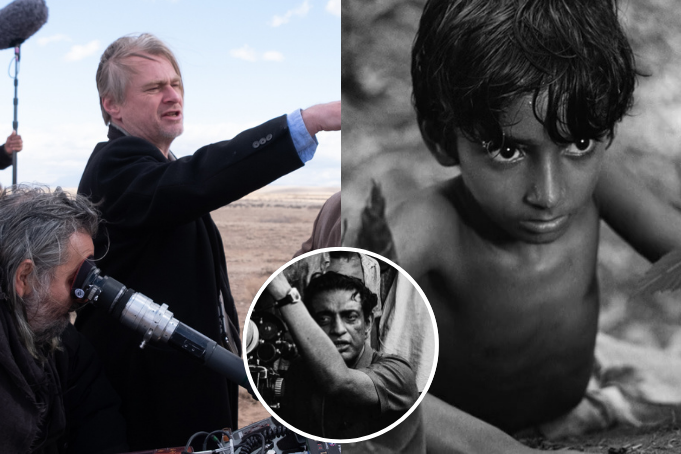
For a filmmaker who has spent his career bending time, memory and scale, Christopher Nolan's latest selection of favourite films, courtesy his Criterion Closet visit begins with something remarkably intimate.
Before revisiting Orson Welles, David Lynch or Spike Lee, he reaches for Satyajit Ray's "The Apu Trilogy," revealing that while "Pather Panchali" (1955) left him "blown away," he wants to finally experience the remaining two chapters. It is a moment that quietly places one of Indian cinema's greatest achievements at the heart of the filmmaker's cinematic education.
The choice feels fitting.
Few filmmakers have pursued emotional truth beneath technical ambition quite like Nolan, and few films embody that philosophy more completely than Ray's 1955 classic. Chronicling the childhood of Apu in rural Bengal, "Pather Panchali" transformed world cinema through its lyrical realism and profound humanity. More than seven decades later, it continues to inspire filmmakers across continents, Nolan among them.
Yet Ray's masterpiece is only one chapter in a collection that reads less like a list of favourites and more like a map of Nolan's creative influences.
Related Stories
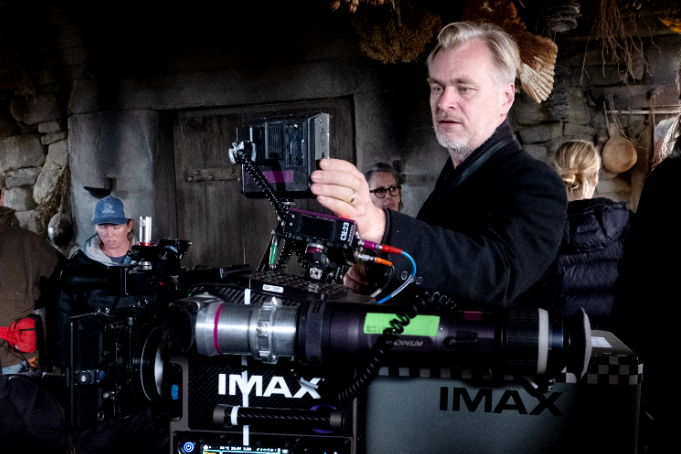
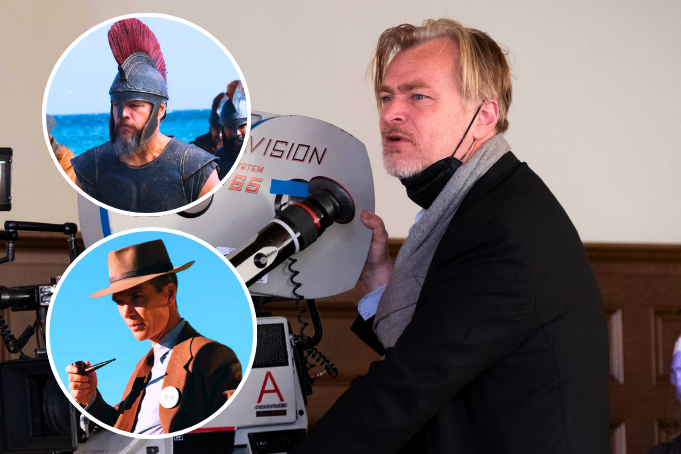
Christopher Nolan's selections move effortlessly across eras and genres: Don Siegel's "The Killers," the "John Cassavetes: Five Films" box set, Al Reinert's "For All Mankind," Orson Welles' "Mr. Arkadin" and "Citizen Kane," Fritz Lang's "The Testament of Dr. Mabuse," Martin Scorsese's "Scorsese Shorts" and "World Cinema Project No. 3," Spike Lee's "Malcolm X," David Lynch's "Lost Highway," "The Qatsi Trilogy," Robert Altman's "The Player," Richard Linklater's "Boyhood," Carl Franklin's "One False Move" and Carroll Ballard's "The Black Stallion."
For Nolan, each title carries a story.
He described "Mr. Arkadin" as evidence of a filmmaker's genius flourishing under scrappy conditions, while revealing that Lang's "The Testament of Dr. Mabuse" informed the creation of the Joker in "The Dark Knight." He recalled watching Spike Lee's "Malcolm X" in 70mm during its original theatrical run and spoke of returning to the film decades later. His admiration for David Lynch was equally revealing. Nolan admitted he initially found "Lost Highway" difficult to penetrate, only to discover days later that it lingered in his subconscious like a dream — proof, in his view, of cinema's ability to reveal itself long after the credits roll.
Elsewhere, Christopher Nolan celebrated "Koyaanisqatsi" as "pure cinema," praised "The Player" as Robert Altman's finest work and an increasingly prescient satire of Hollywood, admired the audacity of Linklater's decade-long experiment in "Boyhood," highlighted the performances in "One False Move" and recalled "The Black Stallion" as a cherished childhood favourite remembered for Caleb Deschanel's luminous cinematography.
Taken together, the selections reveal a filmmaker drawn not simply to spectacle but to formal innovation, emotional precision and directors who reshaped the language of cinema. There are no obvious crowd-pleasers assembled for prestige, only films that challenged convention and expanded what movies could be.
That is perhaps why Nolan's journey begins with Ray.
Long before IMAX cameras, fractured timelines and atomic spectacle became synonymous with his name, there was a black-and-white film from Bengal about a young boy discovering the world around him. By placing "Pather Panchali" alongside some of cinema's most revered works, Nolan isn't simply acknowledging one of India's greatest films. He is reaffirming its place in the global cinematic canon — and reminding audiences that the most enduring films are often the quietest.







Comments are moderated. They may be edited for clarity and reprinting in whole or in part in Variety publications.