



Aug 30, 2026 2:00pm IST
Sham Kaushal On Redefining Bollywood Action: ‘My Goal Is To Deliver Action That Serves The Story’ (EXCLUSIVE)
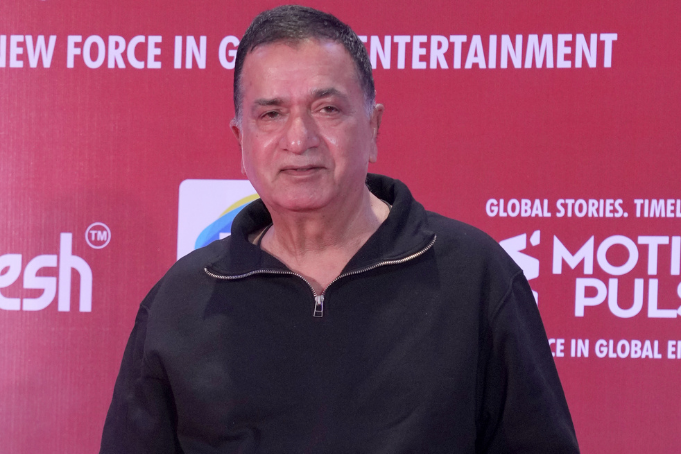
Veteran action director Sham Kaushal has spent decades reshaping the language of action in Indian cinema, moving beyond the gravity-defying stunt spectacles of the 1990s to create sequences rooted in character, emotion and narrative. In a candid conversation, Kaushal reflects on working with filmmakers like Anurag Kashyap, Sanjay Leela Bhansali, and Danny Boyle, his battle with cancer, his sons Vicky and Sunny Kaushal’s acting journeys and why Indian cinema must tell its own stories to make a mark globally.
How did you redefine action from the 90s cable-flying era to emotional realism in 'Black Friday,' 'Gangs of Wasseypur,' 'Dangal,' 'Padmaavat' and 'Slumdog Millionaire'?
Whatever I do, I first want to see it through the director’s vision. When I show up for a meeting with a director, I go in like an empty slate, listen carefully, read the script and understand the characters. My goal is to deliver action that serves the story. It isn’t important how Sham Kaushal thinks; it is important what the narrative is. In the same situation, different characters will react in different ways. That is why the action in these films feels completely tailored to the narrative.
Related Stories

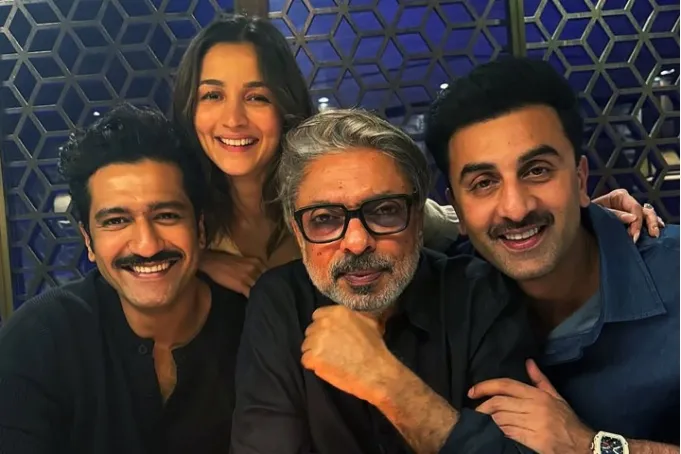
How did directors like Sanjay Leela Bhansali and Danny Boyle challenge you to make action look visceral and yet poetic?
These directors are so capable that my best comes out through them. With Danny Boyle on “Slumdog Millionaire,” he sat with me and immediately started narrating the train sequence with the kids hanging upside down. I wondered why he didn’t ask what work I had done. I asked for a day, and later found out he had already researched me and spoken to my past directors. The next day, I brought a miniature train to show how we could execute it, and he was very happy.
Similarly, when Sanjay ji was making “Goliyon ki Raasleela: Ram-Leela,” he called and said, “You always say I don’t give you much opportunity for action... But this film has a lot.” My dream of doing an action film with him came true.
My principle is: if directors have faith in me, I want to make them feel so comfortable that they love shooting action. I also see it as a continuous learning opportunity working with directors like Mani Ratnam and Rajkumar Hirani.
How did battling cancer reshape your idea of courage?
That phase made me deeply spiritual. When I found out I had cancer in 2003, I was terrified I might die or become weak and even thought of suicide. But one night, unable to get up after my abdominal surgery, I spoke to God like a friend. I said, “I have no regrets. Whatever you’ve given me is more than enough. Take me if you wish, but if you choose to save me, please don’t leave me weak.”
After that 15-minute conversation, all fear of death vanished. I spent 45 days in the hospital enjoying every single day. I realized there is no point in stressing over things beyond my control. Death is inevitable; it isn’t in my hands anyway.
Children from the film industry often choose their parents’ professions. Both your sons are actors. How do you feel about their journey?
I feel blessed. They have seen since childhood that nothing is achieved without hard work. When they were born, I lived in a chawl. They witnessed the journey from a chawl to a small flat, and how everything is earned. They knew that if they worked hard with honesty, God would not deny them anything.
When I came to Bombay, I had no one to guide me. If my parents were here, they might not have allowed me to become a stuntman because of the risks. But choosing my own path was a big asset. That is what I wanted for my children. They decided they didn’t want a regular job and chose acting.
When children do what they truly want, they give their 100%. As a father, my role was to support them and maintain positivity.
What is the state of action in Hindi cinema today, and what still needs to be improved?
We're heading in a very good direction; improvements are happening. My only point is that we should hold on to our own culture and make films that reflect it. We have a vast history, with so many historical tales and stories that we can base films on and present in our own way. If we want to break into international cinema, we need to be more Indian in our thinking. We should tell our own stories, rather than others’. If you look at all the films that have become Indian blockbusters over the past few years, be it Hindi or South films, all those films were rooted in Indian storytelling. So, let us focus on Indian cinema.












Comments are moderated. They may be edited for clarity and reprinting in whole or in part in Variety publications.