



Jun 05, 2026 8:30pm IST
On Casting ‘Obsession’s’ Inde Navarrette Long Before Her Breakout Success, ‘This Person Is Going To Be A Star,’ Says Director Shubham Sanjay Shevade (EXCLUSIVE)
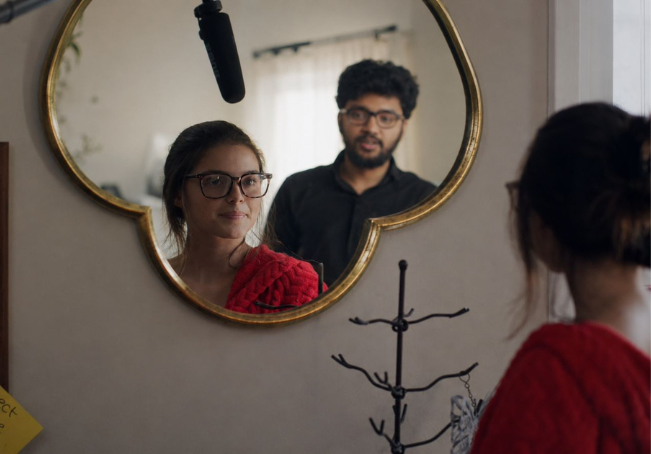
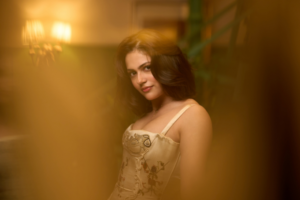
While the world is currently obsessed with Inde Navarrette’s gripping performance in the hit independent film “Obsession”, Indian filmmaker Shubham Sanjay Shevade knew the depth of her raw talent nearly a decade ago. Back in 2018, while completing his film school thesis in Los Angeles, Shubham Sanjay Shevade cast a then-aspiring Navarrette in his SAG-approved short film.
Looking back at her early performance as an innocent teenage girl exploring the meaning of love, Shevade highlights a striking contrast to the heavy emotional world she occupies today, showcasing a phenomenal artistic range that was evident even during her early audition days. Now, as Navarrette commands global attention and Shevade prepares for the upcoming theatrical release of his debut Marathi-language feature film “Magazine” in September.
The director sits down for an exclusive interview with Variety India to speak about creative patience, the changing landscape of independent cinema, and what it truly means for a filmmaker to return to their roots.
You worked with Inde Navarrette years before audiences discovered her through ‘Obsession’. What stood out about her during the audition process, and did you see signs of the actor she would become?
I met Inde while casting my thesis film, “Cross Words Together”, at film school in Los Angeles. It was a SAG-approved project (Screen Actor's Guild of America), and at the time she was working toward SAG eligibility. She needed one more qualifying project, and our film happened to be one of them.
What I remember most isn't some moment where I thought, "This person is going to be a star." Honestly, nobody knows that in an audition room.
She was auditioning for a teenage character who was trying to understand what love actually means. The role required a certain innocence and emotional honesty, and she had that naturally. There wasn't anything forced about her performance.
What's interesting now is that audiences are discovering her through “Obsession”, which is a completely different role. But when I watch her work today, I still recognize the same quality that stood out back then. She commits fully to the emotional reality of a character.
‘Obsession’ has become one of the most talked-about independent films among younger audiences. Why do you think it has connected so strongly, particularly with Gen-Z viewers?
I think younger audiences have developed a very sharp instinct for authenticity.
They've grown up with endless content competing for their attention, so they're pretty quick to recognize when something feels genuine versus when something feels manufactured.
What I like about “Obsession” is that it feels confident in its own identity. It isn't trying to chase trends or explain a generation to itself. It simply tells a story and trusts the audience to meet it halfway.
The other thing that's changed is how films travel. A movie doesn't need a massive marketing campaign to find an audience anymore. Sometimes a conversation online, a recommendation from a friend, or a clip that resonates is enough to start a movement around a film.
Looking back at Inde's role in ‘Cross Words Together’ and her performance in ‘Obsession’, what does that journey tell you about her growth and range as an actor?
What stands out to me is the contrast.
In “Cross Words Together”, she played a young girl whose understanding of love was still taking shape. There was a vulnerability and innocence to that character. Watching her in “Obsession”, you're seeing somebody operating in a very different emotional world.
That's what range looks like to me. Not just playing different characters, but making each one feel truthful.
What's also funny is how much time has passed. When we made “Cross Words Together”, we were simply trying to make the best film we could. The film eventually found a home through Amazon Studios' Shorts program and streamed there for several years before the licensing period ended in 2024.
Now, almost a decade later, audiences are discovering Inde through “Obsession” while I'm preparing for the theatrical release of my debut Marathi language feature, “Magazine”. Looking back, it's a reminder that creative journeys rarely happen overnight.
You studied filmmaking in Los Angeles before returning to India to make independent cinema. How have those experiences shaped your perspective on storytelling and the kinds of stories audiences are responding to today?
Living in Los Angeles taught me how films get made. How Indie space is business-wise. Coming back home reminded me why I wanted to make them.
I grew up in Nashik, studied engineering in Pune, moved to Los Angeles for film school, and then stayed on for a few years working in advertising and brand storytelling. That experience taught me a lot about narrative, audience, and communication.
But somewhere along the way, especially during and after the pandemic, I found myself thinking more about home, family, and the places that shape us.
That's really where “Magazine” came from. The film asks a simple question: what happens when a city-born Gen Z young man reconnects with his ancestral roots?
Around that same period, I got married, and my wife connected deeply with the emotional core of the story. She eventually came on board as the producer of the film.
So in a strange way, returning to India, getting married, and making “Magazine” all became part of the same journey.
Many young filmmakers are finding audiences through social media, streaming platforms, and word-of-mouth rather than traditional industry pathways. What advice would you give aspiring filmmakers trying to break through in this changing landscape?
I don't know if I'm qualified to give advice yet. I'm still learning myself and “Magazine” is my first feature.
What I do find encouraging is that audiences seem more open than ever to discovering films outside traditional systems.
Growing up, there was often a feeling that you had to be invited into the industry. Today, it feels more like a conversation. A filmmaker can make something, put it out into the world, and sometimes it finds people in ways nobody could have predicted.
For me, that's exciting because it means there's still room for unusual voices and personal stories.
What do you make of the success stories of films like ‘Backrooms’ and ‘Obsession’ that are made on modest budgets but have connected with audiences worldwide, especially the youth?
Honestly, as an independent filmmaker, I find those stories incredibly encouraging.
A lot of us spend years hearing about what we don't have — bigger budgets, bigger stars, bigger resources. Then a film comes along and reminds you that audiences aren't really counting any of those things while they're watching.
They're responding to an experience.
What excites me about films like “Backrooms” and “Obsession” isn't just their success. It's what that success represents. It suggests that audiences are still willing to take chances on something new, something personal, or something that doesn't fit neatly into a formula.
As someone who's about to share his own independent feature with the world, that's a pretty hopeful thing to see.




Comments are moderated. They may be edited for clarity and reprinting in whole or in part in Variety publications.