



Jun 06, 2026 3:01pm IST
‘Obsession’ Art Director’s $300-a-Day Salary Sparks Industry-Wide Conversation About Crew Compensation
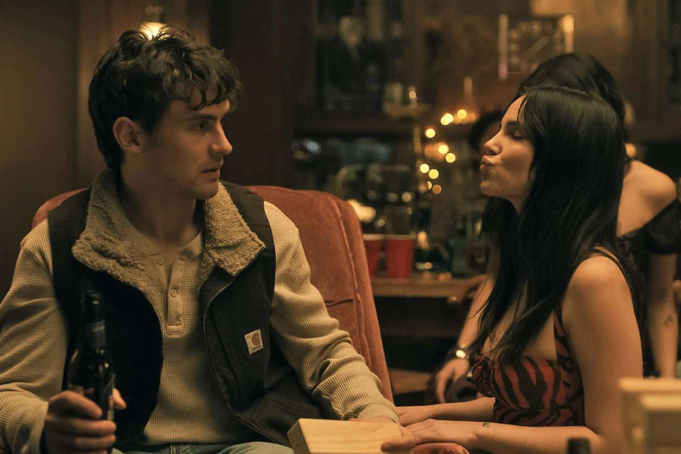
One of the year's biggest independent film success stories has found itself at the center of a growing labor compensation debate. Sally Choi, who served as art director on the breakout horror film "Obsession," has gone viral after revealing details of her compensation on the production, sparking a broader conversation about crew pay, working conditions and the economics of low-budget filmmaking.
The discussion comes as "Obsession" continues one of the most remarkable success stories in recent independent cinema. Directed by Curry Barker, the horror thriller was produced on a reported budget of $750,000 and went on to emerge as a word-of-mouth phenomenon. Its breakout performance has been celebrated by many in the industry as proof that original filmmaking can still break through in a marketplace increasingly dominated by franchises and established intellectual property.
But Choi's account has shifted attention from the film's commercial triumph to the workers who helped bring it to life. In a lengthy Instagram post, Choi said she was paid $300 per day during production and earned a total of $6,741.36 after taxes. She also claimed she was not reimbursed for mileage despite taking on responsibilities that required extensive travel and logistical work.
Related Stories

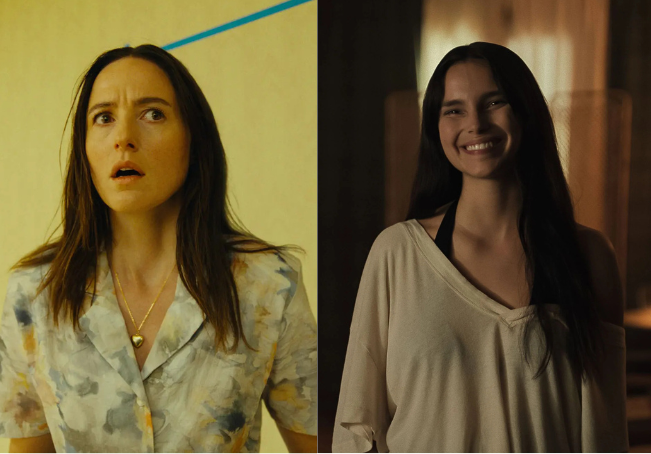
"I did know the rate beforehand and agreed to it, but atp (at that point) I was living paycheck to paycheck," Choi wrote. "This is the reality of most filmmakers, especially those who work below the line. We become a line in the budget sheet to keep as low as possible."
The post quickly resonated with filmmakers, crew members and industry observers, many of whom viewed it as emblematic of wider issues surrounding labor and compensation on independent productions. According to Choi, her responsibilities extended well beyond her official title. She said she also worked as a production assistant, set dresser, graphic designer, buyer, driver, swing crew member and background actor during production.
"As is the case for most low budget productions, everyone has to wear many, many hats," she wrote.
Choi detailed the demands of the production, describing shopping runs, loading trucks, transporting materials, dressing locations and handling various logistical tasks while simultaneously overseeing art department responsibilities. She also said the workload took a significant physical toll.
"It took such a physical toll on my body that I kept losing weight, weighing 90lbs during this production," Choi wrote. Among the most striking claims in the post was her assertion that some crew members worked on a volunteer basis.
"There were also crew on obssn (‘Obsession’) who were volunteers, getting paid in gas and mileage," Choi wrote. "This wasn't even paid on time, so to make a $250M grossing film, some of these amazing people had to come out of pocket to work on set."
The comments section quickly became a forum for a broader discussion about labor practices in the entertainment industry. One Instagram user wrote, "This is what capitalism does to workers plain and simple. You were exploited to make millions for someone else. You were not paid commensurate to your contributions. None of the crew was."
The commenter, who said they had worked on the film for one day, added that while their personal experience on set had been positive, they believed the larger issue was systemic rather than specific to a single production.
Another Instagram user criticized what they described as the industry's tendency to romanticize microbudget filmmaking.
"Thanks for speaking up about this. I hate how much we fetishize low budget filmmaking. I'm all for making scrappy things with friends, but when it becomes a business model that only benefits the folks at the very top, it's gross. Profit sharing should absolutely be a thing."
The debate expanded further after filmmaker Joseph Kahn weighed in publicly, helping amplify the discussion beyond horror circles and into wider industry conversations about labor, compensation and the distribution of financial rewards when independent films outperform expectations.
When you art direct a movie for $300 a day and it makes $250 million. pic.twitter.com/1cJ7KSof2S
— Joseph Kahn (@JosephKahn) June 6, 2026
Despite the attention generated by her post, Choi stressed that her comments were not intended as an attack on Barker or the filmmakers behind "Obsession." "I know this is bigger than ‘Obsession’ (or Curry and his team. It's not about that)," she wrote. "I know this is even bigger than the film industry."
That distinction has become central to the conversation now unfolding online. While independent productions have long relied on crew members willing to accept reduced rates in exchange for creative opportunities and the possibility of future career advancement, critics argue that questions inevitably arise when those projects evolve into major commercial successes.
For many observers, Choi's post has become a flashpoint in a larger debate about who shares in the rewards of independent filmmaking. As "Obsession" continues its extraordinary run, the conversation surrounding the film is no longer focused solely on its success story, but also on the workers whose contributions made that success possible.















Comments are moderated. They may be edited for clarity and reprinting in whole or in part in Variety publications.