



Jul 29, 2026 4:36pm IST
‘Max, Min and Meowzaki’ Review: A Relatable Breakup Drama That Buckles Under Its Own Weight
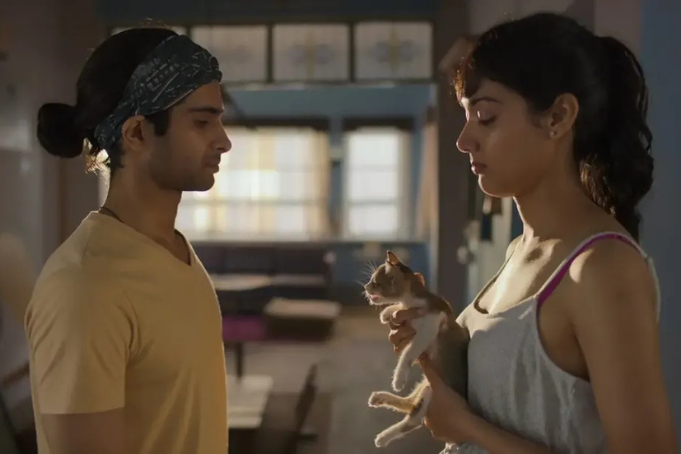
Mahesh “Maximilian” Mahadevan (Siddharth Menon) and Minara Hussain (Medha Shankr) have been in a relationship for many years, but she decides to end it and move out of their shared home. As they divide everything from cutlery to electronics, they find themselves at odds over their cat, Meowzaki. Who gets to keep the pet becomes the central conflict of “Max, Min and Meowzaki.”
The film presents the aftermath of the separation of two people whose lives have been so deeply intertwined that untangling them proves a long and complicated process. What follows is Max’s struggle to come to terms with the breakup while taking care of a pet he is physically averse to, grieving the loss of his mother, and navigating an unrewarding relationship with his father. There’s a refreshing realism to the writing, with due credit to Padmakumar Narasimhamurthy, but the same cannot be said for the actors tasked with bringing these characters to life.
Related Stories
Shankr’s portrayal of Min seems flat with no room for the character to develop. Even in the film’s most emotional moments, her performance doesn’t ring true, making it difficult for the audience to invest in her journey. Menon, on the other hand, feels awkward opposite the actor playing his long-time girlfriend. Even in scenes with his new love interest, he carries a hesitation that never registers as a character trait.
There’s a sense of relatability in Max’s relationship with his father, where the lack of communication speaks louder than words. The generational disconnect deepens further with Adil Hussain’s Ramesh Mahadevan and his father, Sridhar Mahadevan (Nassar). Both senior actors do justice to their roles, while Mandira Bedi brings a welcome surprise in her role. Vidhatri Bandi holds her own as Carol Sequera.
The problem with “Max, Min and Meowzaki” isn’t its attempt to shine a light on important social issues, but its urge to tackle too many at once. From domestic violence and mental health to religious discourse, the film takes on an extensive list of themes. In trying to address everything, it ends up jumping from one issue to the next, never fully committing to any. Thereby, leaving each one feeling underexplored.
Popular on Variety
The jokes don’t land, often teetering on the edge of being cringeworthy and uncomfortable, save for a couple of ironic moments towards the end. The clumsy placement of the background score meddles with the film’s rhythm. The only saving grace is a Carnatic rendition of “Baa Baa Black Sheep,” which does little for the film.
The second half manages to stay afloat and fares far better than the first. As the loose ends gradually tie themselves, there’s some respite from the muddled storytelling that hampers the first half. “Max, Min and Meowzaki” allows closure for each character’s arc. It leaves behind a feeling of completeness that serves as an apt conclusion to the film.












Comments are moderated. They may be edited for clarity and reprinting in whole or in part in Variety publications.