



Jun 05, 2026 11:00am IST
‘Hai Jawani Toh Ishq Hona Hai’ Review: Varun Dhawan’s Dated Throwback Comedy Should Have Stayed Locked Up In The Vault
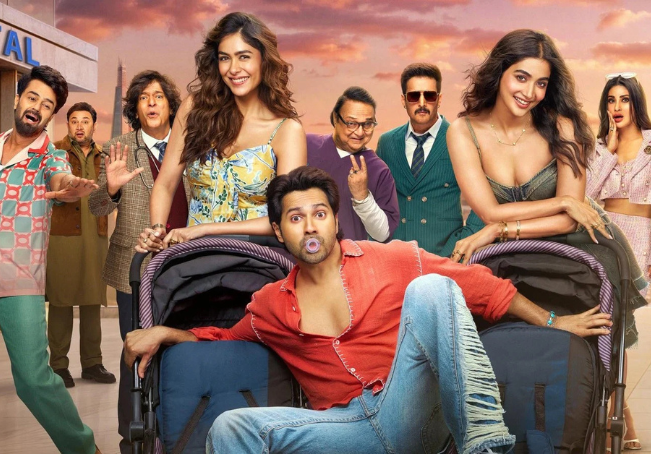
In May 1999, on the cusp of the Y2K panic (Gen Z can skip this history lesson), came a film titled “Biwi No. 1.” Directed by David Dhawan and part of his hugely successful “No. 1” series, the film starred Salman Khan, Karisma Kapoor and Sushmita Sen and went on to become a bonafide blockbuster. A major reason for its enduring popularity was its music. Tracks like “Chunari Chunari,” “Hai Hai Mirchi” and “Ishq Sona Hai” became staples of every millennial playlist and continue to surface whenever the agenda is simple: have a good time.
So when David Dhawan decides to revisit that world nearly three decades later, one is left wondering what exactly the intention was. In the case of Varun Dhawan’s “Hai Jawani Toh Ishq Hona Hai”, intent and consent become unexpectedly important themes. Intent from the filmmakers about what they wanted to achieve and consent from the female characters played by Mrunal Thakur and Pooja Hegde. It is safe to say that neither appears to matter much here.
Related Stories

When the goal seems to be milking nostalgia, a familiar title and a hook-line from a beloved song, does intent really matter? Does it matter if the script feels like a rough draft of a stand-up routine that was cancelled before opening night? Or that Maniesh Paul once again plays a version of Maniesh Paul trapped in an endless loop of sidekick, punching bag and best friend duties? Whether it is “JugJugg Jeeyo” or “Hai Jawani Toh Ishq Hona Hai”, the assignment remains largely unchanged. Character arcs are ignored while maximum attention is devoted to volume, hair flips and what appears to be a very expensive relationship with a dermatologist.
The story, or rather the flimsy excuse for one, revolves around Varun’s character impregnating both Mrunal Thakur’s character (his not yet divorced wife) and Pooja Hegde’s character (his new London-based girlfriend). What follows feels like “No Entry” wandering into “Garam Masala” territory without the wit that made either film work.
Being coded in the style of late 1990s and early 2000s Bollywood is not necessarily bad news. The last decade has hardly been overflowing with memorable mainstream comedies, so revisiting that era for inspiration is a perfectly valid idea. The problem begins when nostalgia becomes the entire screenplay. Throwing in familiar songs and assembling a supporting cast filled with comedy veterans such as Johnny Lever and Rajpal Yadav cannot compensate for the absence of a compelling story.
David Dhawan owned the 1990s. He had the formula, the rhythm and most importantly, actors like Govinda and later, Salman Khan, who understood exactly how to make that formula work. Unsurprisingly, this film is packed with references to his greatest hits. The styling, costumes, loud colours and glossy treatment are all affectionate throwbacks to one of Bollywood’s most entertaining eras.
Unfortunately, the writing never catches up with the vision.
For Varun Dhawan, the brief appears to be simple: flash the abs and keep moving. The women are treated less like characters and more like mannequins modelling the latest streetwear collection. Many of the jokes land with such a thud that you begin to wonder whether the film is accidentally parodying itself.
Like every self respecting 2000s throwback, the film also features songs staged in London with armies of backup dancers. Sadly, not a single track leaves a lasting impression. The recreated “Chunari Chunari” only serves as a reminder of how much more charisma Salman Khan and Sushmita Sen brought to the original. In fact, had David Dhawan convinced some of his stars from the 1990s to show up for cameos, the film might at least have delivered a few genuinely memorable moments.
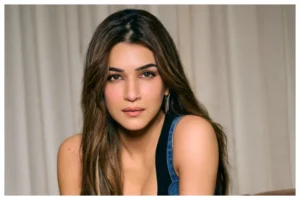
The biggest surprise comes from a subplot that should not work but somehow does. A side track involving Mouni Roy, introduced as a “gold digger with a hot figure”, and Jimmy Shergill injects some much needed energy and genuine humour into the proceedings. The film also serves up a collection of bizarre creative decisions, including an AI-assisted younger version of Varun Dhawan and a random Kriti Sanon cameo seemingly designed to trigger “Bhediya” nostalgia.
If only the gags and gimmicks had been supported by a coherent plot and characters worth investing in, these moments might have meant something. Instead, “Hai Jawani Toh Ishq Hona Hai” mistakes nostalgia for storytelling. It wears its audience down with dated humour, paper thin characters and endless callbacks to better films.
Much like its leading man, the movie spends most of its runtime showing off its abs in the hope that nobody notices the lack of substance underneath. Some blasts from the past deserve a grand comeback. This one should have remained a fond memory on a millennial playlist.












Comments are moderated. They may be edited for clarity and reprinting in whole or in part in Variety publications.