



Oct 16, 2026 3:52pm IST
‘Emperor Vs Sarat Chandra’ Review: Tota Roy Choudhury, Abir Chatterjee’s Zealous Performances Uplift A Thought-Provoking Film
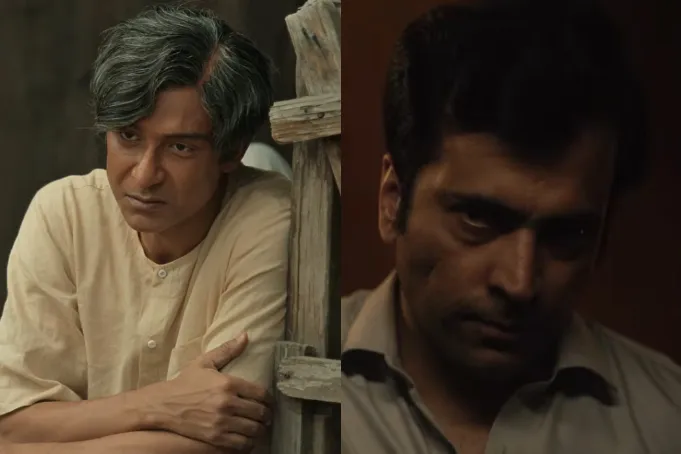
In Srijit Mukherji’s “Emperor Vs Sarat Chandra,” a deeply anguished Sarat Chandra Chattopadhyay (Tota Roy Choudhury) reiterates before Nobel Prize laureate Rabindranath Tagore (Sanjay Nag) that protesting against oppression is his birthright. As Chattopadhyay braces himself to face possible arrest, he is also steadfast in ensuring that his critique of his guru, Tagore is not made public at any costs. One of the big Durga Puja 2026 releases, Mukherji’s film explores the admiration and ideological differences between two of West Bengal’s literary giants at a time when public sentiment against the British hit a crescendo in India.
“Emperor Vs Sarat Chandra” is set roughly in the period from 1913 to 1930 when Chattopadhyay’s first political novel, “Pawther Dabi,” became second only to the Bhagvad Gita for Indian revolutionaries. Simultaneously, it also chronicles the exploits, victories and trials of Sarat Chandra’s fictional hero, the revolutionary icon Sabyasachi Mullick (Abir Chatterjee) from “Pawther Dabi,” who takes the fight for India’s freedom to foreign shores like Japan and Germany.
Related Stories
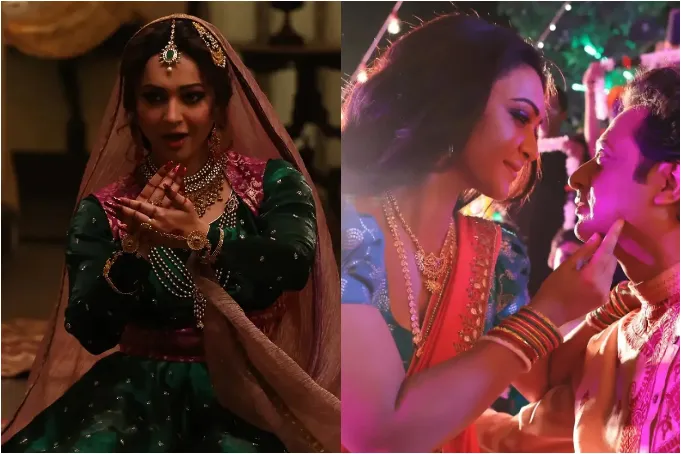
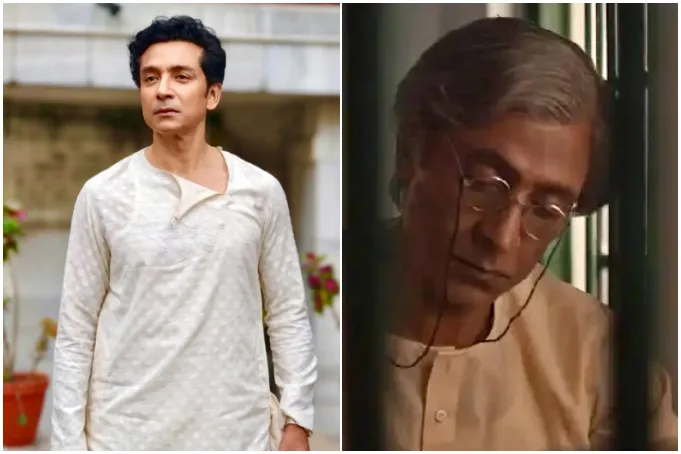
Srijit Mukherji’s film stands out for its layered writing, performances and lyricism. He makes his central characters, Sarat Chandra and Sabyasachi Mullick men who are acutely self-aware of their position in the greater scheme of things. From a clerk in Rangoon to a writer who saw courtesans as women of deep empathy, Mukherji crafts his main character with factual accuracy while retaining the sentiments of his admirers who loved the emotions behind his novels. Tota Roy Choudhury is fantastic as Sarat Chandra Chattopadhyay. Blunt, imaginative, opinionated and rooted, he captures the writer’s matter-of-fact personality to the hilt. The scenes where he weeps before his publisher friends feeling let down by Tagore will stay with you for a long time. Abir Chatterjee does full justice to his character as Sabyasachi Mullick. It can be a bit tricky to play a fictional character within a fictional story but he gets the tonality right. From speaking in various languages like Chinese, Malay, German and Marathi to the action scenes, he is believable.
No revolutionary film is complete without a character that spits fire and zeal. Mimi Chakraborty is first-rate as Sumitra, a former smuggler who gets radicalized by Sabyasachi’s vision of a free India. The supporting cast of Rick Chatterjee, Divyani Mondal, Kanchan Mallick, Debopriyo Mukherjee do a good job as key players in Sabyasachi’s revolutionary group. The music, especially the lyrics, elevates the film emotionally. “Shoite Shoite,” composed and written by Srijit Mukherji is a perfect ode to revolution and patriotism. Rabindranath Tagore’s “Tomare Koriyachi” is used wonderfully to showcase the deep devotion that Chattopadhyay held in his heart for Tagore. Indraadip Dasgupta’s background score is also good.
A film like “Emperor Vs Sarat Chandra” that spans across Myanmar and Batavia (now known as Jakarta) deserved a bit more scale. The digital creation of the Rangoon port and the view of the Shwedagon Pagoda reinforce how the makers operated on a tight budget. While Mukherji has done his best to add authenticity with the use of languages, timelines and costumes, “Emperor Vs Sarat Chandra” would have been a different film with a bigger budget. So, even as Sabyasachi's adventures 'instigate' Indian minds, the visual impact is a bit underwhelming. Despite this, Mukherji holds it together with his dialogues and screenplay shifting the drama to Chattopadhyay's life as "Pawther Dabi" literally creates hell for its writer and the administration.
Popular on Variety
The film starts off on a slow note, especially the first 20 minutes. Audiences who have read up a bit on the history of Sarat Chandra and the novel, “Pawther Dabi,” will find it easier to grasp. Cinematographer Indranath Marick has shot the film mostly in natural light, which works well especially for the portions of Sabyasachi. Shreya Ghoshal’s “Dil Ke Daag” featuring Koushani Mukherjee does not serve much purpose to the narrative but seems to exist to show Chattopadhyay’s literary timeline.
For a non-Bengali viewer, “Emperor Vs Sarat Chandra” is an engaging account of how the Indian revolutionary movement captured the imagination of the state across classes and gender. The dialogue between Chattopadhyay and 'Deshbandhu' Chittaranjan Das (Loknath Dey), Germany’s role in Indian Independence and how Southeast Asia was a strategic stronghold are parts that raise curiosity. Gen-Z, whose slogans are now viral on social media might cheer for Chattopadhay’s bravado as he announces he is ready for jail-time if his hookah is with him. The women in the film raise slogans, shoot bullets and are ready to lay down their lives in their do-or-die mission.
Overall, “Emperor Vs Sarat Chandra” is an engaging narrative on how hero worship, admiration, dissent and respect—despite ideological differences—were the catalysts in framing our understanding of democracy in India.








Comments are moderated. They may be edited for clarity and reprinting in whole or in part in Variety publications.