



Apr 16, 2026 7:45pm IST
Vikas Khanna on the Shah Rukh Khan Compliment He Will Never Forget (EXCLUSIVE)
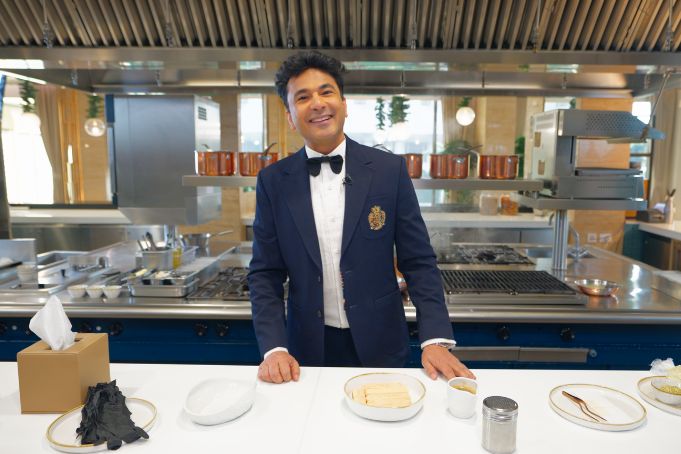
Vikas Khanna is more than a Michelin-starred chef. In the world’s most elite kitchens, he is a cultural ambassador for Amritsar, a reality show judge, author and restaurateur. From running banquets at 16 to opening Bungalow in New York and now being named in TIME magazine’s 100 Most Influential People list, he has had quite the journey. Beyond the acclaimed restaurants, he has a career spanning television and over 35 cookbooks. His work is rooted in food and culture, a sensibility that he carries into cinema through his feature film "The Last Color," and documentary projects like "Kitchens of Gratitude," which chronicle food as compassion-in-action.
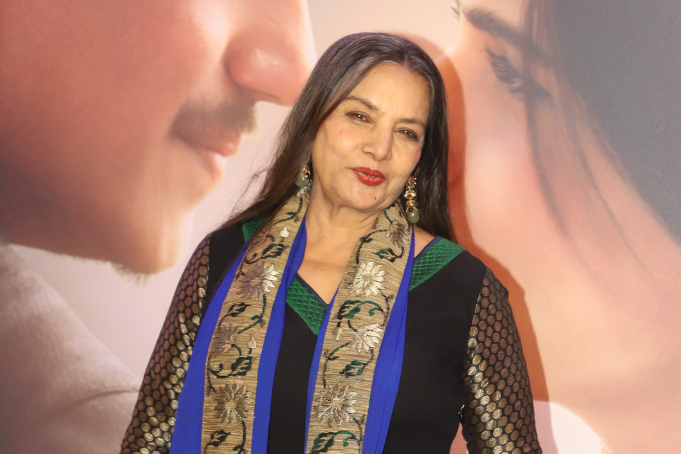
Khanna is now extending his journey as a filmmaker with an upcoming film, "Imaginary Rain," starring Shabana Azmi, chronicling the story of Indian cooking and its journey and struggles in New York. In this exclusive chat with Variety India, Khanna discusses food, career milestones, and cinema as a form of storytelling. Excerpts from the interview:
Are there any milestones you’d set for yourself and haven’t crossed yet?
Vikas Khanna: Do I have more milestones in mind? Absolutely, yes. I feel Indian cuisine hasn’t achieved the status it deserves on the global stage. I’m satisfied with where I am, but there’s still a lot of work to be done. Indian cuisine is not considered on par with Italian cuisine or Asian cuisines. I’m not going to rest till that changes.
What lessons learned from your mom guide your decisions to this day?
Vikas Khanna: One thing my mom taught me is that the food business is about people who happen to be serving food. So, remember, it’s always going to be about how you make people feel. That has been one of the foundations of my entire career.
In the move from India to New York, what part of you did you protect at all costs?
When I moved to the United States in 2000, the one thing that I protected was being the son of the soil. I cannot disconnect myself from my roots to achieve the limits of the sky. Creating that balance has been a learning process, but I feel so proud every single day that I represent my country.
How do you stay emotionally rooted to the boy from Amritsar while on the world stage?
Vikas Khanna: I am always going to be "Amritsar ka munda," son of Mrs. Bindu Khanna! One thing that has always helped me is wearing my identity on my sleeve, and I was never ashamed [of it]. I never felt I was less than anyone in global cuisines. I felt my identity was my strength and not my weakness.
What dishes from your childhood are connected to your memory?
Vikas Khanna: Methi aloo (fenugreek leaves with potatoes) is my favorite Punjabi dish. When it's winter, it's gobi (cauliflower), shalgam (turnip), gajar ka achar (carrot pickle). You can buy me with that (sic). I am very emotional about my childhood flavors.
What feeling do you want your guests to carry with them after a meal at Bungalow?
Vikas Khanna: I will never forget what Shah Rukh Khan said when he entered Bungalow: “Every restaurant I have been to before this seemed like a shop, and this feels like a temple.” I think it is because the vision of the restaurant was much bigger than my winning awards. It was about uplifting the entire cuisine and culture.
Have you ever considered opening a fusion restaurant with another top chef?
Vikas Khanna: We keep getting a lot of offers to open new restaurants, but Bungalow is my last restaurant. This is the last inning of my journey. I’d promised my sister I’ll run this restaurant for 10 years, and then that’s it. I’ll reinvent myself in some other form. Until then, no collaboration with other cuisines. My whole journey has been an example of how Indian cuisine and culture are enough. You don’t need to shake hands with other cultures to find validation.
Indian cuisine abroad has been reduced to a few food items. How have you challenged those stereotypes and presented Indian food as layered and evolving?
Vikas Khanna: Indian cuisine abroad is often reduced, it’s true. And being stereotyped is perfectly fine. It means that you matter; you’re visible. And that’s what it is with a lot of Thai, Vietnamese, French or even South Korean cuisine. We know a few dishes that hold us and call us to the restaurant, and that has happened to Indian food through Butter Chicken, Dal Makhani, Naan and Garlic Naan. Now that we have that engagement for Indian food, I have kept only three Punjabi dishes on the menu. So, I changed the menu to include dishes from Odisha or Bengal, condiments from Pondicherry, spices from Gujarat, Rajasthan and Kashmir. The menu embodies the entire spirit of India.
How do you define the fine line between innovation and cultural dilution?
Vikas Khanna: I’m glad that I have reached a point where I serve food that is as authentic as possible. My competition is with the chefs and restaurants that are cooking Indian food in India, food in Indian homes, and [food cooked] by street vendors. So, my competition is authentic, and that is what is represented in the Bungalow menu.
Any plans to open a cooking school?
Vikas Khanna: I did work a lot with my culinary center in Manipal, but I’m not the guy who will open cooking schools. I feel it requires a different level of commitment. I’ve never done anything half-heartedly in my life. So, for me, it’s difficult to open a cooking school and not be there 24 hours.
After 35 books, are there more on the cards?
Vikas Khanna: We have an amazing book coming out now, conceptualized as "1000 Dishes to Try Before You Die," and I feel that that’s going to be my last big cookbook. Also, I’m writing so many novels and kids’ books, and my mission is to publish 50 books. So, I’m on my way now. I’ve done 42 so far.
What are some of your favorite books on cooking or by a cook?
Vikas Khanna: I love "Climbing the Mango Trees." It’s Madhur Jaffrey’s biography. It’s about her food, and I feel that she’s such a hero for Indian cuisine globally. Her book has really inspired me.
What are the myths you want to bust when it comes to Indian cooks?
Vikas Khanna: You know, being one of the first Indian chefs globally to achieve a Michelin star for eight consecutive years, one thing I realized was that it was not an accolade, it was not a crown. It was a responsibility to come back home and tell the story that, as Indian chefs, we are enough. We have a space on global platforms now where we can be mentioned right next to Italian, French and American cuisines. And that is one thing I want to tell them. Of course, learn Western techniques; what I am doing right now is a lot of Western techniques. But I also don’t forget to add my own understanding and apply it to Indian food.
One person whose review of your book would mean the world to you?
Vikas Khanna: Oh my God! I think one person who has been one of my biggest heroes in the world is Philippe Petit from France. If ever I can cook for him or he can read my book, it’s going to be one of the biggest accomplishments of my life!
Restaurant businesses everywhere are going through a slump. What steps can owners take to counter that?
Vikas Khanna: I think one of the biggest challenges that all chefs worldwide are facing right now is bringing people into the restaurant space. Getting guests to a restaurant is one of the hardest challenges in today’s times. People do love to dine out, but post-pandemic, it’s become a little hassle to go out. It’s like movies; it’s a very big occasion for people to go to the theater and watch a movie now. People discovered that they can have the same experience watching a movie at home. Restaurants are going through the same thing too. But what I focus on a lot is that my restaurant should be more like an experience. In Jeff Bezos’ words, "Bungalow is a pilgrimage. You don’t visit Bungalow; you go there to pay homage to your culture and your cuisine.” That’s the key, I feel.
Reality television thrives on conflict, yet you've always brought a sense of calm to it. Was that a conscious choice?
Vikas Khanna: It was a conscious choice because I felt that critiquing like Gordon Ramsay would not work in India, a country where we find food as not just comfort but a form of worship. So, for me, to have that sensibility coming from abroad was extremely important. I constantly tell people that we are not critiquing you; we are just telling you a new way to cook.
Your interest in filmmaking feels like a natural progression of your storytelling. What stories does cinema allow you to tell that food cannot?
Vikas Khanna: I feel cinema is one of the most powerful tools. If I need to tell the biggest story of the Indian diaspora, Indian life and the struggle for Indian cuisine, I can’t just tell it through books. I must take the help of cinema. I feel I’ve done it well with Shabana Azmi and A.R. Rahman in my upcoming movie, "Imaginary Rain," where I’ve told the story of Indian cooking and its struggles in New York. And because I feel a movie has more cultural impact than any book or any show.











Comments are moderated. They may be edited for clarity and reprinting in whole or in part in Variety publications.