



Jun 15, 2026 4:49pm IST
Ameesha Patel On ‘Gadar’’s 25th Anniversary: ‘It is A Tribute To Love and Romance’ (EXCLUSIVE)
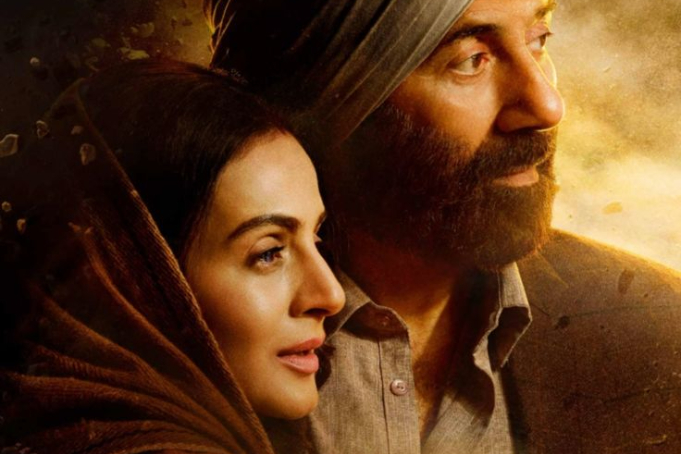
Twenty five years ago, Sunny Deol and Ameesha Patel’s “Gadar” rewrote box-office records for the Hindi film industry. “Gadar 2,” (2023) was proof that the love for Tara Singh and Sakina (Deol and Patel’s characters in the film) had not diminished in Indian audiences. Patel tells Variety India, “It is a gut-wrenching love story that’s so raw and sincere. You cannot find a single flaw in it.” Like Patel, millions of Indian cinephiles will agree that “Gadar” is one of the milestone films of the early 2000s. The actress relives some of the moments she still cherishes.
Excerpts from the conversation…..
Did you ever expect the film to have such a cinematic legacy?
I truly did not. One never knows the impact a film is going to make. But there are certain films like “Gadar,” wherein you have faith that at least you're working in a different, beautiful, and pure form of cinema. One can only know the audience reaction upon [the film’s] release. We did not realise that it's going to have this kind of crazy impact. And I think it solidified furthermore with “Gadar 2” becoming the tsunami it did, at the box-office.
Do you remember your first day on the sets of ‘Gadar’?
My first day was in equal measures spectacular and scary. I was still shooting for “Kaho Na…Pyaar Hai” when I began filming for “Gadar.” We started off with the post-interval scenes and that was very hard, because I was not a seasoned actor. The role of Sakina was meant to be done by an actor who was 10-15 films old and had spent enough time facing the camera. The first scene was the confrontation with my father, Ashraf Ali (Late Amrish Puri). He is firing me in our Lahore home. I had to revise the entire life of Sakina from being a spoiled daughter of an influential politician to someone who lands in Amritsar post Partition. The whole trajectory of a girl who finds a saviour in a much older Tara and builds a life with him in a new country was very hard because in my mind I had to live a journey that I had not filmed at all.
Related Stories
What was your first meeting with co-star Sunny Deol, seventeen years your senior?
Sunny Deol is the gentlest of souls. He made me so comfortable, the vibe was one of respect, affection, care and acknowledgement. He never lost his patience. He helped me no matter how many retakes I needed. It was a completely fun vibe where we'd steal each other's food and we were always laughing and joking. When the third or fourth big schedule of “Gadar” was being filmed, “KNPH” released and became this blockbuster. He was my biggest cheerleader on the sets.
Coming from a family closely associated with the freedom struggle, how special was the association with Gadar?
Most of us have heard stories of freedom struggle from our grandparents. My Sindhi mother has her roots in Lahore and Karachi. My grandfather shifted with all of them to India. There was always that craving, which my maternal grandfather felt till his last day. My paternal grandmother (Sushila Gokhale-Patel), created all the Gandhi museums in Mani Bhawan (Mumbai) and Gandhi Bhawan in New Delhi, donating it to the government of India. My paternal grandfather (Rajni Patel) was a Congress President and had been in jail during the freedom struggle. So, it's something that's very close to home. My paternal grandmother was totally against my decision to join the film industry. But when I told her the subject of “Gadar,” she was very proud.
What do you feel about Partition films as a genre?
Partition films as a genre is great if made for the right reason and not just used as a gimmick. What is beautiful is that through films like “Gadar,” you realize that people of Hindustan and Pakistan never wanted it. The Partition was driven sadly by the requirement of the British who needed to leave India because they were impoverished by World War II. But sadly, two countries that should never have been divided, suffered; the people who loved each other suffered. These are the kind of films that send a positive message.
Films like ‘Dhurandhar’ have changed the template of nationalistic films in India. Would you like ‘Gadar 3’ to be a more modernized film in terms of narrative and screenplay?
Films like “Dhurandhar” have created a new benchmark. But in no way, would I want “Gadar 3” to be a “Dhurandhar” or a “Dhurandhar” to be a “Gadar.” Both films have been crafted in a unique manner and hence, worked independently. This is the one big mistake Bollywood producers, directors and actors make. If a romcom works, then they all run behind that genre. Cinema is not about copying. Cinema is about having your own template and being authentic to your style of filmmaking. Copying is not a formula for success. Be unique. And I think that's what “Dhurandhar” and “Gadar” did. They were sincere. They were not ‘projects’.
What makes the love story of Tara and Sakina so endearing and enduring?
I think the innocence of Tara and Sakina other than the great chemistry that Sunny and I share. Also the fact that we are still somewhere very shy, vulnerable, innocent and introverts in real life. I think that translates on screen. ‘Gadar’ is at its core a story of a man's love, his undying love for his wife and family that he's ready to rip apart anything including his soul for her. It's such a gut-wrenching a love story that anyone would want to be them.







Comments are moderated. They may be edited for clarity and reprinting in whole or in part in Variety publications.