



May 01, 2026 11:00am IST
Why Social Media Crowns Queens While The Box Office Only Pays Kings
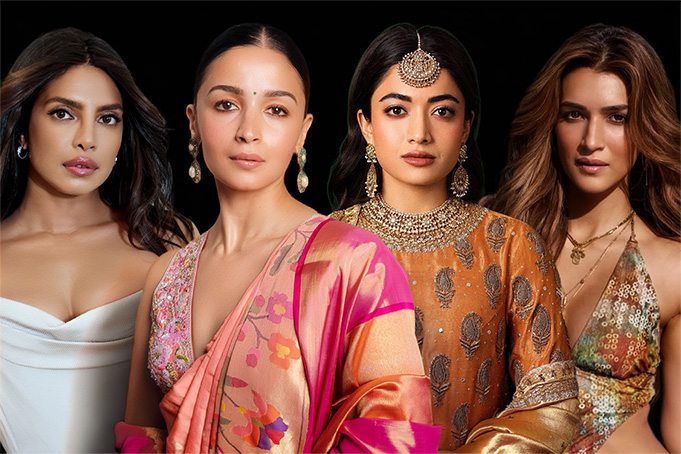
For decades, the Indian film industry has been a stronghold of traditional economics where the male protagonist is viewed as the ultimate crowd puller. Despite the rising tide of successful women-centric films, the internal financial architecture of Bollywood remains skewed. The leading men of the industry continue to command astronomical fees that often dwarf the earnings of even the female A-listers. That said, we seem to be witnessing a new litmus test for stardom that the industry’s power players can no longer afford to ignore: the massive digital footprint of its leading ladies.
This massive digital footprint presents a compelling argument for pay parity that the industry’s power players can no longer afford to ignore. Social media followings have become a significant "flex" that Bollywood’s leading ladies have yet to fully weaponise as a bargaining tool during fee negotiations. If popularity is the ultimate barometer for stardom, these metrics should theoretically dictate a shift in financial standing.
It is nearly impossible to quantify exactly how many fans flocked to the cinemas for Deepika Padukone in “Pathaan” versus those who bought tickets for Shah Rukh Khan, but the digital data is stark: with 80.3 million followers, she significantly eclipses his 49.6 million. This trend persists even within the industry's most high-profile pairings; as they prepare to share the screen again in "King", the disparity remains undeniable. Furthermore, Deepika possesses nearly double the social currency of her husband and frequent collaborator, Ranveer Singh, who trails at 48.7 million.
The dominance of B-Town’s leading ladies on social media becomes even more staggering when examining the line-up of upcoming releases, where the digital divide between co-stars is often immense. In the upcoming film “Varanasi”, Priyanka Chopra commands a massive 94.5 million followers, leaving her co-star Mahesh Babu’s 15.4 million looking modest by comparison. A similar story unfolds with "Love & War", where Alia Bhatt’s 87 million followers far outstrip Vicky Kaushal’s 21.2 million. Even in "Cocktail 2", the women hold the upper hand; both Kriti Sanon, with 58.8 million, and Rashmika Mandanna, with 51.6 million, boast a larger social footprint than their male lead Shahid Kapoor, who stands at 49.3 million.
Related Stories
This digital paradox is perhaps even more pronounced in the South Indian film industry, where the "Mass Hero" culture has historically dictated the highest paychecks in the country. In industries like Tollywood and Kollywood, male superstars are often treated as deities, yet social media metrics reveal a fascinating shift in where the "Pan-India" gaze is actually fixed.
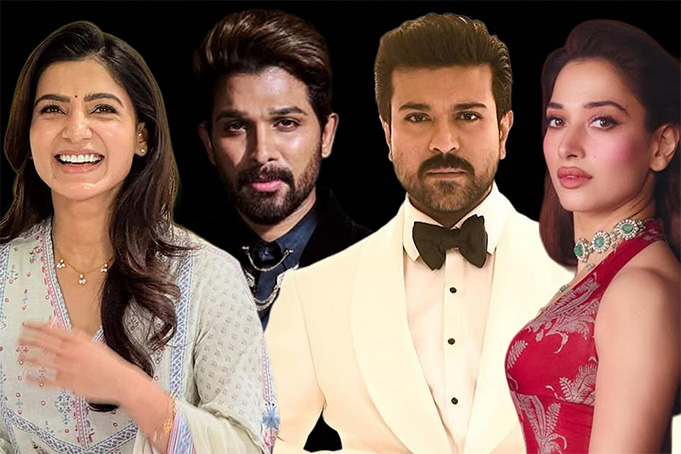
Rashmika Mandanna, with a staggering 51.6 million followers, commands a digital empire that makes the social footprint of the biggest "Mass" heroes look relatively localized; she boasts nearly double the following of Allu Arjun (28.2 million) and almost quadruple that of global stars like Prabhas (13.8 million) or Yash (14.1 million). Even Samantha Ruth Prabhu (38.1 million) comfortably outpaces titans like Ram Charan (24.6 million) and Vijay Deverakonda (23.6 million).
The irony is undeniable: while Southern male superstars negotiate historic contracts - often bolstered by lucrative profit-sharing - it is the women who are actually constructing the digital infrastructure that connects these films to a global audience. Despite Tamannaah Bhatia (28.4 million) and Nayanthara (10.3 million) possessing massive cultural footprints, they still find themselves navigating a systemic pay gap that refuses to align with their actual market reach. Even when actresses like Sai Pallavi (12.9 million) and Anushka Shetty (7.1 million) maintain loyal, highly engaged fanbases that exceed or rival stalwarts like Jr. NTR (8 million), the industry still prioritizes the traditional hero-centric model. In the South, much like in Bollywood, the women may be "ruling" the feed, but the balance sheets are still written in the language of the patriarchy.
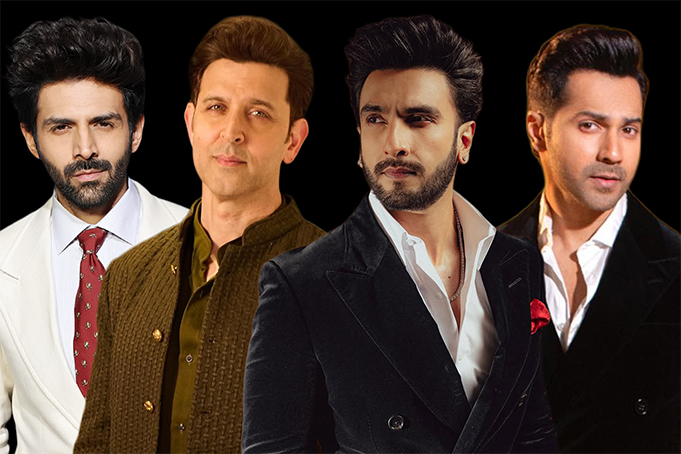
However, this digital matriarchy isn't entirely universal, as a few exceptions emerge within the younger generation of actors where the men occasionally maintain the lead. The younger crop of heroines has yet to amass the same staggering social currency as their senior counterparts. In “Hai Jawaani Toh Ishq Hona Hai”, Varun Dhawan’s 46.1 million followers outweigh those of Mrunal Thakur at 15.9 million and Pooja Hegde at 27.4 million. Similarly, Sidharth Malhotra’s 32.2 million slightly edges out Janhvi Kapoor’s 27 million for their collaboration in “Param Sundari”, while Kiara Advani’s 36.2 million is eclipsed by her "War 2" co-star Hrithik Roshan’s 49.9 million. This trend continues with Kartik Aaryan, whose 51 million followers nearly double his "Tu Meri Main Tera Main Tera Tu Meri" co-star Ananya Panday’s 26.6 million, while Ranveer Singh, who at 48.9 million, maintains a significant lead over Sara Arjun’s 3.7 million in "Dhurandhar" .
Yet, even with these exceptions, the overarching narrative remains clear: while the "established queens" are the undisputed titans, the younger crop of heroines is still amassing the staggering currency needed to tip the scales.
The frustration regarding this unjustifiable gap is palpable among the industry's top talent. At the IIFA 2025 segment “The Journey of Women in Cinema,” legendary actress Madhuri Dixit said, “I think for the women, they have to prove themselves time and again, and to say that we’re equal, we can bring the audience to the theaters, we can do that, but we have to prove it every single time.”
Even global icons like Priyanka Chopra and Deepika Padukone — actresses with immense critical and commercial weight — continue to earn significantly less than their male peers, while having massive fan followers. Priyanka famously shared that she was once told female actors are replaceable because they just stand behind a guy anyway. Kangana Ranaut has been equally vocal, questioning why discrimination persists when no one, male or female, can truly guarantee a film’s success.
This digital boom for women can be attributed to several factors. Actresses have mastered the art of direct engagement, blending high-fashion aspirational content with relatable glimpses into their daily lives, which creates a more loyal and interactive community. While many male stars maintain a traditional "mystique" by remaining aloof, women have embraced social media as a platform for lifestyle influence, fitness, and fashion, making them far more valuable to the digital-first generation. As the digital following of actresses continues to dwarf that of the men, the industry may soon find that market value is no longer defined just by the box office, but by the millions of fans who engage with these women every single day.








Comments are moderated. They may be edited for clarity and reprinting in whole or in part in Variety publications.