



Apr 28, 2026 6:00pm IST
From Shakira To Circoloco: Is India Going Through A Concert Crisis? (EXCLUSIVE)
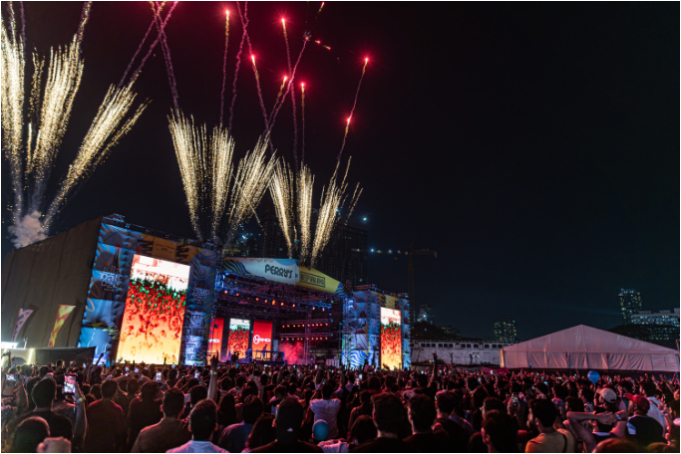
Concerts-wise, the first quarter of 2026 has seen a spate of big announcements, arrivals, postponements and cancellations all at once. While Shakira and Flipperachi’s cancellations and Ye’s postponement were attributed to continuing geopolitical tensions in West Asia and a health issue derailed Scorpions’ return to India; Lollapalooza 2026, John Mayer’s, Keinemusik’s and Def Leppard’s debut in Mumbai went ahead as planned.
The tipping point
Then came an event on April 11 held at NESCO in Mumbai where two MBA students reportedly died of a drug overdose at a techno gig. The fallout was swift with the law-and-order machinery exercising an abundance of caution and overhauling several protocols in place, making it tougher for event organisers and promoters to get required permissions for their upcoming scheduled events.
The fallout
On April 18, while Calvin Harris played to his fans, Paresh Pahuja was forced to announce a rescheduling of the sold-out Mumbai leg of his Love Notes tour, despite having all permissions in place, a day prior. Ibiza’s Circoloco was to make its India debut in Mumbai on April 19 and the event was “unable to proceed” as “required permissions” were “not granted.” Boombox, which had French Montana as a headliner, and was scheduled for April 25 in Navi Mumbai was cancelled, “following an official directive from the authorities.”
Three cancellations in quick succession have caused a disruption that doesn’t bode well for India and Mumbai’s thriving gig economy. Organisers find themselves increasingly bearing the brunt of an irate audience that is willing to spend to attend concerts, but suffers when something like this happens.
Variety India reached out to industry stakeholders to ask: Has it become more difficult to hold concerts in India or Mumbai for that matter?
Maximum City, maximum challenges
Siddhesh Kudtarkar, Founder, Team Innovation (a major event management company), explains the challenges they face in the city when putting on a concert in Mumbai today. “It means navigating a multi-layered permissions process—police, fire, municipal authorities, traffic, sound regulations. None of these are unified and timelines aren’t always predictable. You can be fully compliant on paper and still face uncertainty right up to show day. That unpredictability is the single biggest stress point for promoters, because by then you’ve already invested heavily in production, artist fees and infrastructure.”
Roydon Bangera, Chief Business Officer at ticketing platform Skillbox, feels that while “Mumbai is India's entertainment capital in spirit, the infrastructure tells a different story.” He explains, “It’s a city of over 23 million-plus people with barely a handful of proper venues, no mid-scale options, steep rental costs, and a fragmented licensing environment where every ward plays by its own rules.”
He continues, “On ground, undertrained security agencies, counterfeit wristbands, and fake tickets continue to bleed revenue and erode trust. And then there's sponsorship. Brands still back names, not numbers. Shows with stronger footfall and better audience engagement lose out to bigger headliner names every time. There's no data-driven conversation, no appetite to invest in culture before it goes mainstream.”
Deepak Choudhary, Founder and MD at EVA Live, gets into specifics in light of recent events. He shares, “ It’s really, really unfair to come down so strongly on NESCO. It is also very unfair to cancel any other event. The government should ideally address it one event at a time and not make it a rule. Solve the real problem, don’t eradicate the whole entertainment economy. It is a problem that could’ve happened anywhere.”
Related Stories

The change needed
Says Kudtarkar, “A mindset shift needs to happen. Live entertainment is often treated primarily as a law-and-order challenge, rather than as an economic and cultural driver. In markets like the UK or the US, there’s an understanding that concerts are infrastructure — they generate tourism, jobs and city branding. In India, we’re getting there, but we’re not fully aligned yet.”
He goes on. “All of this means the risk profile for promoters is extremely high. If something goes wrong, especially a last-minute cancellation; the financial impact can be significant, and there’s very little protection against that. It’s more complicated today than it was five years ago. But it’s also bigger, more ambitious, and more important than it’s ever been. And that’s why most of us are still betting on it.”
Choudhary believes that the government “has to build better infrastructure, a better police ecosystem and a better licensing ecosystem and support promoters through and through.”
Need of the hour
Bangera believes that things can get better. He shares, “Purpose-built mid-size venues, a single-window licensing system, certified security standards for live events, and brands willing to back potential over popularity – these aren't pipe dreams, they're policy and mindset shifts.” And they need to happen.
A single-window clearance system is the need of the hour, echoes Kudtarkar. “It would make a huge difference such as one application, defined timelines and accountability across departments. Pre-approved venues with standardized compliance would reduce ambiguity. Clear, transparent SOPs would help everyone from promoters to authorities to operate with the same expectations.
According to recent reports, the Maharashtra government has announced that it will introduce a single-window clearance system for live events and concerts. Additionally, a 25-member panel led by the state’s DGIPR (Directorate General of Information and Public Relations), along with the ‘Brihanmumbai Municipal Corporation’ and other key departments, are expected to draft a model SOP aligned with the Centre.
The way ahead
Siddhesh Kudtarkar believes that the shift in perception isn’t sudden but, “it’s that the scale of what we’re trying to do has changed dramatically and the system hasn’t fully caught up. From a promoter lens, the demand has never been stronger. We’re selling out large-format shows, international artists are finally prioritizing India on their touring circuits and audiences here are willing to pay for experiences at a global standard. That’s the upside and it’s real. That said, I don’t think the story here is negative. It’s transitional,” he shares, adding, “We’re at a point where the audience is ready, the artists are ready and the business is ready. What we need now is structural alignment. And over time, investment in dedicated live entertainment infrastructure will be critical. If those pieces fall into place, India doesn’t just catch up we leapfrog. Because the demand here isn’t incremental; it’s exponential.”
It’s a sentiment echoed by Roydon Bangera. He says, “The demand in this country is undeniable. We just need the infrastructure and investment ecosystem to finally catch up with it.”
Deepak Choudhary believes that some issues have to be resolved with the authorities, but avers, “I won’t ever generalise that it’s difficult to do an event in Mumbai, Maharashtra or India.”






Comments are moderated. They may be edited for clarity and reprinting in whole or in part in Variety publications.