



Jun 06, 2026 11:30am IST
Where Are India’s 20-Something Directors?
Hollywood is currently in the throes of a youth revolution. The industry is buzzing with the meteoric rise of 20-year-old Kane Parsons, the visionary behind Backrooms, and Curry Barker, the filmmaker behind Obsession—both part of a new wave of horror directors transitioning from YouTube to major studios.
Defying the traditional hierarchies of studio filmmaking, these youngsters have become the absolute talk of the town, proving to audiences and cynical executives alike that age is merely a number when you possess a lethal combination of conviction and a kick-ass story.
But while the West pats itself on the back for discovering the commercial potency of Gen-Z visionaries, this trend is far from an exclusively Hollywood phenomenon. Indian cinema has a long, storied history of handing the directorial reins to twentysomethings who went on to reshape the pop-culture landscape. What has changed is that it's not happening anymore.
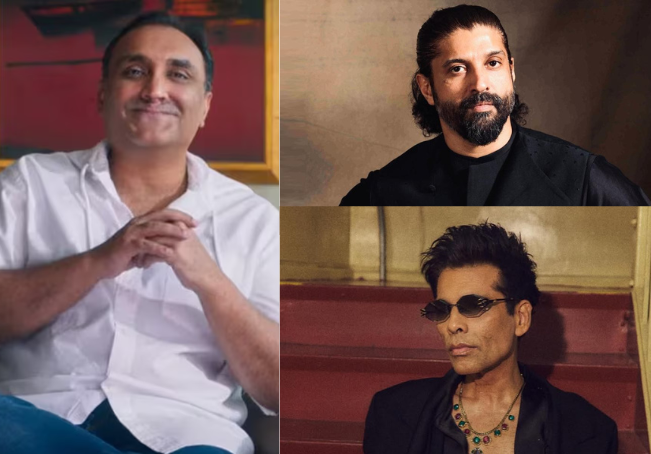
Step back and look at the track record: Aditya Chopra was just 23 when he directed the era-defining “Dilwale Dulhania Le Jayenge”. Farhan Akhtar was 25 when he rewired urban Indian friendships with “Dil Chahta Hai”, and Karan Johar was 26 when he mounted the behemoth that was “Kuch Kuch Hota Hai”. Before the above list triggers the nepo-baby conversation, it's important to note that the pattern holds across generations and genres. Mohit Suri was 24 when he helmed “Zeher”, Kunal Deshmukh was 25 for “Jannat”, Mudassar Aziz signed “Dulha Mil Gaya” at 26, and Rohit Shetty was 29 when he debuted with “Zameen”. Down South, Kartik Subbaraj was 29 when he revolutionized the indie-mainstream space with “Pizza”, while Rahul Sadasivan was 27 when he directed “Red Rain”.
To understand what it takes to bankroll, guide, and survive the explosive energy of a director in their 20s, Variety India spoke to a panel of powerhouse producers and filmmakers who have lived the reality on both sides of the camera.
The Producer's Perspective: "Younger is Hunger"
For Karan Johar, filmmaker and studio head of Dharma Productions, betting on fresh talent isn't just a strategy, it’s a foundational philosophy. "My belief in life has always been to launch first-time filmmakers," Johar states. Dharma has launched a significant number of directors still in their 20s. Ayan Mukerji, Punit Malhotra, Abhishek Varman, and Shakun Batra as prime examples of this youth-first approach.
According to Johar, a director's first feature represents a sacred, unrepeatable moment in their creative life. He describes a debut film as "an amalgamation of thoughts that they've grown up with, their passion for cinema, and every single idea that has been built in the inner recesses of their mind over the years."
This unique creative purity is precisely why the veteran producer actively seeks out rookies over seasoned veterans. "The core idea is that younger is hunger," Johar explains. "I've always believed there's a certain spark with a young filmmaker who's full of breakthrough, path-breaking, and brave ideas. In my repertoire as a filmmaker and studio head, I've actually very rarely worked with an established filmmaker."
Ultimately, Johar balances the financial risk of trusting an unproven director against a much rarer commodity: raw authenticity. "The list of younger and first-time filmmakers has been a large list only because I believe in the integrity of their passion," he says. "A lot of people actually claim they're passionate, but younger and first-time filmmakers have an integrity to their passion which is rare."
The Freedom of Not Caring
For Nikhil Advani, who witnessed Johar direct “Kuch Kuch Hota Hai” at 24 and later stepped into his own directorial journey, age is a complete non-factor. "Somebody took a chance on me when I was 20 years old," Advani, who started his career by assisting Saeed and Aziz Mirza in directing “Naya Nukkad” in 1994, notes, dismissing the idea that convincing established stars to trust a rookie is an uphill battle. "Actors, I feel, are excited when they meet younger people who are not burdened by the image or the so-called reputation that the actor carries. They are irreverent and they say, 'Listen, who cares? This is what I want to do.'"
Advani argues that this irreverence is exactly what gives young cinema its edge. "At that age, there is a certain level of arrogance, which is that the filmmaker should not care about the audience at all. Caring about the audience really takes you away from the art of the film, and therefore the heart of the film."
Kunal Deshmukh corroborates this feeling of pure, unadulterated passion, recalling the absolute lack of career anxiety when he was making “Jannat” at 25. "At 26, the only thing that defines you is your work. You are so obsessed with films," Deshmukh laughs. "I was just so happy to make a film. I couldn't care less—hit, flop, nothing. I didn't know market dynamics, I didn't know Bollywood politics. Now that you're older, all those doubts come in. Agents, managers, producers all tell you what to do. Back then, it was pure passion."
Deshmukh recalls a piece of rogue, guerilla-style filmmaking from his debut that he would never dare attempt today. "In Jannat, there are sections where I shot in a live match in South Africa. We bought tickets, spectators went in with the camera, and Emraan Hashmi is in the crowd with no makeup, nothing. We shot a whole day as if he’s a bookie calling people. Today, my first thought would be, 'Are you mad? What if we get caught? What are the legal ramifications?' At 26, I didn't care. And money cannot buy what we captured."
The Reality of the Risk
However, the journey isn't all romanticized rebellion. Making a film in your early 20s comes with immense pressure, external scepticism, and deep professional vulnerability.
Karan Butani, who shot his debut feature “Phamous” around the age of 22, had to actively mask his age on set. "Most people, I think 95% of my crew, didn't know my age because I looked older and had a beard. I made sure that I behaved older to carry that on," Butani shares. While his seasoned cast—including Kay Kay Menon, Jimmy Shergill, and Pankaj Tripathi—supported him blindly based on the script, the outside world wasn't as forgiving. "You'll always find five people on the outside looking at you like, 'Hey, I don't think this kid can do anything.' You just have to shut out that noise."
The real danger, Butani warns, is what happens if that debut film stumbles. "I went into depression [when the process played out roughly]," he admits candidly. "We, as an industry, judge people by what they make first. I always tell people going out to make their first film: don't do it if you're not sure, because once it releases, you're not going to have the opportunity to stand next to that screen and scream to the audience that this is not your f**k up. You have to own it. Good, bad, or ugly."
Mudassar Aziz echoes this existential dread of failing as a young outsider. Though he commanded respect on the sets of “Dulha Mil Gaya” through his background as a writer and the security of his veteran cast, the film's delayed release and ultimate performance cost him heavily. "My fear was that I was an outsider, and part of that nightmare did come true. For about five years post that, I was abandoned. I had zero to nothing kind of work. So I was right in thinking that if I fail with my first film, they won't have anything to do with me for a long time."
India Doesn't Lack Gen-Z Geniuses
Aziz points out that while Hollywood’s structure allows 20-year-olds to break out cleanly, comparing the two ecosystems requires nuanced context. "It’s not an apples-to-apples comparison. When you talk of a country with a very different education system than ours, a 20-year-old’s life there becomes very different. We are an economy where most people are struggling to make ends meet. A family’s primary concern is to graduate and take a job. It’s unfair to say, 'If Hollywood can throw up talent in their twenties, how can India not?'"
Yet, despite the economic hurdles, Aziz emphasizes that India’s cultural fabric is inherently built to breed prodigies. "Our 25-year-old geniuses have always been around. Storytelling is deeply entrenched in Indian culture. People on tea stalls in our country are great narrators—they are expressive, they almost show you the picture. Such a culture is always going to throw up young talent."
The Trap of Technology
As the tools of filmmaking become increasingly accessible to the next generation of twentysomethings—with 4K cameras, accessible VFX, and AI tools at their disposal—the veterans offer a vital piece of warning: do not let the tools drown out your voice.
"I would tell them that these are all tools," says Deshmukh. "Filmmaking for the big screen is the director's voice. If I give you an actor and a camera, that's all you need to create a film. Do not lose your voice."
Aziz takes it a step further, lamenting how technical wizardry is beginning to overshadow pure storytelling. "I have started to see around me that form is losing to matter," Aziz reflects. "Both from a young filmmaker’s perspective and sadly from an audience’s perspective, the technique, the razzmatazz, the slow-mo shot has started to supersede what is actually happening in the story. I hope the younger makers don't lose the vulnerability of story and innocence of characters. Any technique you think is state-of-the-art today will be old tomorrow. The story will never get old."
Ultimately, the global success of films like “Backroom” and “Obsession” serves as a glaring reminder of what truly matters at ground zero. "A kid with a kick-ass story and a clear conviction of how to tell it will win," concludes Butani. "In the process of great visuals and gimmicks and VFX, thanks to AI and everything else, don't forget that the audience is going to connect to a heart in a story. That's the only thing that can win."













Comments are moderated. They may be edited for clarity and reprinting in whole or in part in Variety publications.