



Sep 02, 2026 10:00pm IST
Saiee Manjrekar: ‘The Pressure on Actors to Change their Appearance Needs to Stop’ (EXCLUSIVE)
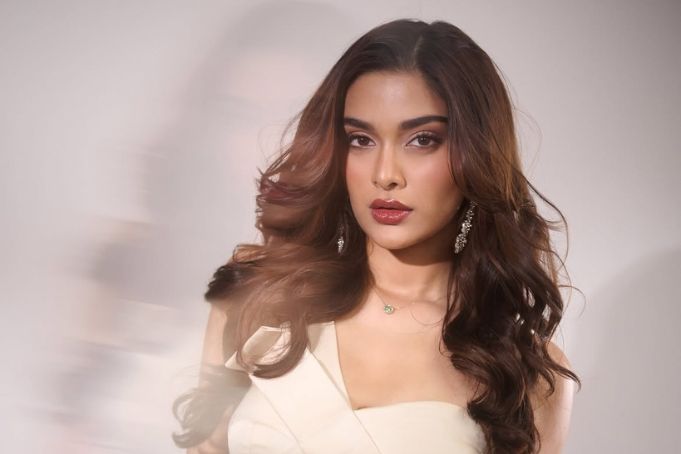
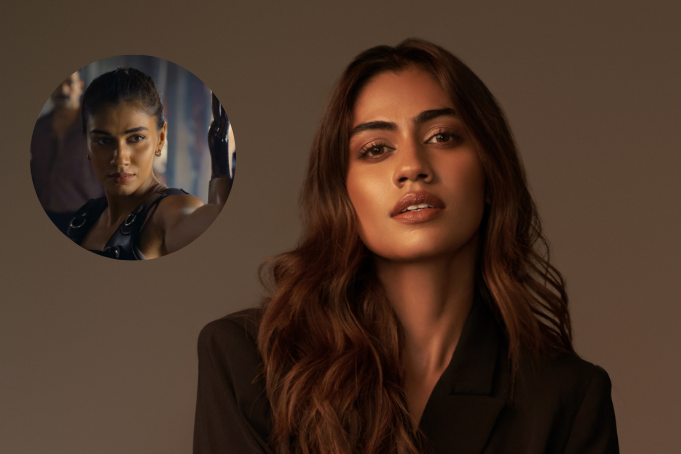
Saiee Manjrekar has grown up around cinema, but her journey as an actor has been distinctly her own. After making her debut with “Dabangg 3,” she has gone on to work across Hindi and South Indian industries, balancing commercial projects with roles that allow her to explore different languages and cultures. Her latest project, “The India House,” sees her play Sati, a strong-willed young woman determined to shape her own destiny. Manjrekar tells Variety India about working with Nikhil Siddhartha and Anupam Kher, the lessons she learnt from her parents, and the pressures actors face in the age of social media.
What was it like playing Sati in “The India House”?
Sati is a strong-headed girl who wants to do much with her life and eventually does that. I got the film through a casting company. Eventually, we got down to dates, and our first schedule was in Hampi. It was amazing sharing screen space with Nikhil Siddhartha. He’s such a kind person. I am still shooting, and waiting for my scenes with Anupam Kher. I have also worked with him in the past in “Kuch Khatta Ho Jaay” (2024). I know him as a giving actor. He would help me out a lot in scenes, go out of his way to give me advice and tell me how I was supposed to do my scenes.
Related Stories
Did producer Ram Charan come to the sets?
Unfortunately, he hadn't been to the set when I was shooting. I’m actually really excited to meet him once. I want to pick his brain about his journey and experiences.
You’ve worked in Hindi and Telugu projects. What is the biggest difference you’ve noticed in the way filmmaking is approached in these industries?
I don’t think there’s much difference beyond language and cultural integration. The Telugu industry feels more rooted in its own culture, from the language spoken on set to the food. Here, with people from different backgrounds, English often becomes the common language to make communication easier.
You began your career with “Dabangg 3” in Hindi. What impact does it have to be launched by a massive star like Salman Khan?
I’ll start with what impact “Dabangg 3” had on me. It was huge because I was only 16 and still in school. Even though my parents (Mahesh Manjrekar and Medha Manjrekar) are part of the industry, they had kept me away from it because I was a studious child. Working with Salman Khan was a treat because I had a good level of comfort with him.
You grew up watching your father navigate the film industry, long before you decided to become an actor. How did observing his journey shape your understanding?
I have visited my father on set many times. I got to explore so much of Maharashtra because of him. He was shooting a film in Bhor when I was around four years old. He has shot films in Konkan, Guhagar and more places. We used to make friends with the locals. My mother would make food for the whole crew on a ‘chulha.’ My father has given me much wisdom. He has been in the industry for the longest time. He always told me that it is a “Friday-to-Friday” industry, so I should not take success to my head. I was told not to ponder over failure, too. That things change overnight for everyone. I was advised to work hard, with honesty and integrity.
Coming to your Marathi ventures, is it a conscious choice to stay away from the industry for now?
I’ve never thought that language is a barrier. I want to work in movies where I can speak my mother tongue. But the kind of projects I’d be interested in, haven’t come to me yet. The second one does and I am going to jump at the opportunity.
What are some of your favorite female Marathi characters?
There are so many favorite Marathi films and female characters. “Natsamrat” is one of them. There’s no bias there, even though my father directed it and my mother acted in it. My mother’s character, Sarkar, is one of my favourite female characters because she played her so strongly and beautifully.
Popular on Variety
There’s talk about how people get acting roles because of follower counts. Have you ever faced any demands like that?
I don’t know about follower counts, but I’ve noticed that more visibility brings more work and queries. However, casting should ultimately depend on whether an actor fits the role and can perform. I also think the pressure on actors to change their appearance needs to stop. I was once advised to get injectables, but I said no.









Comments are moderated. They may be edited for clarity and reprinting in whole or in part in Variety publications.