



Nov 06, 2026 11:29am IST
‘Ramayana’: The Real Reason Ranbir Kapoor’s Father-In-Law Mahesh Bhatt Skipped the Film’s Premiere (EXCLUSIVE)
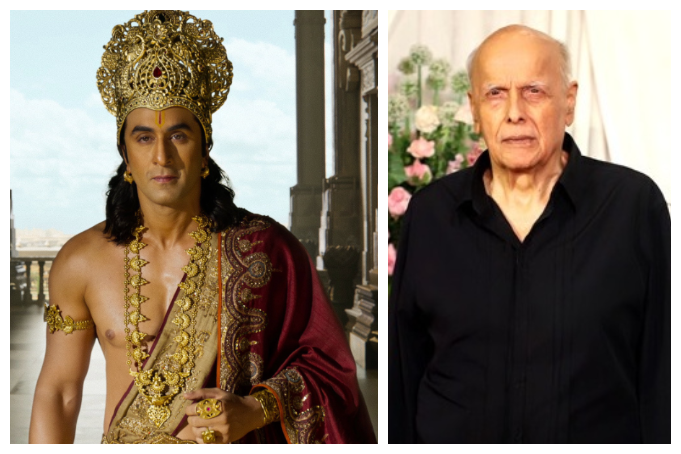
Mahesh Bhatt was missing from the premiere of what is arguably the biggest film of his son-in-law, Ranbir Kapoor’s career. In an exclusive interview with Variety India, he explains he wanted to experience the film in a cinema hall with strangers as he felt it would be ‘real’ and ‘organic’. The filmmaker also talks about his first memories of the “Ramayana” recited by his mom. He is all praise for the director Nitesh Tiwari and the cast and crew of the film. He admits unabashedly that he was in tears as the lights came on as the end credits rolled. Excerpts:
What are your earliest memories of the ‘Ramayana’?
Before I saw Rama on a screen, I knew him through my mother’s voice. She told my brother, my sisters and me about the “Ramayana.” I was a child. I did not understand all of it, but it entered my consciousness. At 12, I saw “Sampoorna Ramayana,” produced by Homi Wadia and directed by Babubhai Mistry, that wizard of bygone days. I wept when Sita pleaded with Mother Earth to take her back into her womb. She had been banished from Ayodhya after the Agni Pariksha. She had given birth to Luv and Kush and lived alone. I felt the cruelty of it then. I still do.
What about the new version of the ‘Ramayana’?
I have seen the new “Ramayana,” but stayed away from the premiere. I wanted to sit in a cinema hall among strangers and have that private, shared experience of watching a film. The mall I went to watch the film at looked nothing like the India I grew up in. Then the lights went down, and there was the “Ramayana” again, unfolding before us in 3-D.
Related Stories
Your initial thoughts?
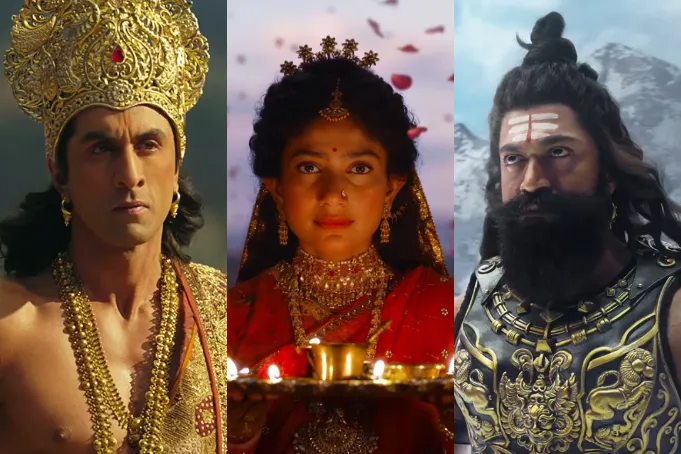
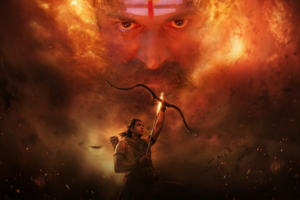
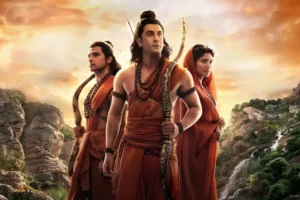
Yash mesmerized me as Ravana. Nitesh Tiwari reins in all that power; it could so easily have become too much. I was still under its spell when Ranbir entered, and the film did not immediately rise for me with his arrival. Then he walked towards the camera and folded his hands. I saw him touch something in himself that his other films had never asked him to. I felt he had touched the God in him. As the family gathered around Rama, the epic came close. Arun Govil was heartbreakingly total.
And Sai Pallavi’s Sita?
Sai Pallavi’s Sita brought me such relief. Our heroines are so often burdened with the need to dazzle, to seize the space the moment they enter it. Sai has the courage to remain unvarnished. She is simply there, and I believed her. I believed, too, the love between Ram and Sita. They could show their devotion without embarrassment.
How different did this ‘Ramayana’ feel when compared with the version you grew up with?
People speak of a cultural gene. I cannot define it, but I felt it there. My mother’s voice. Babubhai Mistry’s film. And now, this vast screen, with all the technology of our time. Something had traveled through them all and reached me again.
How immersive was the experience for you?
Just before the interval, Rama was sent into exile for 14 years. I felt my throat close. I tried hard not to cry. I had gone [to watch the film] with young filmmakers and writers and people in the hall knew they were sitting with Ranbir Kapoor’s father-in-law. When the lights came on, I tried to hide my tears. I couldn’t. Nor could I say much. Great experiences make you silent.
Was the second half rewarding for you?
In the second half, Bharat came to plead with Ram to return. When he left carrying Ram’s ‘khadaun’ [an ancient Indian footwear], saying he would rule with them, my heart broke again. I thought of the values we once held before ourselves, and how far we sometimes seem from them. Anupam Kher, my protégé, stayed with me as Jatayu. In his dying voice, I heard the exhaustion of the fight he had put up to save Sita. Only an actor like Anupam could leave that with you.
What about the finale?
Near the end, Rama resolves to bring Sita back. Ravana’s forces are immense. Rama and Lakshman are only two. I found myself thinking, How the hell will they do it? Then came the hint of Hanuman, and the hall applauded. I came out deeply moved. I want to raise a toast to Nitesh Tiwari, Namit Malhotra, the writers, the composers, the actors and everyone who made this film. The images, the music, the sheer labor of bringing it all to life — I felt proud of what Indian cinema had done. We should say thank you when people give us something. We don’t do it enough. I want to tell Nitesh something.
And what is that?
I want to tell him, “Nitesh, I first heard the ‘Ramayana’ from my mother. Today, I heard it through you. I am an older filmmaker, and I want you to know what that meant to me. I walked into that theatre carrying the boy who had wept for Sita. I came out with tears in my eyes again.” The “Ramayana” makes you see.



Comments are moderated. They may be edited for clarity and reprinting in whole or in part in Variety publications.