



Sep 17, 2026 6:52pm IST
‘Om Ka Hari’ Review: Heavy Melodrama And Pacing Issues Dilute This Small Town Family Saga
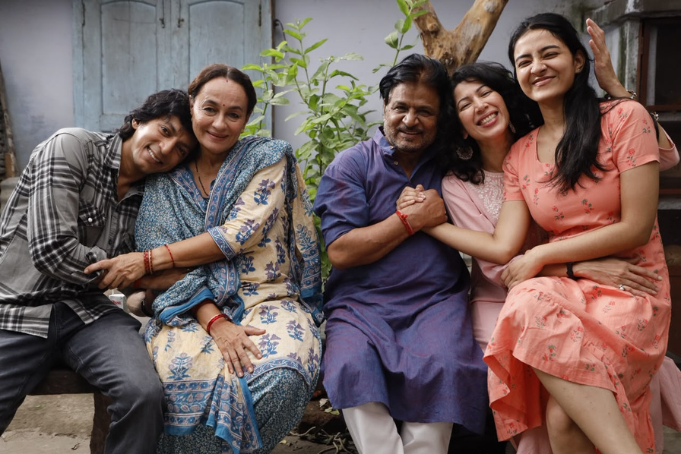
Harish Vyas brings us “Om Ka Hari”, an emotional family comedy drama centered on a lower-middle-class household in Bhopal. Hari Prasad Sharma, brought to life with trademark grit by Raghubir Yadav, is a stubborn retired astrologer whose world comes crashing down after a sudden medical scare. Gripped by the sudden conviction that his erratic heart has gifted him a strict six-day countdown, he drags his reluctant, estranged son Om (Anshuman Jha) onto the highway. What follows is a frantic, spontaneous pilgrimage from Bhopal to Varanasi, where a dying father hopes to find his final rest. But as the miles roll by, the dusty road forces both men to unpack far more than their luggage, surfacing years of bitter silences, unspoken generational friction and buried resentment that neither can run from anymore. While the core premise possesses genuine intent, the film suffers from a severe pacing issue that drastically divides the cinematic experience into two contrasting halves.

The first half struggles significantly to build engagement, largely because the fundamental heart of the story remains absent. Rather than establishing a warmth that binds the household together, the early chapters display characters existing in isolation. Hari Prasad comes across as perpetually angry and loud. Even in ordinary conversations, his constant shouting makes it difficult for viewers to connect with his underlying vulnerability or the anxiety driving his actions. Meanwhile, the surrounding family dynamics feel underutilized. The daughter-in-law has virtually no dialogue, while the rest of the women in the house, played by Soni Razdan, Shivani Tanksale and Samta Sudiksha, are given very little space to leave much of an impact. Using the entire first half to set up the journey to Kashi slows down the momentum, presenting excessive setup without effectively pushing the narrative forward.
Once the story shifts to Kashi in the second half, the tone abruptly shifts into an overabundance of emotion. Where the initial acts lacked heart, the latter half compensates with heavy melodrama and sentimental beats. Father and son delve into deep realizations regarding their personal failures, working tirelessly to tie up every loose emotional end. This sudden transition from cold emotional distance to intense sentimental drama feels jarring. The narrative tries to capture the subtle, heartwarming essence of successful small-town family sagas, yet it misses the mark because the balance feels uneven.
Amidst these narrative struggles, one element stands out as a genuine highlight. The movie features the song “Ae Meri Zindagi,” which marks legendary singer Asha Bhosle's final playback song before her passing. Her soulful rendition offers a rare moment of beauty that lingers long after the scene ends. Ultimately, "Om Ka Hari" holds a relatable premise about family reconciliation, but its disjointed structure and lack of emotional balance keep it from becoming a truly engaging watch.
















Comments are moderated. They may be edited for clarity and reprinting in whole or in part in Variety publications.