



Aug 19, 2026 12:00pm IST
Nagarjuna: ‘Collaborations Between Studios Are The Only Way Forward’
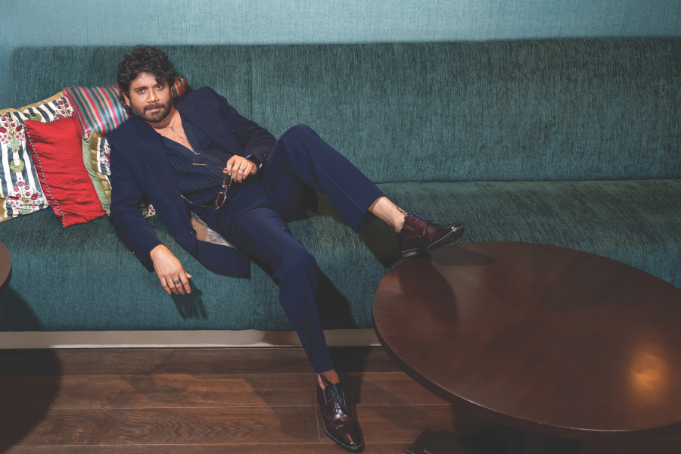
Nagarjuna Akkineni is gearing up for the release of his landmark 100th film later this year. The actor, who has completed four decades in the industry, talks about his body of work, guiding his two sons, Naga Chaitanya and Akhil Akkineni and why the concept of superstars no longer exists. He shares his future plans and the reasons behind South cinema’s recent success at the box-office...
How is your upcoming 100th film shaping up?
The working title is “King 100,” for now. It’s a name that has gained momentum. I will take a final call on the title after I see the film. It’s a rags-to-riches story centered around a family drama. We wanted to make a classic story and that’s why I picked this script. The character I play ages from 32 to my current age through the film. About 65% of the film is complete. I slowed down this last month as I am also producing my son Akhil’s film, “Lenin” and that was my immediate priority. But I plan to release “King 100” by year-end.
You began your career in 1986 with ‘Vikram’ 40 years ago. What has each decade taught you?
It has actually been five decades in the business. I’ve been actively involved in the filmmaking business since the age of 20 with Annapurna Studios. Those were simple times. There were no social media platforms. I was treated normally wherever I went. Most of the time we would travel by train as my father, Akkineni Nageswara Rao, raised us with discipline. Until the age of 15, my mode of transport was a bicycle. When I moved to the US for my engineering degree, I attended a few movie screenings. I saw the adulation my father received. The power of cinema had sown the seeds back then. I finished my education and came back to join the production house.
Related Stories
What do you remember about those early childhood years in Hyderabad?
During our summer holidays, my father would take us to his village to help us connect with our roots. Those days there was only partial electricity and dirt roads in the village. But those memories have played an integral part in my career as many of biggest hits were based on rural dramas.
To what do you attribute the success of South films in recent times?
I feel directors who make these pan-India films are successful because they stick to their roots. They are not trying to infuse another culture into their cinema. S.S. Rajamouli, who I’ve known for a long time; the way he speaks to you is rooted and it reflects in his work.
Where have Hindi films gone wrong in recent times?
Every industry has its ups and downs. Even in Telugu cinema, we’ve made some bad films in the 2000s. At the time, people were saying the industry was going to close down. Nobody was coming to theatres. It was a worrying phase. I think in Hindi cinema, the ’90s were quite bad because most of the filmmakers were very confused. It was commercial trash. It is happening again now. It is just a cycle.
Legacy filmmakers are facing challenging times. What is the solution?
What we have realized with Annapurna is that collaborations work best, be it with actors or directors or other production houses. We have six films on the floor. Everything is a collaboration. That is the new modern business model. Even “King 100” is a collaboration with another production house. And there is another film starring Chaitanya. That is also a collaboration with another big production house. “Lenin” was a collaboration with Sithara Entertainment. This is the future.
One lesson that you have learned from your father which you passed down to your boys?
My father taught me to respect one’s work. That everything will fall in place. And discipline. But I only guide my sons when they come to me for advice. I am quite open about it: if I don’t like something, I tell them, but they have the freedom to go ahead if it still works for them. If their film does not work out, I give them a pep talk by pointing out that this happens to the best of actors.
There’s a perception that working on one film a year and high remuneration is hurting business.
I feel top stars should do more films instead of one film in two to three years. It does not take more than 100 days to make a film if it is planned. I think the production team should do their homework extensively before they start the shoot. Most of these stars don’t even get 50% of what is depicted in the media. It is all exaggerated. These are all inflated figures across the industry.
What is your plan post ‘King100?’
I’m working on a sequel to “Bangarraju,” a rural film where I play a happy ghost. I first played this character in “Soggade Chinni Nayana.” “Bangarraju,” the sequel to this movie, had Chaitanya and me. In the third version, I will be working with both the boys. I love the character. It’s a slapstick comedy and we will plan to work on this film next year.
Cos silk-cotton zip-up cardigan paired with Classic Navy Elegance Suit by Twig Tie and Bugatti Derby formal shoes. Accessorized with Cross Motif Signet Ring by House of Shikha, Kairos Pendant Chain by Esme Crystals and sunglasses by Lunetterie Generale from Drishti Platinum.
Hairstylist: Koniki Rambabu
Makeup: Dinesh Mal
HMU: Rakesh Naidu
Talent Management: Anusha Puppala



Comments are moderated. They may be edited for clarity and reprinting in whole or in part in Variety publications.