



Nov 16, 2026 5:58pm IST
‘Ramayana: Part 2’ DoP Pankaj Kumar Promises ‘Fabulous Sequences’ With Sunny Deol’s Hanuman, Decodes Contrasting Looks of Ayodhya and Lanka (EXCLUSIVE)
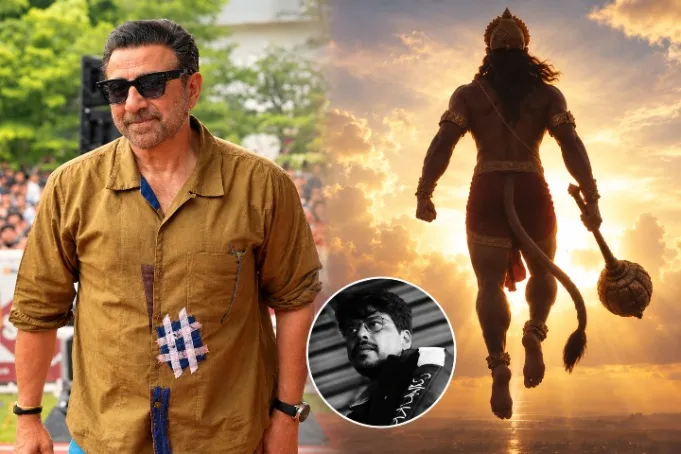
In the post-credits scene of “Ramayana: Part 1,” the makers teased audiences with a brief glimpse of Lord Hanuman without revealing Sunny Deol’s face. They also announced that “Ramayana: Part 2” would arrive on Diwali 2028.
While Deol’s prominent presence as Lord Hanuman is expected to be one of the biggest highlights of the sequel, DoP Pankaj Kumar reveals that several spectacular sequences featuring the character have already been shot.
“The expectations around Hanuman are immense. I know people want to see him on screen. We have already shot a lot of fabulous sequences involving Hanuman, and I can promise you that it's going to be great. It’s going to be a great experience to watch him on the big screen,” he says.
He adds that the brief glimpse in Part 1 was always part of the plan. “It was always going to be like that. Even in the script, it was written as a very small snippet of Hanuman. That’s how the script ends.”
Related Stories
Kumar also shares that his favorite sequence in “Ramayana: Part 1” is not a technical spectacle but an emotionally driven one: Lord Rama’s exile and farewell to Ayodhya. The cinematographer says the sequence struck an emotional chord with him and with audiences.
“It wasn’t technically very difficult to shoot, but the sequence where Rama goes into exile, meets the queen and the mothers, and then leaves Ayodhya, with people not letting him go, was very emotional. Even while shooting it, we could feel that the emotions were hitting the right notes. When your images manage to convey the right emotion, that’s a very rewarding feeling. I always believe that no matter how technically perfect your image is, if it doesn’t make your audience feel anything, then it doesn’t mean anything. It’s a failure. That sequence may not be technically very complex, but it hits the emotional mark very well for me,” says Kumar.
The cinematographer also decodes the distinct visual identities of Ayodhya and Lanka in the film. He explains that the two kingdoms were deliberately given contrasting looks, with the differences extending beyond cinematography to production design, costumes, colors and architecture.
“It was very clear from the very beginning that these two worlds were going to be different, and we knew in what way we wanted to make them different. The decision was not related to cinematography alone. It is also reflected in the costume design and set design. The entire way the spaces are designed, the colors of the pillars and the walls — everything is much brighter in Ayodhya. When you come to Lanka, especially after Ravana takes over following his defeat of Kubera and establishes his kingdom, almost all the colors turn black. Black and gold become the colors of Lanka,” explains the DoP.
“Even from a cinematography point of view, I would dim the lights quite a lot and play around with contrast, something I was avoiding in Ayodhya. I deliberately avoided that kind of high-contrast, deep-dark look for the Ayodhya sequences because that was what we were aiming for from the beginning,” he concludes.





Comments are moderated. They may be edited for clarity and reprinting in whole or in part in Variety publications.