



Sep 22, 2026 10:00am IST
‘Monster: The Lizzie Borden Story’ Review: This ode to female rage lacks punch
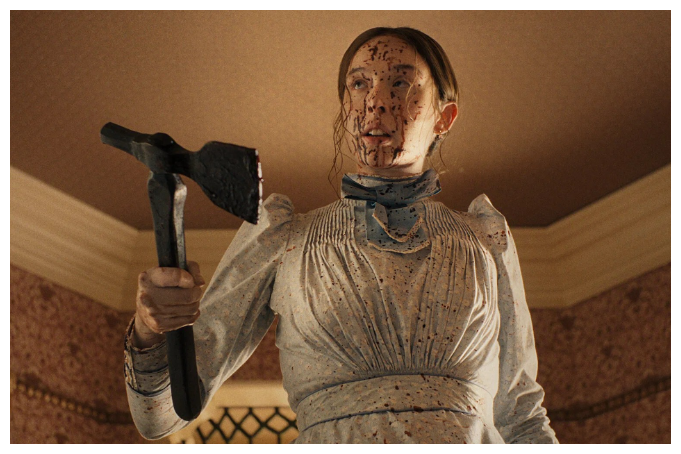
The “Monster” franchise is not just based on recreating the heinous crimes and the psychology of the murderers behind them, but it also prods and pokes at the facts to present a scenario that is a creation of imagination let loose — perhaps a little too loose. While taking creative liberties has been part of its journey, “The Lizzie Borden Story” does make you wonder how much is too much.
The fourth season is the first to focus on female killers after “The Jeffrey Dahmer Story” (2022), “The Lyle and Erik Menendez Story” (2024) and “The Ed Gein Story” (2025). It’s obvious that the makers, rather than focusing on the crime itself, look at their motives through the prism of repression, female rage, sex, power and revenge.
The show begins on August 4, 1892, with Lizzie (Elizabeth Borden, played by Ella Beatty) brutally murdering her father, Andrew Borden (Charlie Hunnam), and stepmother, Abby Borden (Rebecca Hall), with an axe in their Fall River, Massachusetts, home. The stepmother gets 40 whacks and the father one extra. The show then dials back four months to present its version of the events leading to the brutal double murders. It begins when Lizzie’s stepmother tries to coach her stepdaughter to land a proposal from a suitor, but fails. Lizzie is trapped in her repressive Victorian household under her domineering father and stepmother.
Her life changes when a new maid, Bridget “Maggie” Sullivan (Vicky Krieps), enters the household and becomes her confidante and romantic interest. The two obsess over Elizabeth Báthory (also played by Vicky Krieps), a 16th-century Hungarian countess who was accused of torturing and killing up to 600 women. As tensions escalate, Lizzie and Maggie plot against the former’s parents, culminating in the axe murders that put Lizzie at the center of a sensational trial.
Related Stories



The eight-episode series also connects Lizzie’s story to that of serial killer Aileen Wuornos (Sarah Paulson), under the broader category of female rage stories over the years. It highlights Aileen’s fascination with Lizzie, which even leads her to stay at Lizzie’s home decades after the murders. While there is no historical record of either Aileen’s interest in Lizzie’s story or her stay at the latter’s home, the makers use this as a device to connect the two women who were accused of heinous crimes decades apart.
The series also takes considerable creative liberty through its portrayal of Bertha Manchester (Linda Reiter), a neighbor of the Borden family. In the show, Manchester mistreats the Bordens’ maid, Bridget “Maggie” Sullivan (Vicky Krieps). Lizzie and Maggie kill Bertha before the murders of Andrew and Abby Borden.
Manchester was actually murdered in Fall River in May 1893, shortly before Lizzie’s trial began, according to William D. Spencer’s “The Other Fall River Tragedy: The Murder of Bertha Manchester.” Lizzie was already in jail awaiting trial when Manchester was killed, and there is no evidence linking her to the crime.
While “Monster” creators Ryan Murphy and Ian Brennan compile female rage over the decades, they say nothing that hasn’t been said before. The show spins some interesting theories and ideas that never quite hit the mark. What keeps the show interesting is its cast. Ella Beatty brings an unsettling stillness to Lizzie, making it possible to relate to her inner turmoil. Vicky Krieps gives Maggie a mysterious quality, but also gives a glimpse of her vulnerable side. Charlie Hunnam, who returns to the franchise after “Monster: The Ed Gein Story,” brings enough eccentricity to the Borden household. But it is Rebecca Hall as Mrs. Borden who proves to be the absolute highlight of the show. Sarah Paulson, too, makes her presence felt as Aileen Wuornos, even though the character exists more as a thematic bridge.
This season occasionally allows some light into its dark world. Lizzie’s beautiful garden, in particular, provides a striking visual contrast to the oppressive interiors of the Borden home. Apart from being a welcome respite from the bloodshed, they underline the strange duality of Lizzie’s world, which is outwardly charming, but deeply troubling beneath.
The show makes no bones about playing to the gallery. Many sequences have a theatrical quality, whether it is the Bordens retching around the dining table or the elaborate staging of Bertha’s murder, which work for it.
One of the show’s problems is the pacing. At eight episodes, the series feels stretched. A tighter edit could have made the narrative considerably more engaging. The show has all the right ingredients, including a notorious crime, an enigmatic protagonist, a fascinating historical backdrop, and a terrific ensemble, but falls short in execution.
The show is streaming on Netflix.

















Comments are moderated. They may be edited for clarity and reprinting in whole or in part in Variety publications.