



Nov 29, 2026 6:00pm IST
From Satyajit Ray To SRK, Hasan Minhaj’s Love Letter To South Asian cinema
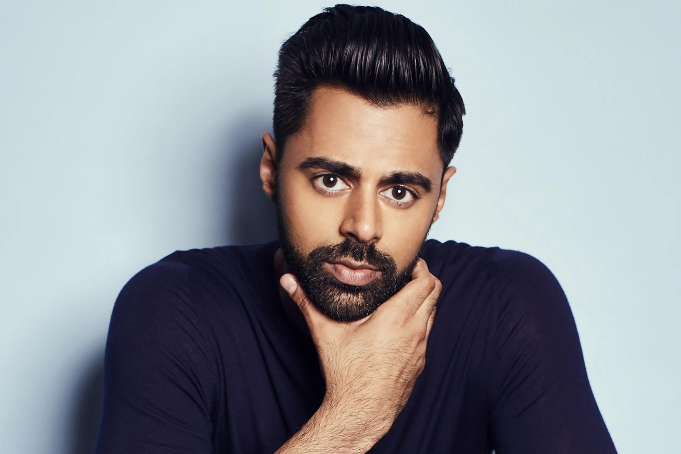
As South Asian stories, artists and performers increasingly find space in Hollywood, representation is moving beyond familiar narratives of immigrant struggle, racism and cultural displacement. A new generation of filmmakers and performers is pushing for something more expansive: stories centred on joy, ambition, glamour, romance and pop culture, with South Asian characters allowed to simply exist at the heart of the frame. Hasan Minhaj’s new film, “Best Of The Best,” taps into that shift through music, dance and a distinctly South Asian-American lens.
In conversation with Variety India, Minhaj talks about his earliest Bollywood memories, his admiration for Shah Rukh Khan and Satyajit Ray, working with A.R. Rahman, and why “izzat,” dignity and self-respect, was at the heart of the film. Excerpts...
What’s your core memory of listening to an Indian film song?
Wow! First-ever core memory. Growing up, I remember listening to cassette tapes in the car with my parents and having them sing along to iconic tunes, probably from the great Karan Johar catalogue. Those were some of the first big pop hits I remember. And that whole Shah Rukh Khan run from around 1993 to 1998 or 1999 was incredible.
People talk about Michael Jordan. Sure, Michael Jordan had a pretty great basketball run. But that Shah Rukh Khan-Karan Johar run was a defining generation, not only for the art that was being made, particularly in Bollywood cinema, but also for what us diaspora kids ended up listening to in the car. It was an era that has been a pivotal part of pop culture and shaping and entire era of movies.
Obviously, there were the classics, “Dilwale Dulhania Le Jayenge,” “Kabhi Khushi Kabhie Gham,” “Dil To Pagal Hai.” But for me, those songs came with my first crush. It was a tie between Juhi Chawla and Kajol.
Related Stories

When you were making the film, did you think consciously about the tropes and stereotypes you wanted to embrace, or avoid?
Absolutely. There were particular stereotypes and tropes where I felt the movie needed to meet the moment. There’s a moment in time happening right now, in 2026, where I think all of us diaspora kids living throughout the world who proudly represent our South Asian and Indian heritage have updated our software. There are certain ideas about us that are simply outdated.
One small but important detail in the movie was that we didn’t have the parents speaking with accents. We have one of the primary parents, played by the incredible Janina Gavankar, raising Anjali through a divorce, but the divorce isn’t the defining thing about her character. It’s not, “You have to get good grades,” or “I need you to do this.” It’s about empowerment. It’s about how you’re going to survive and make a living in a very pragmatic, practical sense.
There were just these old tropes and stereotypes that we wanted to be done with. Parents today are super modern and contemporary. They see the world as it is and, as urban professionals, they understand what the stakes are. We thought, what if the parents operated that way? And what if we made a college film that also honoured the modern canon of American college movies?
Do you think Rahman has recovered from your Justin Timberlake reference?
A.R. Rahman is a genius, but when I’m quoting Justin Timberlake’s “Justified” to him and he has no idea what I’m talking about, he understands it melodically. He is a true musical genius and alien, in the best possible sense. He understands Hindi cinema, Tamil cinema and obviously American cinema. He didn’t know the Justin Timberlake reference, but he could understand it from the melody. I clearly butchered Justin’s verses, so I want to apologise to Justin Timberlake. I also want to apologise to The Neptunes. That’s obviously one of your guys’ best tracks, and I butchered it. But that was a moment between me and A.R. Rahman. And let’s just say this: I’m probably not going to get a record deal based on the way I was singing.
With borders disappearing for actors, would you ever come to India to make a Hindi film?
I’m super passionate about the art coming from India and that part of the world. Even early in the casting process, one of the things I did was work with casting director Tess Joseph in India. I told her that I wanted to do everything I possibly could to showcase and highlight the amazing talent coming out of India. Many incredible Indian actors screen-tested and auditioned for the film. And when I spoke to them during the Zoom meetings before their auditions, there was one word I kept coming back to: “izzat.” There isn’t an immediate American translation for it, but I described it as dignity and self-respect. I told them, “This movie is about our izzat.” I have seen South Asian stories articulated in American cinema through pain, poverty, suffering and racism. All of those things are real. But another part of the human experience is joy, laughter and aspirational glamour.





Comments are moderated. They may be edited for clarity and reprinting in whole or in part in Variety publications.