



Nov 29, 2026 2:00pm IST
‘Bokshi’ Makers Bhargav Saikia and Harsh Vaibhav on How J.R.R. Tolkien and Sikkim Inspired Their Folk Horror and the Fictional Language Created for the Film (EXCLUSIVE)
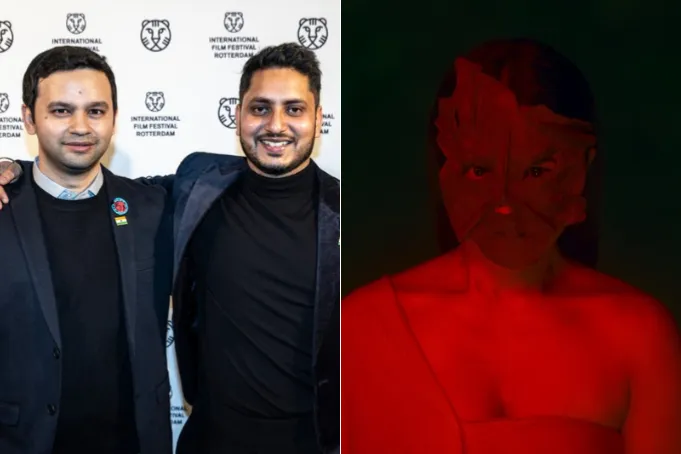
Horror has emerged as one of 2026’s most popular film genres, with young filmmakers like Curry Barker and Kane Parsons making their debuts in the space. From India, filmmaker Bhargav Saikia and writer Harsh Vaibhav have chosen “Bokshi,” a folk horror rooted in Sikkim’s shamanic culture, as their first feature. Meaning “witch” in Nepali, “Bokshi” goes beyond conventional forest-set horror. Inspired by Saikia’s childhood experiences, the film features an original creation myth and a fictional language, Boksirit, developed specifically for the film.
Starring Prasanna Bisht, Mansi Multani, Siddharth Shaw and Swaroopa Ghosh, with Shernaz Patel voicing the titular Bokshi, the film premiered at the 2025 International Film Festival of Rotterdam (IFFR). Following a multi-festival run, it is now set for a theatrical release.
In an exclusive conversation with Variety India, Saikia and Vaibhav discuss the film’s origins, creating Boksirit, their cinematic influences, the challenges of an independent theatrical release and their experience with the CBFC review committee that pushed their release from October 2026 to December 2026.
Excerpts:
What inspired you to tell the story of ‘Bokshi’?
Bhargav Saikia: During my school years at Assam Valley School, we went on expeditions to Arunachal Pradesh and Sikkim. On one trip in 2001, we camped near a cremation ground in Dirang, Arunachal Pradesh, where locals shared ghost stories that stayed with me. Years later, I pitched Harsh a horror film about high school students encountering something extraordinary during an expedition. Interestingly, I mistakenly told him the trip was in Sikkim, not Arunachal Pradesh. So “Bokshi” was born of a happy accident!
Harsh Vaibhav: When I was studying at Delhi University, some of my friends belonged to Sikkim’s Lepcha and Limbu tribes, and I resonated with Bhargav’s idea. We began researching local folklore and visited Dzongu Valley in North Sikkim, where we discovered a living shamanic tradition. We met Jhakris, or shamans, who work ordinary jobs by day but serve as custodians of the region’s spirituality and ecology by night.
Bhargav: Harsh also developed a creation myth for Bokshi’s origin, which was particularly exciting because Indian cinema rarely explores something like this.
Related Stories
You created a fictional language, Boksirit. Was author J.R.R. Tolkien an influence?
Bhargav: Absolutely, we are huge Tolkien fans! In fact, when we reached Dzongu, the landscape even felt like Middle-earth!
Harsh: Tolkien was primarily a linguist who started writing to build a world to use the languages he created. We had a similar reason. Also, our titular character is the first human on Earth, whose story was erased. Her language had to be the mother of all languages, something that eventually went extinct.
So how does one go about developing a fictional language?
Bhargav: We knew as early as 2019 that we needed a fictional language, which was only done before by S.S. Rajamouli in “Baahubali” with its invented language, Kiliki. So we Googled and found out about the Language Creation Society (LCS), which represents conlangers – creators of constructed languages.
Its then vice president, Jan Van Steenbergen, enthusiastically took up the project. He was a huge fan of Sanjay Dutt, Indian horror films (like the ones by Ramsay Brothers) and Indian culture!
Harsh: While we were having this chat with Jan via video conferencing, his pet parrot flew by, and he told us he had named her “Jwala”! Jan began developing Boksirit in 2020 and continues to work on it.
Bhargav: Jan was a godsend to us! The language currently has around 2,500 words, and he continues to expand its vocabulary and grammar.
‘Bokshi’ is a uniquely atmospheric horror film. What were your filmmaking influences?
Bhargav: Our research shaped much of the film’s atmosphere. We spent over a year in Sikkim meeting locals, scholars and shamans, including a young boy who had recently undergone shamanic initiation. Luca Guadagnino’s “Suspiria” was a strong visual reference. His camera movements and direction, particularly Tilda Swinton’s sharp portrayal of a witch, influenced Mansi Multani’s character, Shalini. I also wanted Anahita’s character to leave an emotional impact similar to Timothée Chalamet’s Elio in the last scene of “Call Me by Your Name,” which is why the camera lingers on her face for so long in the end.
Robert Eggers’s “The Witch”, Ari Aster’s “Midsommar” and “Hereditary” were other major influences. Indian filmmakers like Mani Ratnam, Sanjay Leela Bhansali, Vidhu Vinod Chopra and Ashutosh Gowariker also inspire me because of their distinctive directorial voices.
Popular on Variety
What made you pursue a theatrical release instead of going straight to streaming?
Bhargav: Independent films often struggle to secure even festival screenings. We were fortunate to be discovered by IFFR programmer Stefan Barsos, who oversees South Asian and genre programming, despite not having submitted the film. Its Rotterdam premiere gave us a significant launch, followed by screenings at other genre festivals.
I think for every independent filmmaker, theatrical release is always our first preference because we do make films for the big screen. However, indie films also face considerable economic and systemic challenges and often end up on streaming platforms. Ours would’ve too, but as makers, we do feel that horror gives “Bokshi” an X-factor because it can attract younger audiences with how atmospheric it is. Also, its unusual world-building is something best enjoyed as a community viewing experience in a dark theater.
The film’s release was postponed due to CBFC certification. Were major cuts required?
Bhargav: We cut only 24 seconds, and that too, spread across different portions of the film.
Harsh: We were referred to the revising committee two weeks before the film’s initially planned October 2026 release, but I have to say, the CBFC members were generous with our film. The changes were minor, and as people who have worked on this film for years, we had no objections.
Bhargav: In fact, they appreciated the film’s distinctive Northeast setting, and one member even complimented its unusual cinematic grammar.
Harsh: It’s just that it was our first experience with the CBFC, and the use of words like “hearing” for their review process just got us expecting some harsh feedback. But turns out, just as preconceived notions about witches can be misleading, the same can apply to the CBFC!
What do you wish for audiences to take away from ‘Bokshi’?
Bhargav: Come with an open mind. The film features plenty of strange and unsettling elements, culminating in a shocking, bloody climax.
Harsh: We also want audiences to leave the theater knowing it's okay to question dominant narratives and form their own opinions about right and wrong. Whether “Bokshi” is a heroine or a villain is for viewers to decide. Even we are divided!
Bhargav: We hope audiences support films like ours in theaters, encouraging more independent filmmakers to take such creative risks.
“Bokshi” releases theatrically on December 4, 2026.






Comments are moderated. They may be edited for clarity and reprinting in whole or in part in Variety publications.