



Jul 13, 2026 3:30pm IST
Danish Husain on Bringing Sahir Ludhianvi to the Stage: ‘The Purpose Is to Capture the Essence of His Personality’
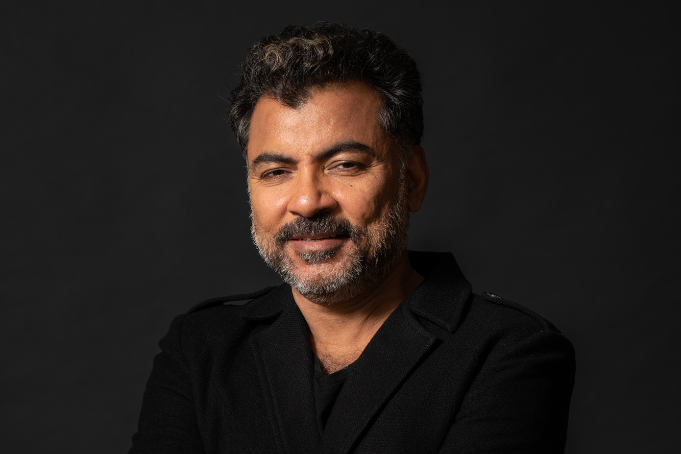
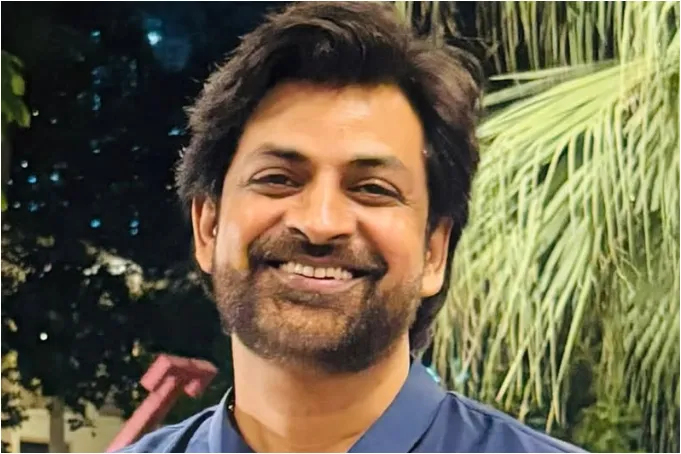
Watching Danish Husain perform on stage is a joy to behold. The actor-director, who is credited with reviving the art of Urdu storytelling with Dastangoi, has also directed and performed in several plays with his theater company, Hoshruba Repertory. One of their most popular plays, “Main Pal Do Pal Ka Shayar Hoon,” is based on the life of the celebrated Urdu poet and Hindi lyricist Sahir Ludhianvi. After performing to packed houses in Mumbai, Ahmedabad, Delhi, Kolkata, Hyderabad, Bengaluru, Pune, and even Singapore, they are gearing up for a performance at the third edition of the Malhar & the Sea festival, to be held in Goa from July 24 to 26.
In conversation with Variety India, Danish delves into the making of the play, ongoing projects of Dastangoi and Qissebaazi and his future acting projects:
Tell us how ‘Main Pal Do Pal Ka Shayar Hoon’ came to be?
In 2023, I completed 11 years of my theater company, Hoshruba Repertory, and I had a week at Prithvi Theatre. Along with the plays I have performed in the past, I also wanted to premiere a new one. I got a call from Amita Talwar, who is the founder of Art for Causes Hyderabad. She told me she had Mir Ali Husain’s script on Sahir Ludhianvi’s centenary year and wanted me to do a show narrating Sahir’s life. I liked the monologue, but given the kind of person Sahir was — sometimes enigmatic, sometimes controversial, sometimes rubbing people the wrong way, sometimes magnanimous — I felt that a single perspective, of him speaking about his life, would perhaps be limited. I wanted to have more voices from his peers and contemporaries. I had met Himanshu Bajpai, who had also prepared a Dastan (story) on Sahir. I decided to put the two scripts together and come up with something different. They graciously agreed and allowed me to edit their scripts. That is how “Main Pal Do Pal Ka Shayar Hoon” came to be.
Related Stories
How has the audience responded to the play?
I’ve never had this kind of response for any of my plays before. It was sold out two weeks before the premiere! And that has been the experience every time we do this play. That’s the genius of Sahir.
You play the protagonist. How did you go about playing the man?
There are many images and audio recordings of him, but it is surprising that we could not find any video recordings of Sahir. The one thing that helped was a conversation with Javed Akhtar, who has spent considerable time with him. He shared a couple of Sahir’s mannerisms with me, such as how he would talk with a wry smile and speak in a thick Punjabi accent. When he would get nervous or shy, he would comb his hair and always kept a small comb in his pocket for that purpose. He would refer to himself as Fakir. These insights were useful. I didn’t use the thick Punjabi accent because I wanted the play to reach more people, and of course, Sahir sahab spoke in impeccable Urdu. I had access to his audio recordings, but in the play, I have not tried to imitate his voice or him. That’s not the purpose. The purpose is to bring the essence of his personality to the audience.
Why did you choose to weave live music - Sahir’s songs - into the play?
From the beginning, I wanted to incorporate live songs. It pulls the audience in as well. The idea is not to recreate the sound, because we cannot have that range of an orchestra on stage, but to create the vibe and liveliness those songs brought into our lives. Almost every time, the audience starts singing along with us. There are songs from “Baazi,” “Hum Dono,” “Pyaasa” and “Taj Mahal,” among others.
Popular on Variety
What has been the response of the younger generation to the play?
Audience members have come to me and told me that their children recognized some of the songs. That only shows the longevity of Sahir’s creations – that even 60-70 years later, those born in 2005 or 2010 are responding to his songs. If it sparks their curiosity to dig up more about Sahir and find more things about him, I think our work is done.
You revived Urdu storytelling with Dastangoi and ten years ago, you developed Qissebaazi, which is storytelling in multiple languages. What do you enjoy about these two projects?
There is no greater joy for me than sitting face-to-face with the audiences and telling them a story. It is such a complete experience, where just with your voice and with your gestures, no backdrop or light changes or extra props, you can mesmerize the audience. It is a great kick as a performer. The whole idea of Qissebaazi was that if one can do this in Urdu, why can’t we have something similar in other languages as well? Ideally, I would like to perform these stories from any of the languages in our country, including the dialects. I would love to have a traveling troupe that visits cities and villages, incorporate local artists and perform these stories with everybody.
Are you working on any such project now?
Well, we recently created a new Dastan on the history of Urdu literature called “Dastan Urdu Hai Jiska Naam”. I also intend to incorporate more actors, prepare more stories and perform them at smaller venues.
What else is on the cards?
I am acting in the Netflix series “Operation Safed Sagar,” which is about the Indian Air Force’s role in the Kargil War.



Comments are moderated. They may be edited for clarity and reprinting in whole or in part in Variety publications.