



Apr 14, 2026 12:41pm IST
Band Of Boys to Euphoria: Indian Bands That Should Make a Big Comeback
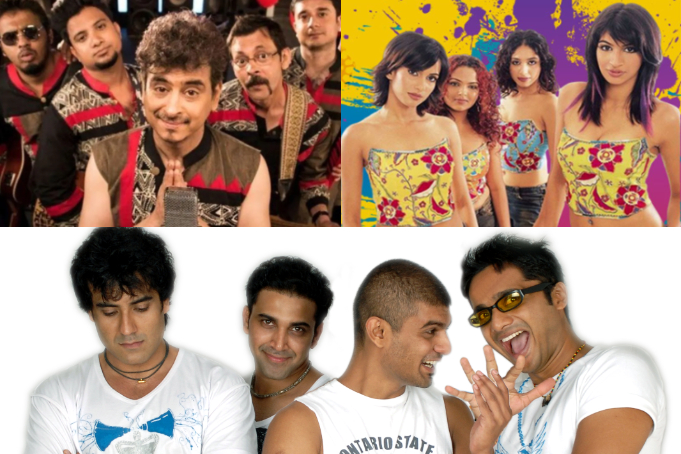
The return of the Backstreet Boys does more than trigger nostalgia. It reopens a question the Indian music industry has quietly avoided for years: what happened to our bands? There was a time when Indian pop wasn’t driven by solo singles or film soundtracks, but by groups that built identity, sound and fandom together. They were on television, at college festivals, on cassette racks, and, more importantly, in everyday recall.
In an era now dominated by algorithms and independent singles, the idea of bands feels both nostalgic and strangely fresh again.
Here are the Indian independent bands that deserve a second act.
Band of Boys
If there was a homegrown equivalent to the boy band wave, Band of Boys came closest. With members like Karan Oberoi and Sudhanshu Pandey, they understood the grammar of pop early, from stylized music videos to instantly catchy hooks. Their music lived in that early 2000s sweet spot, where songs like “Meri Neend” and “Gori” weren’t just hits, they were part of everyday pop culture consumption. A comeback now would not feel dated; it would feel like a format finally catching up with the current pop landscape. Because if global pop nostalgia is working, a homegrown version with a sharper identity could land even stronger.
Related Stories
Aasma
Aasma was an early experiment in manufacturing a band through reality television, long before that became standard practice. Built for visibility as much as music, they represented a shift in how pop acts were introduced to audiences. Their biggest recall often came from tracks that leaned into quirk and immediacy, the kind that stuck because they were everywhere at once. In today’s era of viral discovery, Aasma’s format feels less like a relic and more like a template waiting to be revisited.
Euphoria
Led by Palash Sen, Euphoria didn’t just make music; they built a movement. There was a time when “Maeri” wasn’t just a song; it was a feeling, and “Dhoom Pichak Dhoom” became shorthand for the band’s infectious energy. Their ability to blend rock with Hindi lyricism gave them both accessibility and depth. If there is one act that could return today without needing reinvention, it is Euphoria. The audience is already there. Because very few acts today manage to create that kind of emotional recall at scale.
VIVA
India’s first all-girl pop group, VIVA, featuring Anushka Manchanda among others, arrived with a clear purpose: to shift the gaze in a male-dominated pop space. Their music carried a bright, youthful energy, with songs that felt designed for a generation discovering pop through television and music channels. They brought individuality and visibility when the industry was not fully ready to sustain it. A VIVA comeback would not just be nostalgic, it would feel overdue. Because the space they once struggled to hold now actively needs strong female-led pop groups.
Silk Route
Before Mohit Chauhan became a mainstream playback voice, Silk Route had already defined a softer, more introspective indie sound. “Dooba” remains one of those rare songs that refuses to age, while the band’s overall catalog was more mood than momentary recall. Their music was never about scale; it was about atmosphere. In a landscape that often prioritizes immediacy, Silk Route’s return could offer something quieter but lasting.
Kailasa
With Kailash Kher at the helm, Kailasa managed something rare; they were both rooted and mainstream. Tracks like “Allah Ke Bande” became cultural staples, while “Teri Deewani” carried their signature emotional intensity into the mainstream. Their fusion of Sufi, folk and contemporary sounds created a space that felt distinctly Indian yet widely accessible. At a time when fusion is once again finding traction, Kailasa’s return would be more like a natural progression rather than just nostalgia. Because the current fusion wave could use a band that already understands how to balance authenticity with reach.
Aaryans
The Aaryans thrived on melody and simplicity. “Aankhon Mein Tera Hi Chehra” is the kind of track that still finds its way into playlists built on nostalgia and easy listening. Their music was all about romance and relatability, making them staples of early 2000s pop listening. While they may not have had the edge of some contemporaries, they understood audience behavior well. In today’s streaming-first ecosystem, where easy listening dominates, their sound could find a new audience. Because simplicity and melody are once again becoming streaming strengths.
Indus Creed
Before the indie boom of the 2000s, Indus Creed had already taken Indian rock global. Fronted by Uday Benegal, the band carried a polished, English-language rock identity that set them apart. Songs like “Pretty Child” and “Fireflies” captured that early ambition to go beyond local circuits and speak to a wider audience. They were among the first to show that Indian bands could exist outside a domestic framework. A comeback now would not just be about throwback; it would be a reminder of the foundation the current indie scene is built on. Because every evolving music scene needs to reconnect with its origin story.
The return of the Backstreet Boys proves that band culture never really disappears; it just waits for the right moment to resurface. India has already had that moment once. The question now is not whether these bands can come back. It is whether the industry is ready to make space for them again.








Comments are moderated. They may be edited for clarity and reprinting in whole or in part in Variety publications.