



Sep 18, 2026 4:01pm IST
Anant Nag: ‘Three years ago, seeing the scenario, I quit film acting’ (EXCLUSIVE)
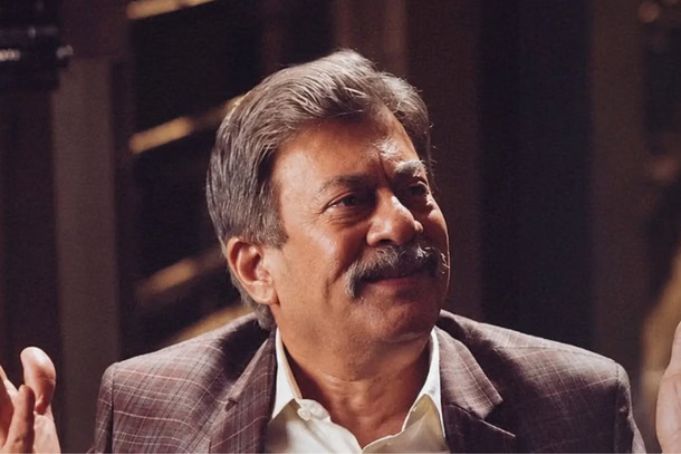
Anant Nag is a legendary Indian actor and politician, best known for his monumental contributions to Kannada cinema. With a career spanning over five decades, he is widely regarded as one of the finest and most versatile actors in Indian cinema. He is acclaimed for his natural acting style, effortlessly transitioning between intense drama, subtle romance, and impeccable comedy. In the 1970s and 1980s, he was a prominent figure in the Indian parallel cinema movement, starring in landmark Hindi films directed by Shyam Benegal, such as “Ankur,” “Nishant,” and “Manthan.” Alongside his brother, the late Shankar Nag, he contributed to some of the golden eras of Kannada television and film, including the iconic series “Malgudi Days.” He has won multiple Karnataka State Film Awards and was honored with the Padma Bhushan for his rich contributions to the arts. Anant Nag has been active in politics. He served as a Minister of State in the Karnataka government and was a member of the Karnataka Legislative Council. He has now been awarded the Dadasaheb Phalke Award for his contribution to Indian cinema. In an interview with Variety India, he talks about the honor, working in theatre with stalwarts and his roots.
Related Stories
Congratulations, richly deserved honor, even if it seems delayed?
Better late than never. It was good that it came from PM Modi’s tweet. For me, it is very special. Last year, he was present when I was given the Padma Bhushan. Now this year, this.
Your first really hard-hitting performance was Shyam Benegal’s “Ankur?”
Yeah, that was actually my first film. And I was playing an anti-hero. Before that, I was trained in theatre. Not in NSD or in a film institute or anywhere. But on the practical stage of Kannada company plays. I met Amol Palekar, who directed me on stage in Mohan Rakesh’s “Aadhe Adhure.” He introduced me to theatre doyen Satyadev Dubey, who took me to Shyam babu, and that’s how my first film “Ankur” happened. There was an experience of about five years on stage in about fifty plays.
All these years you’ve worked in Hindi, Kannada and several languages. Would you say it’s been a fulfilling career?
I think so. Because I came from a theatre background. I worked there for five years, and then I met personalities who trained me. Then I came into cinema. I joined the theatre at the age of 18. My mentors: Amol Palekar, Satyadev Dubey, Shyam Benegal…
Did you have a background of acting in your family?
No, but I used to imitate everyone around me. Actually, I grew up in rural Karnataka, you know, from Karwar to Kasaragod, that’s a stretch of about 400 kilometers, in an ashram and a math. I had my schooling there too. I studied up to 8th standard in Kannada medium. I was 12 when I was sent to Mumbai. Because of my father’s influence, I was accommodated in St. Xavier’s High School, Dhobi Talao.
You were introduced to English after the age of 8…
Yes, and I failed in my 10th standard because I couldn’t manage English. In school, at 12, I used to imitate people and lighten up gatherings with my mimicry. But when I was in Mumbai, I told myself, “This is your last chance.” Satyadev Dubey tracked me and corrected my diction, etc. He asked me how I spoke such good Hindi.
You actually speak very good Hindi.
That’s because of my Sanskrit. I quote from Shankaracharya’s shlokas, you know. That helped me along. Also Satyadev Dubey, and later Shyam Benegal, who spoke Hyderabadi Hindi. But as an actor, I was already trained. So, I actually disliked that role in “Ankur.”
Why?
Because it was an anti-hero! In all six films of Shyam Benegal in which I worked, all were negative roles. I did a Dr. Jekyll and Mr. Hyde film in Kannada, “Idhu Sadhya,” which was a major hit. Then there was “Mangalsutra,” with Rekha, which was a remake of a Kannada film, “Naa Ninna Bidalaare,” with Lakshmi, of “Julie” fame. That was a super duper jubilee. Rekha asked me to introduce her to Shyam Benegal. Ultimately, I landed the role in Shyam Benegal’s “Kalyug” with her. I told Shyam, “You have made a villain out of me.” All six films, negative roles. Amol Palekar, then Satyadev Dubey, and then Shyam Benegal were very helpful to me. They supervised my Hindi film career, in a way. Some years ago, Amol came down and did a film, “Anahat.” He told me he wanted to do it in Hindi and approached me. I said yes. Then, at the last minute, he switched to Marathi. And that film was made in Marathi.
And another milestone in your career was, of course, ‘Malgudi Days?’
Yes, my brother directed the TV show. He always wanted to direct films. He made some films, but they were more art films than commercial films and didn’t succeed at the box office. Then, he was offered Malgudi Days on Doordarshan and he took it up. I told him to add a condition that I had to act in it. I told him, “Let’s stop producing films. We are losing money. Whatever we gain as actors, we are losing it here.” Shankar emerged as a reputed director after “Malgudi Days.” For me, as an actor, it was for my younger brother, who was six years younger than me. He would always look up to me for everything. So I told him, no more film directions for you till you do this Doordarshan project. And it was such an achievement.
R. K. Narayan, the author of ‘Malgudi Days,’ said that he was happy with the serial. You rarely find authors being happy with what’s being made from their work, right?
Yeah, you see, this was Doordarshan. So one could shoot what was written there. Otherwise, there are commercial necessities. In “Malgudi Days,” I played a sweet seller; a Gandhian. R. K. Narayan’s novel, “Banker Margayya,” was made into a film. It bombed in Kannada. And then, there was “Guide,” which he wrote. R. K. Narayan said that it is not “Guide,” it is a misguide. Cinema is a different medium.
What do you think of what is happening in cinema today?
Actually, three years ago, seeing the scenario, I quit film acting. I do get offers to be a part of Hindi and Kannada films, of course. I say, “Send the script. If I like the script, then I will do it.” I have read over 100 scripts in the last three years. I didn’t like any. So I gave up acting itself.
Popular on Variety
So you have retired?
Yes, I have.
Would you agree to act if it enthuses you?
If something interesting comes, but it doesn’t, and I mean across languages. In Malayalam, I got a script, which I found very defective. From Hindi, I keep getting them regularly. From Telugu, Kannada, any number of scripts are lying in my house. None of them appeal to me.
So what do you think of what’s happening in Kannada cinema today? For example, ‘KGF?’
See what’s happening now in the Kannada industry. “KGF” part one, part two and part 3… It’s Toxic. What a disaster. Our cinema is taken over by senseless violence. And all kinds of sex. The women audience, which used to be 50-60% for Kannada films, is hardly 1% or 2% today. PM Modi is two years younger than me. He turned 78. And at this age, they expect me to work in mediocre films. This is the world of illusion. Cinema, drama. Complete illusion.







Comments are moderated. They may be edited for clarity and reprinting in whole or in part in Variety publications.