



Sep 19, 2026 12:15pm IST
Theja Rio’s Indigenous Naga Film ‘Angh’ Makes Its Mark at TIFF
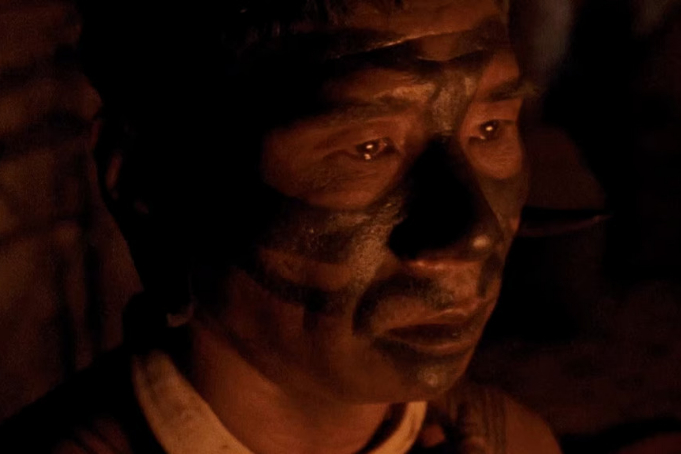
One of the remarkable films of the 51ST Toronto International Film Festival, TIFF, is Theja Rio’s “Angh,” a debut feature and Indigenous film in the Konyak language of Nagaland in Northeast India. It was selected in TIFF’s Platform Competition section, chosen from 9,000 film submissions. From this year, the Platform winner will be eligible for the Oscars for Best International Feature, so the possibilities are immense. The film’s Polish cinematographer Adam Pietkiewicz has already won the TIFF Variety Artisan Award for Best Cinematography. It is a remarkable film shot on 16mm film.
A period film set in the 1960s in a remote Nagaland village, “Angh” explores the fate of one of the last Naga tribal chiefs, who finds the ground slipping from under his feet with the arrival of an American missionary. But by framing it as a turbulent father-son relationship, Rio makes it deeply personal in this adaptation of his previous short “Angh,” which won a Special Jury award at the Clermont-Ferrand International Short Film Festival in 2021.
Rio, who did his Master’s in Directing Fiction at the National Film and Television School, London, and has made a number of shorts, including Remains (shot on 35mm) and Ade-On a Sunday (16 mm, International Film Festival Rotterdam). No Naga film has been released in a Nagaland theatre, and now Rio got an enthusiastic reception at its showing in theatres at TIFF.
Related Stories
The film explores the fragility of both the rich heritage of an indigenous culture and of authority, and how, if the youth who are its future custodians are not lovingly guided to cherish it, the future of that culture is at stake. The film opens with Anghba, the tribal chief, in traditional costume—naked but for a loincloth, headgear and tattoos, threatening with a bow and arrow, a young man who has converted to Christianity.
When Anghba’s wife passes away and his young non-speaking son Amao is tempted by the comforts of the new Church nearby (clothes, food, English education), his isolation and desperation result in an explosive climax. Rio keeps the tone observational, avoiding depicting the Church as a villain—it did bring education, hospitals and the English language —while also underlining how its presence and temptations can leach an ancient civilization. Rio has said that the film is a “gesture of remembrance, of pride and of presence.”
Rio’s direction is absolutely assured and discreet, with a gift for metaphor and powerful imagery. Rio and James Davis’ screenplay effortlessly combines modernity with ancient myths. The acting, mostly by local non-actors Anghlong Konyak and Sobino Rengma, is powerful and authentic, alongside senior British actor Douglas Henshall. Pietkiewicz’s cinematography on 16mm is haunting and poetic, evoking the textures of an ancient civilization.
The editing is crisp, and the music and sound design richly enhance the film. The producers are Nancy Nisa Beso (a Naga woman producer with diverse work, including “The Sky is Pink,” “Jugnuma The Fable,” “Angh” and “The Elysian Fields”), Theja Rio, Jai Vir Rodgers, and Bernardo Angeletti. Gaurav Dhingra is the Executive Producer and international sales are handled by Jungle Book Studio. The film certainly has a bright future ahead.
Read More About: Angh
More from Variety










Comments are moderated. They may be edited for clarity and reprinting in whole or in part in Variety publications.