



Sep 24, 2026 3:25pm IST
“The Paradise” Film Review: Nani Unleashes Brutal Chaos, But Srikanth Odela’s Story Runs Out Of Steam
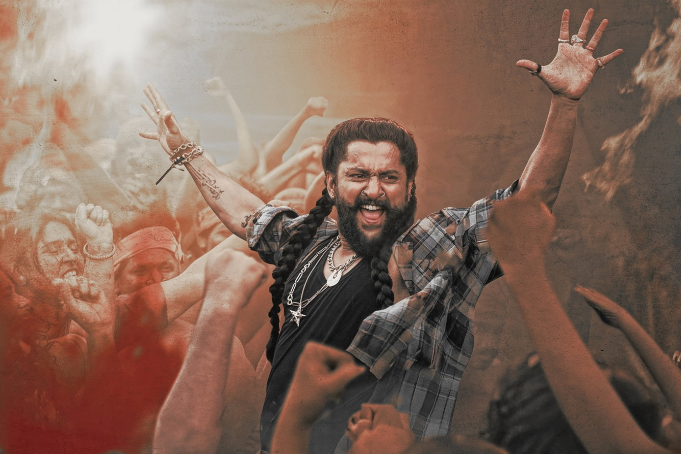
It's back to the woe-zone for Telugu audiences as yet another nomadic tribe fights for their right to be recognized, after Ram Charan-starrer “Peddi.” However, 'Natural Star' Nani’s “The Paradise” is nothing like the former. While the solution to the generational trauma code in “Peddi” finds its savior only slightly bending the status quo and seeking “pehchaan” via conformity and cricket, Nani’s Jadal in “The Paradise” leans into the more animalistic response. Forget ‘ask and you shall receive,’ snatch and it’s yours, is more his calling card.
In this sweeping saga directed by Srikanth Odela (his second with Nani after 2023’s “Dasara”), single mother Samakka (Sonali Kulkarni) serves as the film’s narrator while also raising the unruly Jadal (Nani), who survives a stillbirth and grows into adulthood after a 14-year prison term.
Related Stories
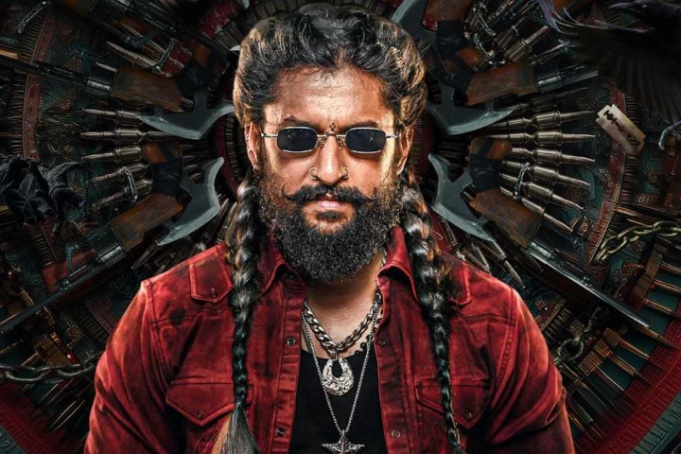
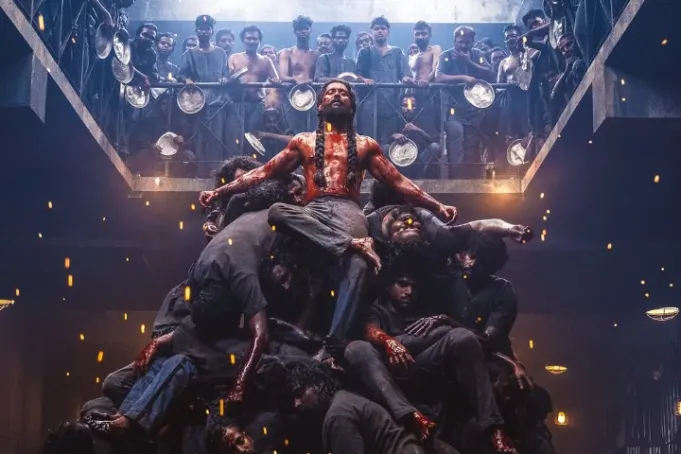
Samakka and Jadal, one is told, belong to Savari, a nomadic tribe nobody outside of the area knows the name of, that settles down in a ghetto/jagir owned by one Shikanja Malik (Mohan Babu) whose despotic dynasty rules with an iron fist. They’re regional kingmakers and hence, the authorities choose to let them be, well after Indian Independence. Thanks to the apathy, even basic rights and dignities are refused to them.
Jadal returns after his prison term, nursing a deep disdain for his mother as well as Shikanja and his son Vikram (played as an adult by Raghav Juyal). Disdain soon gives way to retribution as matters progressively worsen even as the Savaris rebel while also persevering in their pursuit for freedom. And Jadal rages against everything in his way.
The “Peddi” and “K.G.F.” parallels aside, there is very little to fault in the first half of “The Paradise.” It plays out as expected, packing far more than expected, including an extremely violent pre-interval climax that had everyone in this writer’s screen hooting, whistling and clapping.
Post-interval, though, is another story altogether. There’s a good amount of mourning, beheading, some more mourning and some more beheadings and severing of limbs, before a laying down of arms, a somewhat failed promise and more. All before the savaris finally settle and there’s peace.
It’s the world-building by Odela, along with some zany camerawork by his director of photography CH Sai along with some brilliant fight choreography that lets you crow on about this film. But it’s the dark shadow cast by uneven editing by Navin Nooli (surprisingly) and otherwise average acting by most of the support cast including Juyal that drags this film down by the collar and rubs its nose in the mud in the second half.
A film that plays out in six chapters, it is the agency (or the lack thereof) of a woman over her own body, that separates this film from the good fight (for self-identity) that unites this film and “Peddi.”
With three of the chapters devoted to Samakka’s characters and only one to Kayadu Lohar’s character. As Jadal’s love interest, she has precious little to do but as a character on its own is quite weakly etched. Juyal as the secondary villain just can’t land the menace even as Mohan Babu effortlessly nails it.
Nani brings it and how! As the self-styled gang leader, he makes every outrageous fight sequence look believable.
Even as he mouths a dialogue to Kayadu, which goes: “Duniya ke ghaav ko bhav diya toh sutta kya, saans bhi nahi kheech payegi,” you’re not worried about him and Lohar lighting up every chance they get.
It’s the relentless brutality (mostly unnecessary) in the second half that makes you wonder why they squandered what they collectively built with such wantonness.
A KCR lookalike bogs down proceedings as he urges the Savaaris to seek peace. Even Sathyaraj’s cameo starts out effectively, but goes nowhere. Worst off is Keerthy Suresh (Nani’s “Dasara” co-star) whose “Yeshanagula” doesn’t hit as hard in the dubbed Hindi version. Quite unexpectedly, Juyal disappoints as a villain who neither can ace menace and comedy (like he did in “Kill”).
Popular on Variety
However, it is Jadal’s trusted canine companion and Sonali Kulkarni that make the most impact. And that’s saying something.
There’s a story that wanted to be told here that got sacrificed at the altar of its own spectacle. If only this had been a far shorter film with some brutal trimming, this might have been a very different review.










Comments are moderated. They may be edited for clarity and reprinting in whole or in part in Variety publications.