


May 16, 2026 1:22pm IST
Saudi Arabia Raises Film Rebate to 60% as Kingdom Pushes Harder for Global Productions
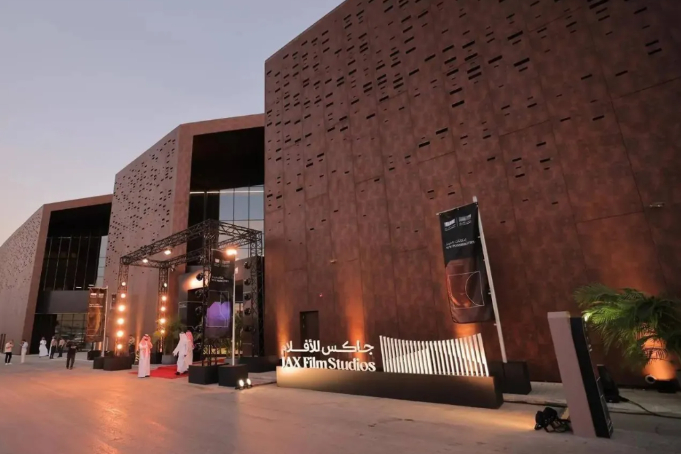
Saudi Arabia is dramatically increasing its push to become a global production destination. At the Cannes Film Festival, the Saudi Film Commission announced that it is raising its film and television production rebate from 40% to 60%, marking one of the most aggressive incentive programs currently available to international filmmakers.
The move comes less than a decade after the kingdom lifted its 35-year ban on cinemas in late 2017, signaling Saudi Arabia’s growing ambitions to position itself as a serious player in the global entertainment business.
In a statement released Friday, as per Variety, the Saudi Film Commission described the revised program as an “updated cash rebate program” designed to simplify and accelerate production workflows.
Related Stories

The commission said the revised structure introduces “practical enablers that support every stage of production through clear processes, streamlined pathways and competitive financial support.”
Officials also emphasized that the updated model includes “improved and accelerated disbursement processes,” aimed at helping productions manage cash flow more efficiently while reducing operational friction.
The rebate program was first introduced at Cannes in 2022 with a 40% incentive. While the financial offer immediately grabbed attention across the industry, producers often viewed the system as difficult to navigate during its early stages.
According to Rasha AlEmam, CEO of Saudi Arabia-based Yellow Camel Studios, that perception is now changing rapidly. “Three years ago, it was not really a user-friendly rebate,” AlEmam told Variety during Cannes. “But today the systems are in place; the processes, the guidelines, the government approvals. It’s all on paper.”
Saudi Film Commission CEO Abdullah bin Nasser Al Qahtani said the new announcement is not only about offering more money to productions but also about improving efficiency and accessibility.
“We want to be not just the most generous incentive, but also the most agile one,” Al Qahtani told Variety. In the commission’s official statement, Al Qahtani added, “Over the past period, we have worked on developing a number of regulatory and operational aspects related to the incentives program, most notably the launch of the financial audit and disbursement procedures guide, with the aim of improving implementation efficiency and providing filmmakers with greater clarity.”
He continued, “Through the program, we are focused on developing an integrated ecosystem that enables filmmakers to work with confidence, empowers the private sector and attracts quality investments that contribute to transferring expertise and knowledge to local talent.”
Saudi Arabia has increasingly become a destination for international productions looking for untouched landscapes and large-scale shooting locations. One of the latest Hollywood projects to film in the kingdom is “Chasing Red,” an adaptation of Isabell Ronin’s bestselling young adult (YA) romance novel.
Starring “Riverdale” actor Madelaine Petsch alongside Gavin Casalegno, the feature became the first Hollywood film to shoot entirely inside Saudi Arabia earlier this year. The production was filmed in AlUla, the northwestern Saudi region known for its sandstone canyons, desert terrain and oasis landscapes that have become central to the kingdom’s growing screen ambitions.
The expanded rebate now places Saudi Arabia in direct competition with several established global production hubs as the country continues investing heavily in entertainment, tourism and media infrastructure as part of its broader Vision 2030 strategy.











Comments are moderated. They may be edited for clarity and reprinting in whole or in part in Variety publications.