



Jun 12, 2026 10:37pm IST
‘Raakh’ Review: Ali Fazal and a Strong Ensemble Can’t Save This Starkly Unsure Show
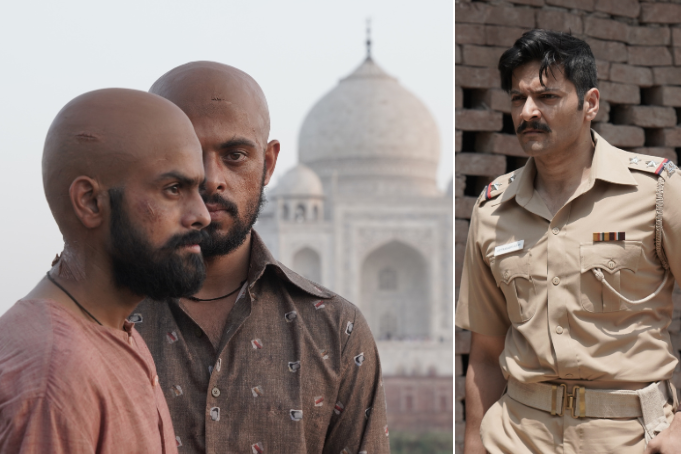
Pursuing the idea that the unthinkable is but a misstep or a series of bad intentions away, “Raakh” embarks on a laborious journey of an oft-retold tragedy that played out in real life in late-1970s Delhi. However, the ‘this could happen to you’ premise feels dated in a post-”Savdhaan India”/”Crime Patrol” world. We’re so acutely attuned to expecting the worst, that when it does not happen soon enough, we’re jolted back to our new reality.
When teenage siblings Sahil (Vivaan Sharma) and Suman Arora (Divya Sharma) disappear in broad daylight in Delhi, nobody really worries. At least, not immediately. Dilli, in those days, apparently, was safe enough for children to move around, unchaperoned. But when the children do not return hours later, a search party, led by the sub-inspector (SI) of the area, Jayaprakash Jatav (Ali Fazal) sets out to investigate. After a search botched by inclement weather, the lifeless bodies are eventually found in a state of decomposition.
Told in a juxtaposed narrative style – one story moves forward, the other dives into backstory a few days prior – the eight-episode “Raakh” moves reptile-like, as it draws you in with a familiar story about one family torn apart by a reckless act of violence while showing an estranged one that finds common ground.
The title slate of each episode is broken into mostly one-word chapters that forebode the events that play out. The first, “Gumshuda” is about the disappearance. The second, “Jaanwar” is about the animalistic tendencies of the main antagonists Babu (Akash Makhija) and Rajjo (Ramandeep Yadav) will go to, for their next hit. The next, “Dhoomketu” correlates to a smoke trail a comet leaves behind in its wake with Rajjo and Babu continuing their erratic killer run. Patterns emerge and come to light as the ‘demons’ of this tale and their motivations find a voice in Episode 4, “Rahu-Ketu”.
The fifth episode “Tilchatta” (cockroach in Hindi) is about Rajjo while the next, “Daitya” sees JP pursue Babu to Mumbai and wades straight into the depths of his depravity. “Muttonwale Bauji Ka Beta” sees JP follow the killers’ trail to Agra, but also make peace with his father Ghanshyam (Rakesh Bedi), a former constable and celebrated local chef who specialises in mutton delicacies. The final episode, titled “Hum Yahin Hai” takes you to the evening of the incident while also telling you if justice was served. And if anything has changed since the events of those times.
Related Stories
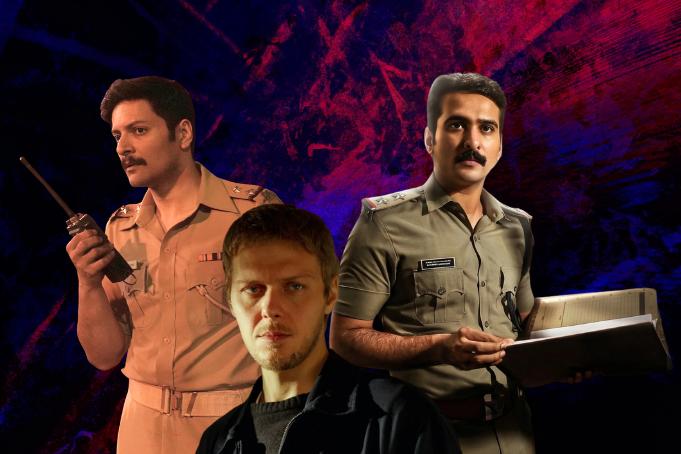
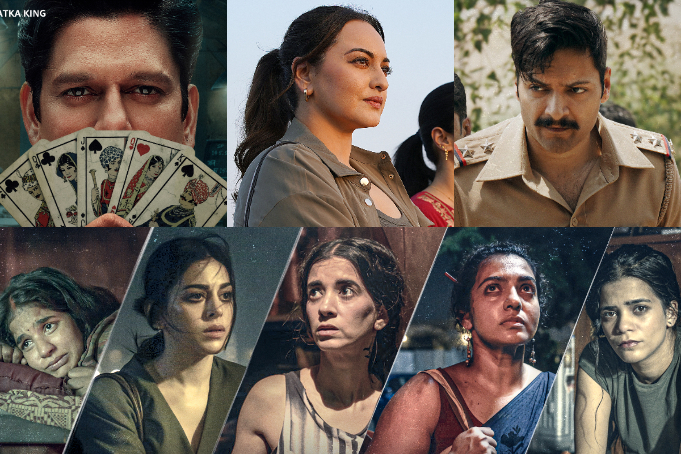
“Raakh” boasts of an ensemble cast as versatile as Ali Fazal, Sonali Bendre, Aamir Bashir, Rakesh Bedi and Dibyendu Bhattacharya, but it is relative newcomers Akash Makhija and Ramandeep Yadav as the series’ irredeemable antagonists, who hold your attention throughout.
Fazal’s JP is torn between a father’s cloying, overbearing love and his unwavering dedication to his duty and for the most part, he tries to keep the two separate. There’s no doubt about his intentions, but a slight complacency does try to make inroads. This is not the actor’s usual playground, he’s played law-breaker more times than he has played a lawmaker and that veneer sometimes slips.
As the grieving and surviving Aroras, Aamir Bashir and Sonali Bendre’s Ashok and Mona Arora are stuck at varying stages of grief: one has accepted the way things are while one remains in denial almost across all episodes. They end up becoming footnotes in their own story as writers Anusha Nandakumar and Sandeep Saket barely give the two any agency beyond the first few episodes. The standout scenes that devastate you are their respective emotional breakdowns (you’ll see it and instantly know!).
It is Jayprakash and his father Ghanshyam’s (Rakesh Bedi) relationship that becomes the secondary plot to the main one. Bedi is a one-note, warm, avuncular gent in the show who only gets to spout universal truths when director Prosit Roy and his team of writers see fit. A hard-wrought lesson in how diplomacy trumps hard work comes home to roost. Dibyendu’s SP Indranil Hajra is seen in a mentor’s role to JP, but he serves no further purpose that being a necessary conflict device. Quite oddly, there is a romantic subplot involving Nisar (Anshul Chauhan) and JP that barely moves the needle on where that story will eventually land. The two have little to no chemistry. Makes you wonder what director Roy was going for with this character.
Also, remember, this series is set at a time when forensic technology in the country had advanced sufficiently. That fact seems to be lost on the researchers of the show who show Fazal to be clueless about how the tech will help his case and then immediately warm up to the idea minutes after his first meeting with Baharul Islam’s Dr Biswajit Baruah.
If you know the true story that this series is based on, you know the long and arduous road to justice that followed after the criminals were apprehended. The show barely scratches the surface when it comes to this. Much is made of why Rajjo and Babu turn out the way they do. Babu’s proclivity for evil is inborn and only gets worse with time while Rajjo’s riled easily when provoked over his masculinity (or the lack thereof).
Homosexuality is awkwardly addressed across a couple of episodes and kind of makes you wonder why this show continuously paints everyone except the villains in emotional hues of black and white. And that is jarring.
Saumyananda Sahi’s camerawork really shines in the final episode, which plays out in real time unlike the episodes that come before. That’s not to say that Sahi’s work doesn’t catch your eye throughout. However, you do feel editor Manas Mittal could have done more. The action scenes hold you, though. And that’s a good thing.
By the end of it all, “Raakh,” despite the best of intentions, a sufficiently good cast and a technically sound, familiar story, feels like a deer in the headlights, confused about what it wants to do, wantonly flipping from trope to trials and from storytelling to overstuffing the season.
"Raakh" is streaming on Prime Video.







Comments are moderated. They may be edited for clarity and reprinting in whole or in part in Variety publications.