


Oct 16, 2026 10:55pm IST
‘Impossible Creatures’ Author Katherine Rundell on Fantasy’s Big Moment, Why Children’s Literature Is For All Ages and Concerns Over AI (EXCLUSIVE)
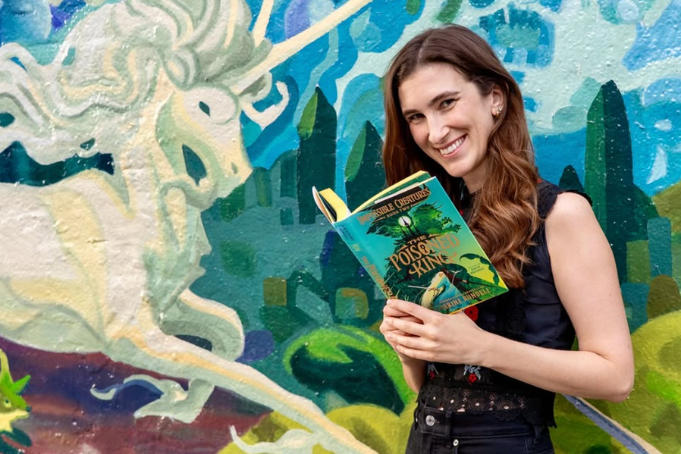
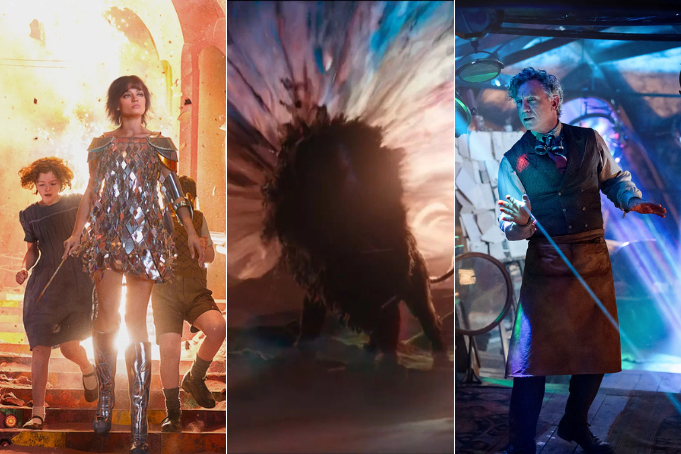
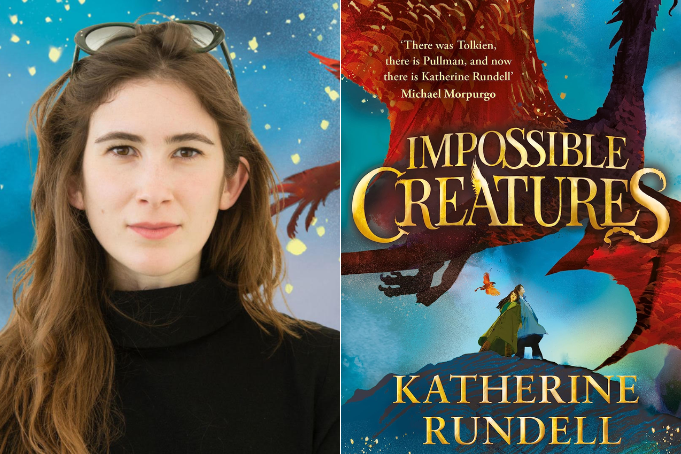
British author Katherine Rundell believes children’s literature, particularly fantasy, is for all ages. At a time when the YA genre is fuelling a growing appetite for escapism, that belief seems especially relevant. With the third book in her “Impossible Creatures” series, “The Neverfear,” now out and Disney adapting the five-book series, Rundell speaks exclusively to Variety India about the rise of fantasy, her concerns about AI and what a world without readers might look like. Excerpts:
Related Stories
Why is fantasy having a moment right now?
I think it’s partly because fantasy is a way to talk about big problems. Right now, a lot of people are unsure what the future will look like and are experiencing difficult times globally. In such moments, we have often seen fantasy become a way to think about questions around the hunger for power, dominance, freedom, justice, joy, delight, care, family and even good jokes. Because fantasy works outside any recognisable world, it allows us to think about questions that are not limited by the specific details of the moment. Instead, it can explore allegorical and metaphorical ideas or tackle big, sweeping themes. And that applies to both adult and children’s fiction.
Do you feel the world has been unfairly dismissive of children’s literature as an unserious genre? What have we lost out on because of that attitude?
I do. We have often thought of children’s literature as something given to children to tame and control them, telling them how to behave. But it has evolved from its 17th- and 18th-century beginnings into a liberatory art form in its own right. I’ve always felt that when people say, “Oh, I don’t read children’s books because I’m not a child anymore,” it’s a little bit like saying, “Oh, I don’t go to the woods anymore because I did that when I was eight and I no longer need to.”
Of course, you still need to! It’s like saying, “I no longer need to play.” Adulthood has different kinds of play, but play remains at the heart of how we explore imagination and our human possibilities. I think children’s literature, at its finest, can be a distillation of what we hold dear and of some of the questions surrounding our most vulnerable human hearts.
Has a fan encounter with your young readers ever surprised you with how beautifully they grasped the ecological and humane subtext of “Impossible Creatures”?
I’m very lucky that I get to travel around the world and meet young people. In “Impossible Creatures,” when the child discovers that she is the Immortal Soul and flies into the source of light, she says the word “Yes.” One of the things I have loved is when children ask me, “Why does Mal say yes at the end of the book?” And I ask, “Well, why do you think?” They say, “I think she’s saying yes to the world.”
It gives me such joy that they have understood the great “Yes”, the idea that, for humanity, there is always this question: Are we going to say yes to the duty we have to protect one another and the world itself? Yes to love and its burden, but also to its liberatory, glorious power. When I meet children who have understood this, it’s such a joy.
Also, occasionally, I have young readers ask me, “I know how fantasy works. I know it’s fictional. But just to check, is any of it real?” I love the idea that they might hope there’s a tiny bit that is real.
Popular on Variety
Let’s talk about the economics of being a writer in the current publishing landscape. What’s your advice to aspiring writers?
My first book deal was for something around £3,000. I was lucky to always have a second job because I was elected a fellow of All Souls College at the University of Oxford at 21. But it is very difficult to be a writer without a second income in the current ecosystem. At the beginning, unless you happen to be one of those lucky people who get an enormous deal straight away, it will require great discipline to write alongside a job that also demands your manual or intellectual labour. You need to be quite ruthless with your time to prioritise your own imagination and creativity.
While writing 'Impossible Creatures', you spent a lot of time researching mythical creatures in libraries. Have you been tempted to use AI as a tool?
I’ve never used AI in my fiction writing, research or academic work. I never want to. I am offering young people, and even adults, who read my books a promise that this is a human imagination. When I turn to books, what I’m looking for is a physical artefact that contains a living, beating human soul. AI cannot and must not replace that.
I am very uneasy about the swift insertion of AI into our lives because it can be an iron curtain that comes down between young people and their capacity for learning, clarity of thought and patience. It can also come between them and a kind of intellectual robustness in which you don’t immediately get an answer, because the answer is often not the valuable thing; the process of reaching it is.
We also often forget to ask who is profiting from our use of AI. What is the environmental cost? What are we losing by making it part of our daily lives? Do we allow ourselves to become habituated to a source of information that we know is controlled by people who have routinely proven that they’ll put profit ahead of young people’s intellectual and emotional growth or the safety of human civilisation? I am very wary of those people.
What scares you about a world where children are not reading? And how do we get them back into the habit?
Young people aim to mimic those around them, particularly their parents. You cannot expect them not to be constantly scrolling on their phones if you are doing the same. Hence, I think the first step has to be us, not just parents and teachers, but even those without young children of their own. We must champion the idea that literature, books, theatre, film and music have value, and consider what a future without them would look like in its arid emptiness and ruthlessness.
We are already a people capable of great cruelty. I don’t believe literature is the cure for that. But I do believe it is a way to talk to each other across boundaries of time and space, offering our most carefully wrought, beautiful, insightful, funniest, wisest and boldest selves. To make TikTok and ChatGPT the core of our understanding of culture would be to lose something that is at the heart of who we are.



Comments are moderated. They may be edited for clarity and reprinting in whole or in part in Variety publications.