



Sep 19, 2026 6:00pm IST
From BTS To Jackson Wang: Decoding The State of K-Pop in India
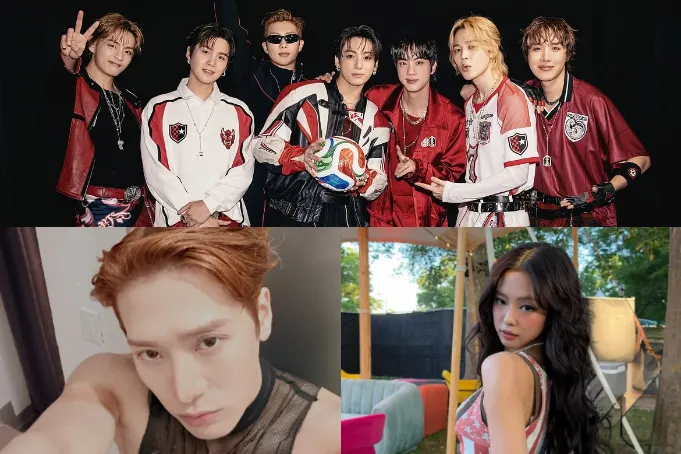
In June 2025, the bustling streets of Mumbai became the backdrop for a major cultural milestone. Jackson Wang, a member of the K-Pop group GOT7, spent time in Mumbai eating street food, playing cricket on the beach and hobnobbing with Bollywood celebrities like Hrithik Roshan. Wang, a self-confessed Bollywood fan, always showed his admiration for the artistry of Indian musicals. Not only Wang, the BTS mania in the country has gripped youngsters even from India’s smaller towns, so much so that local salons have replaced Zayn Malik with BTS’ maknae (youngest member), Jungkook.
India beckons
Kamal Shah, the promoter who worked closely with Jackson Wang for his 2025 visit, describes it as one of the most fulfilling experiences of his career. He says, “It gave me the chance to reintroduce him to authentic Indian life while making sure he also engaged deeply with the culture, not just the surface of it. The idea came together after conversations with Jackson himself. He was genuinely keen to experience India firsthand and to introduce his music directly to Indian audiences. I built his trip around striking that balance between Indian experiences and genuine cultural immersion. Working with him was effortless, he’s remarkably grounded, listens closely, and treats everyone with respect. That ease, combined with strong support from my local network, is what made the whole tour come together so smoothly.”
Over the last decade, K-Pop has transformed from a niche internet subculture into a powerhouse in the Indian entertainment ecosystem. India has actively become one of the most critical frontiers for the Hallyu wave. HYBE, the label ‘built’ by BTS has also arrived in the country with their first-ever audition for a global girl group.
From Small Cafes to Massive Festivals
The road to filling arenas was built step by step by independent promoters who wagered their own capital on an unproven market. Nikita Engheepi, founder of the K-Pop community Namaste Hallyu and a contributor to Pink Box Events recalls, “When we started in 2015, bringing K-Pop artists to India was still largely uncharted territory.” She reveals that despite a passionate fan base very few Korean agencies saw India as a viable touring destination. Engheepi highlights how building confidence about the Indian market was an uphill task. She says, “Our goal was never just to organize concerts. It was to build confidence in the Indian market among Korean agencies, artists, brands, and even local stakeholders. Over the years, we’ve had countless conversations, faced our share of setbacks, and celebrated many milestones, but every successful event has helped reinforce one message: India has always had the audience. Looking back, it’s incredibly fulfilling to see India now being part of conversations and knowing that we’ve played a role in that journey has been the most rewarding part.”
She also reminisces how the scale of initial concerts was intimate and funded entirely out of pocket. Their first event was attended by a few hundred people. “Since then, we’ve also been part of large-scale festivals that have welcomed audiences of around 13,000 attendees, reflecting the tremendous growth of the Indian K-pop market. Over the years, we’ve had the opportunity to work with artistes such as KARD, M.O.N.T, Kim Woojin, Hyolyn, Suho, and EVERGLOW, among others,” she beams with pride.
This trajectory of rapid acceleration is mirrored by Shital Sikarwar, the driving force behind Tani Events & Entertainment. Like Engheepi, she too aimed for a future that went beyond organizing concerts. Reflecting on the growth of K-Pop, she says, “I saw a gap between the fans’ enthusiasm and the opportunities available to them, and I believed they deserved the same experiences as fans in other countries. My vision was never just to organize concerts; it was to build an ecosystem for Korean entertainment in India. Every event became a step towards proving that India had the audience, infrastructure, and passion to be part of the global K-pop touring circuit.”
Related Stories

Theatrical screenings bridge the gap
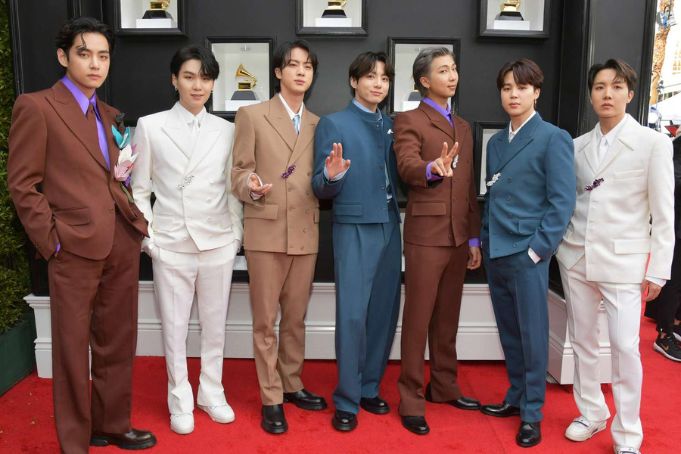
Because physical tours are highly complex logistical undertakings, the theatrical exhibition sector has stepped in to bridge the geographical gap, turning cinema halls into virtual stadiums. Aamer Bijli, Lead Specialist Innovation, Film Marketing and Digital Programming at PVR INOX Limited, shares, “The response to BTS concert films has been outstanding and reinforces our belief that audiences today are looking beyond traditional movie-going for premium, event-led experiences. In FY 26, our BTS screenings attracted approximately 55,000 admissions and generated more than ₹5.5 crore at the box office, demonstrating the depth of the fan community and the growing demand for immersive concert experiences. BTS World Tour Arirang in Busan delivered the strongest performance, grossing over ₹2.45 crore with approximately 23,000 admissions. It was followed by BTS World Tour Arirang in Goyang, which collected over ₹1.64 crore with approximately 15,000 admissions, while Arirang in Japan generated over ₹1.45 crore from around 14,000 admissions. What is particularly encouraging is not just the box office performance but the willingness of audiences to come together for premium, event cinema.” He further discloses that markets such as Delhi NCR, Mumbai, Bengaluru, Kolkata, Pune, Ahmedabad and Guwahati continue to lead in demand, driven by vibrant fan communities.
Mapping the Indian Fandom
On the “K-Pop in India” Podcast, co-hosts Shreya Khaladkar and Soham Sengupta track these shifting market dynamics and demographic realities weekly.
“K-Pop fandom extends beyond metro areas like Mumbai, Delhi, Bangalore, Hyderabad, and Guwahati to include non-metro cities with particular strength in Northeast regions,” Sengupta explains. The fandom primarily consists of digitally active individuals aged 15-25, with approximately 50-80% being women, though age ranges vary by artist. He further quips, “Younger groups like CORTIS have fans under 20 while older groups like BTS have slightly older followers.”
This age divide introduces a significant economic factor that brands and promoters must navigate: spending power. “Younger fans have limited purchasing power which affects the overall engagement and ability to attend events compared to older audiences who can afford tickets and Weverse subscriptions,” Khaladkar observes.
Roydon Bangera, chief business officer, SkillBox opines, “K-Pop as a genre is still new in India. While it has a big following it does not translate into ticket sales. The numbers are decent for a big artist but the traction is lesser for a B-category artist. The listening numbers of K-Pop songs is massive due to the consumption patterns of the Gen-Z audience it does not translate into sales. K-Pop artists are not cheap. And they come with huge travelling parties. Even a small K-Pop artist has a group of 20 people. You cannot price the ticket beyond a point as the audience is young and depends on their family for financial support. Because you cannot price tickets too high you need to depend on sponsorships. A number of brands do show interest as they want to cater to Gen-Z but then they are ones who use a lot of traditional media. They do not know how to evaluate the value of such events.”
Sikarwar sheds more light on this, saying, “We had to consistently present audience data, consumer insights, and a long-term vision to brands to demonstrate the potential of this market. At the same time, fans were understandably cautious. Since international K-Pop concerts in India were still uncommon, many questioned whether events would actually happen. Building trust required transparency, consistency, and delivering on every commitment we made. Every successful event strengthened our credibility, and over time we’ve earned the trust of both fans and corporate partners.”
Nikita Engheepi recalls how she encountered the exact skepticism from South Korean idol agencies when trying to pitch Indian audiences. “We have always worked directly with Korean entertainment companies, and so, in the early years, almost every conversation started with the same question: ‘Is there really a fanbase in India?’” she says. The early players faced many rejections as there was no concrete data or blueprint to present.
Infrastructure bottlenecks are a big hurdle
Promoters are calling for systemic reforms in how international events are executed to keep up with consumer demand. Shah notes that media legitimacy is no longer the issue, as the press tour received massive, organic coverage across major digital and print outlets. Instead, the problems are structural. He explains, “India is absolutely ready for a proper Jackson Wang tour. His own social media analytics show that Indian fans consistently rank among his top three audiences globally, and his music resonates strongly with India’s Gen Z and millennial listeners. His sound, style, and personal philosophy of living life on one’s own terms align closely with how this generation thinks and lives. A few structural things need to improve like easier access to suitable venues, a smoother visa process for touring artists and crews, and stronger protections for the promoters who put real money on the line. Too many international promoters have been let down after making upfront payments and deposits, and there needs to be a more reliable mechanism in place to protect the people investing in Indian concerts.”
Bangera elaborates, “The lack of infrastructure is an issue at grassroot level. Yes we pulled off a Coldplay concert but we know how tough it was. In other cities the administration mobilizes itself around the event. They know the kind of revenue that comes into the country.”
Operational predictability is an absolute necessity when dealing with Korean entertainment labels. Engheepi stresses how matching their expectations in a realistic manner is a matter of deep planning and preparation. She states, “And aspects such as permissions, venue readiness, production standards, and timelines are all important considerations. Setting achievable expectations and consistently delivering on them helps build long-term trust.”
Popular on Variety
The strategic pivot to iPop
As global entertainment conglomerates look at the volume of Indian streaming data, corporate strategies are beginning to pivot toward creating localized pop industries entirely inside India. Entertainment giant HYBE has been actively exploring this frontier. Reviewing recent corporate activities, Khaladkar points out that the execution needs greater clarity. She highlights, “HYBE is focusing on their own I-Pop brand rather than traditional K-Pop. The pop-up events helped gather data about K-Pop audiences and their purchasing power, but fans engaged primarily with K-Pop content rather than the brand itself. There’s also very little transparency in terms of what is expected at these events. The Airtel and Netflix streaming for ARIRANG live made many fans angry due to the lack of information about selection processes and event details.” This misalignment was highly visible at recent pop-ups. Khaladkar explains, “There was an expectation gap regarding merchandise sales, as many attendees expected BTS and TXT merchandise despite the event’s focus being on creating awareness for HYBE’s girl group auditions.”
According to Soham, HYBE is currently focusing on long-term infrastructure over immediate data capitalization. “HYBE has not yet provided data on K-Pop numbers in India and is currently focused on the IPOP India building rather than K-Pop-specific data,” he says.
Damien Woochang Lee, CEO, HYBE India tells Variety India, shares why they decided to audition for a global girl group from the country. He says, “I think it comes from two things. First of all, data-driven insights. We’ve been doing a lot of market research. As I’ve told you, India has always been an important and interesting market for us. So, we were always keen on exerting due diligence about the market. There is one specific trend amongst young women is the need for role models who can take their dreams across the world. This is HYBE’s answer to their needs. These are the two reasons we decided to go with a girl group.”
Indian K-Pop fans saw Guru Randhawa collaborating with LE SSERAFIM to promote their latest track, “Boompala.” Jackson Wang and Diljit Dosanjh came together for a single “BUCK” in 2025. “Dhurandhar” fans had a moment when they saw rappers Hanumankind and Reble (Daiaphi Lamare) with HYBE India CEO, Damien Woochang Lee.
Where does Hallyu go from here?
The defining theme for the next era of Hallyu in India is sustainability over raw speed. “India has already proven that it can host some of the world’s biggest artistes across genres, including K-Pop. The more relevant question is whether we are ready to sustain multiple large-scale K-Pop concerts every year,” Engheepi muses.
Recalling the oversaturation of events in 2019, she cautions, “Every event competes for the same audience, and ultimately, attendance matters. Growth is important, but it needs to happen at a pace that the market can genuinely support. Finding a commercial model that works for both agencies and local promoters will be key to making India a regular stop on global tours. I’m, however, optimistic that over the next two to three years, we’ll see India become a much more regular stop on K-Pop touring schedules through steady, sustainable growth.”
The success of recent international tours and sold-out festivals has proven that the initial wall of doubt has been permanently breached. For Sikarwar, the path forward requires an all-hands approach to elevate the entire live ecosystem. “However, for India to become a regular stop on global tours, we need continued support from brands, stronger corporate partnerships, greater investment in large-scale event infrastructure, and long-term confidence from international agencies. Consistency is equally important. The foundation has been laid over a decade of grass-roots labor.”
Bangera gives us an insight on what would be a good venue and price point for concerts. He says, “In terms of listening metrics Delhi is the highest followed by Chennai and Mumbai. But if we want to hold a concert then Bengaluru is the best option as it is the hub of live action entertainment. I would say ticket pricing would be around ₹999 and max till ₹2500.”
“For HYBE India, we always view goals as cultural impact. I want HYBE India to be, within, let’s say five to 10 years, a company that delivers the biggest cultural impact to South Asia. So that’s HYBE’s goal, and that is my goal as well,” Lee concludes.
Streaming giants and the big screen
According to data insights from Amazon Music India, the hierarchy of K-Pop listenership in the country has solidified around a few core titans. BTS remains the undisputed king of K-Pop in India. Their massive 2026 reunion gave the fandom another massive boost. Following closely is BLACKPINK, who decisively owns the girl group space. Members like Lisa and Jennie command massive individual followings in India, making the group a core staple for pop listeners who stream tracks like “How You Like That,” “DDU-DU DDU-DU,” “Kill This Love,” “Pink Venom,” “Shut Down,” “Lovesick Girls,” “BOOMBAYAH” and “As If It’s Your Last.” Simultaneously, SEVENTEEN has emerged as one of the fastest-growing K-Pop acts in the country, building a loyal fanbase among Indian Gen-Z listeners with tracks like “Super,” “HOT,” “Aju Nice,” “MAESTRO” and “Rock With You.”





Comments are moderated. They may be edited for clarity and reprinting in whole or in part in Variety publications.