



May 12, 2026 5:00pm IST
‘Dug Dug’ Director Ritwik Pareek on India’s Indie Film Crisis, Blind Faith and Why Audiences Want “Fast Food Content” (Exclusive)
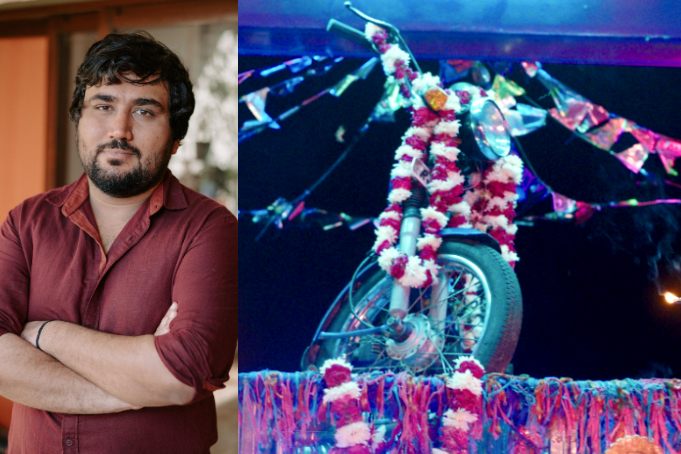
How COVID Delayed “Dug Dug” for Years
The film was initially close to securing a major distribution deal before the pandemic completely changed its trajectory. “Initially, the film was getting bought by a big Hollywood studio for distribution but then Omicron happened and theatres started shutting down. After that, the conversation completely changed. People started saying now it’s too late, the film already did the festival rounds, it’s old so there is no point buying it. I kept hoping that eventually something would happen,” Pareek says.
The uncertainty eventually forced the filmmaker to emotionally distance himself from the project. “I only watched the film again after two years for the final DCP check and it felt bizarre. There was so much resistance, that eventually I decided to work on other things and move on. Today I can finally chill. There is a huge pile of games I haven’t even played yet,” he says with a laugh.
Related Stories
The Floyd and Kubrick Inspiration Behind
One of the film’s standout moments is its hypnotic opening sequence featuring the protagonist riding through Rajasthan highways at night. Pareek says the scene was heavily inspired by Pink Floyd and Stanley Kubrick. “My main idea behind that opening sequence was the Pink Floyd song ‘Echoes.’ There is a version online where the song syncs with the Stargate sequence from ‘2001: A Space Odyssey’ and when I saw that, I thought this is what my cinematic language should be,” he reveals.
The filmmaker designed the sequence around rhythm, movement and color. Warm halogen lights dominate the frame while trucks race past the drunken protagonist as he continues riding in complete calm.
“He’s drunk out of his mind but he’s still in control. Trucks are coming, people are shouting at him, distractions are there but he just keeps focusing on his thing. In life also, people will come, hurdles will come, distractions will come, but you just have to focus on your thing,” Pareek adds.
“Audience Wants Fast Food Content”
Despite the film’s strong festival reception, Pareek remains frustrated with the state of independent cinema distribution in India. According to him, even when smaller films make it to streaming platforms, they are often buried without visibility.
“People are not showing up and even OTT platforms are not promoting these films properly. I never even saw one banner for some really good films on Netflix. Since I’m from the film industry, I know these films exist otherwise how will audiences even discover them?” he asks.
Pareek believes audience viewing habits have fundamentally shifted in recent years because of short-form digital consumption. “Audience wants fast-food kind of consumption now. Short-form content. It’s very messed up to be honest,” he says.
He also jokes that mainstream commercial filmmaking has become creatively repetitive. “Earlier in Bollywood we used to put masala. Now they’ve changed the masala into gutkha, zarda and tobacco because in North India even that is called masala,” he says laughing.
Making Satire Without Mocking Faith
“They are not crazy people. They honestly believe in what they are doing and that was very important for me while making the film. I never wanted to look at them from a superior point of view,” he says. The story grew from Pareek’s childhood experiences travelling across Rajasthan, where local shrines and unusual rituals were common sights. “The first shocking thing for me was seeing people offering alcohol at temples but later I realized Rajasthan has many bizarre shrines and rituals so eventually it stopped becoming shocking for me,” he states.
One particular temple near Dausa stayed with him for years. “There is a temple where they do exorcisms. People are tied with chains and I saw women going into trances there. Even I got scared watching it because it felt like something from another world,” says the director. Despite the politically sensitive themes of “Dug Dug,” the filmmaker says he had no censor trouble. “Thankfully the censor board did not give a single cut to the film,” he says.
Anurag Kashyap’s Support and the Dream of Making “Dune”
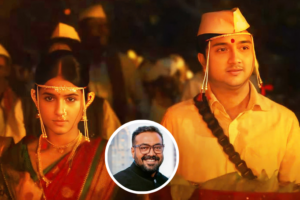
“It really helps when pioneers support the new generation. That’s how only the system can survive,” Pareek says. Even after years of making grounded indie cinema, the filmmaker says his long-term ambition lies elsewhere entirely. “I’m a sci-fi nerd. Eventually I want to make big spectacular films like ‘Dune.’ That’s my goal,” he says.
Ironically, his proudest moment already brought him close to that dream. When “Dug Dug” premiered at TIFF, the film screened in IMAX alongside Denis Villeneuve’s “Dune.”
“When I found out the film was premiering in IMAX alongside ‘Dune,’ I was blown away. I always wanted to make a film for IMAX and the first film itself premiered there. For me, that was the biggest compliment I could have gotten,” Pareek says.





Comments are moderated. They may be edited for clarity and reprinting in whole or in part in Variety publications.