



Jun 03, 2026 12:00pm IST
Amitabh Bachchan’s Filmmakers Miss Working With Him: ‘Every Shot With Him Is a Unique Experience’
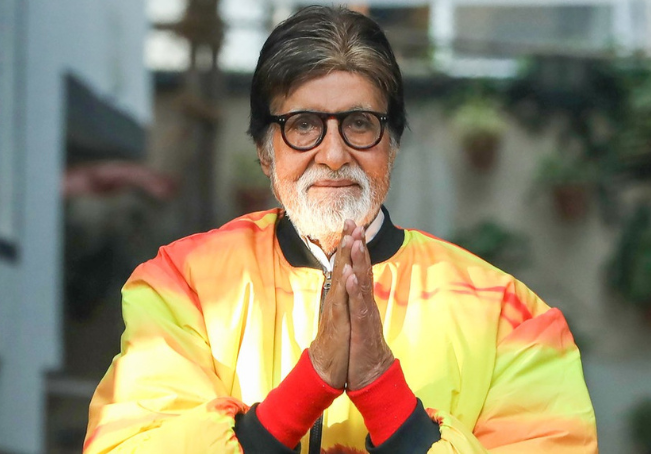
When does the audience get to see Amitabh Bachchan back on the big screen? The veteran actor’s last full-fledged appearance was in Sooraj Barjatya’s “Unchai” (2022). Ever since, there have been sporadic cameo appearances, including the much-lauded one in “Kalki 2898 AD.” Like the audience, directors who have worked with him are also keen to see him in theaters again.
Sujoy Ghosh, who directed Bachchan in “Aladin” (2009) and “Badla” (2019), says, “I’m getting serious withdrawal symptoms. But I have to get the right script for him. I want to direct a smart action film with him. Let’s see when that happens.”
Ramesh Sippy, who directed Mr Bachchan in the iconic “Sholay” (1975) and “Shakti” (1982), as well as “Shaan” (1980) and “Akayla” (1991), agrees that working with Bachchan is irresistible. “His knowledge of the grammar of film acting is precise, and every shot is a unique experience. Yes, we did Sholay and Shakti. And yes, we also did Shaan, which I am equally proud of. I haven’t been able to come up with a script that does him justice in recent times. It is never too late when it comes to Amitabh Bachchan. Interestingly, my son (Rohan Sippy) has worked with Abhishek Bachchan, while I’ve worked with the father. Maybe, my son and I can co-direct the senior and junior Bachchan.”
Related Stories
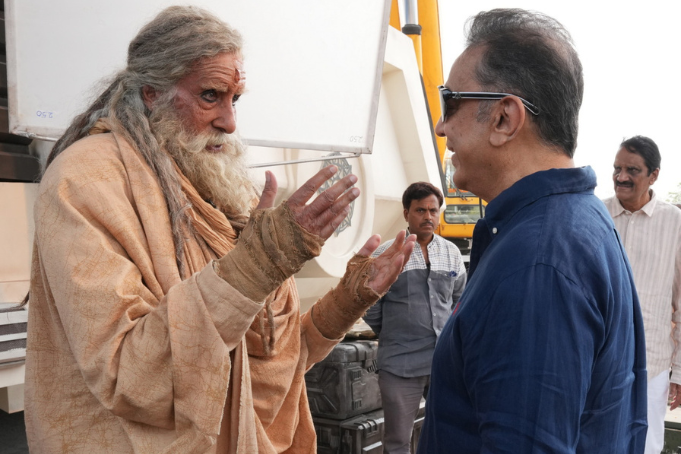
Shoojit Sircar, who directed Bachchan in one of his most acclaimed films, “Piku” (2015), is luckier than his colleagues. “I recently directed Bachchan saab again, this time in an ad. I can’t tell you the details, but I must say he is as fun, agile and adventurous at 83 as he was at 63 or 73, and he will be just as energetic at 93. I am working on an idea for a feature film. But let me tell you, we have an unreleased film ‘Johnny Walker’ somewhere waiting for his fans. Hopefully, one day it will release,” he says.
The one constant in R Balki’s cinema is Amitabh Bachchan. He has been a part of six films of R Balki’s films, including “Cheeni Kum” (2007), “Paa” (2009), “Shamitabh” (2015), and cameos in “Ki & Ka” (2016) and “Chup” (2022), and “English Vinglish” (2012) (which Balki produced for his wife, Gauri Shinde). Balki and Bachchan began bonding during the making of his directorial debut, “Cheeni Kum,” a love story between a 70-year-old chef and a 40-something woman in London. Balki says, “I don’t know why, but Mr. B has to be in all my films in some capacity or another. My friends joke that I first think of a role for him and then write the rest of the film. Maybe that’s true. Of course, I am getting withdrawal symptoms. Every day, I think of an idea for a movie with him, then I drop it. If I team up with him, it has to be for something the audience hasn’t seen before.”
Sanjay Leela Bhansali, who directed Bachchan in “Black” (2005), wants to return to the Bachchan territory with something that will match, if not be better than, their past collaboration. “After ‘Black,’ what can I do with him? Of course, we want to work together, but I can’t cast him as some actor’s father or uncle. That’s doing a disservice to Hindi cinema’s biggest. When it happens, he has to be the central character.”
Prakash Jha jumps at the idea of working with Bachchan again. “We did two films together, ‘Aarakshan’ (2011) and ‘Satyagraha’ (2013). In my opinion, both were very special films for both of us. The kind of understanding he has of the space in front of the camera is unmatchable. I would direct him again, anytime. There is no one like Amitabh Bachchan.”
Ram Gopal Varma is the only Bachchan director to have a project on hand with him. He says, “We were supposed to start ‘Sarkar 4’ in April, but after Dhurandhar, the script needs some reworking. We are making it early next year now. I’ve worked with a lot of superstars, but there is no one like Amitabh Bachchan.” The two have worked together on films like “Sarkar” (2005), “Sarkar Raj” (2008), “Nishabd” (2007), “Ram Gopal Varma Ki Aag” (2007) and “Sarkar 3” (2017).
Nagraj Manjule, who collaborated with Bachchan on “Jhund” (2022), says, “I wrote ‘Jhund’ for Bachchan saab for a good two years. I wrote it with only him in mind. I’ve been his fan since childhood. I grew up copying his clothes, speech and mannerisms from ‘Majboor’ (1974) and ‘Deewaar’ (1975). I’d go to school with my shirt tied like Bachchan saab in Deewaar and get severely reprimanded by my teachers. But the punishment had no effect on me. I’d still do it. Of course, I am a fan for life. I am dying to work with him again. Who isn’t?”





Comments are moderated. They may be edited for clarity and reprinting in whole or in part in Variety publications.