



Feb 26, 2026 2:18pm IST
‘50 Years From Now No One Will Remember The Crores’: Shujaat Saudagar And Vikesh Bhutani On ‘Boong’, BAFTA And The Value Of Cultural Legacy (EXCLUSIVE)

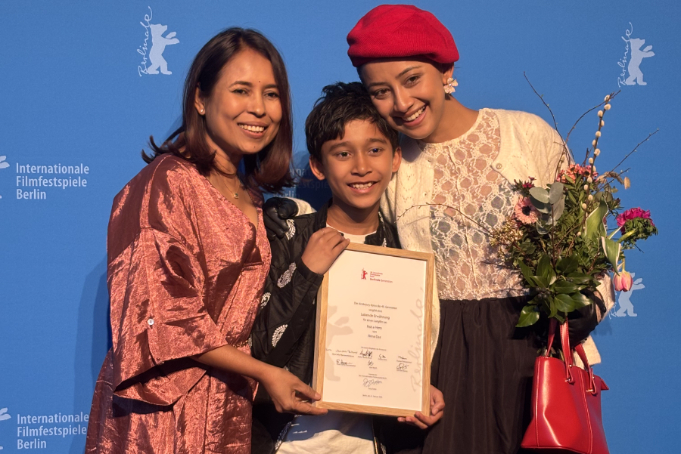
Director Lakshmipriya Devi and the team behind the Manipuri film “Boong” created history when it became the first Indian film to win at the BAFTAs. Backed by Farhan Akhtar, Ritesh Sidhwani, Shujaat Saudagar, Vikesh Bhutani and their team, the film won the Best Children’s and Family Film Award at the prestigious ceremony, bringing global recognition to Indian regional storytelling. Saudagar and Bhutani, in an exclusive chat with Variety India, reflected on the cultural significance of their historic victory and the economic ecosystem surrounding films like “Boong”.
Every once in a while, a film enters the conversation that shifts the metric entirely away from commerce and toward cultural memory. “Boong” is one such example. Its BAFTA recognition, following a strong festival run, reframes success as legacy rather than revenue.
Both Saudagar and Bhutani believe films like “Boong” cannot be evaluated by commercial yardsticks. Saudagar said, “I was recently telling someone, ‘Dhurandhar’ has done whatever, a 1000-crore, for example. And Inshallah, I hope ‘Dhurandhar: The Revenge’ does 2000 crore or whatever. In another year or two, something will do 3000 crore, and in five years, something will do 5000 crore. But 50 years from now, when people are Googling, I am hoping Google is still there, or whatever engine exists then, which was the first Indian film to win at BAFTA, it is this. So, it is etching history. You cannot put a monetary valuation on something like that.”
Related Stories
Validation Beyond the Balance Sheet
For Saudagar, the BAFTA recognition is not just prestige but affirmation of a story meant to resonate beyond scale. “It feels like validation for the effort, for the story and for what it is saying,” he explained. “It is a very important film despite being told through the lens of a young boy. The journey reflects, on a macro level, what the country and the world are going through, and the need to keep hope alive.”
While often labeled a children’s film, the makers never saw it that way. “For me, it never felt like we were making a children’s film,” Saudagar said. “Yes, children are central to it, but it speaks to something much larger.”
The BAFTA Effect
According to Bhutani, the impact is both emotional and strategic. “We are still trying to soak it in. It pinches every day, is it real?” he said. “This recognition gives validation, but also comfort to filmmakers and producers who believe in this kind of cinema, that the world is watching.”
He believes such wins could reshape global perceptions of Indian independent cinema. “With recognition at BAFTA, like with Shaunak Sen’s film (‘All That Breathes’) and Payal Kapadia’s film (‘All We Imagine As Light’), there is a growing curiosity internationally. Interest will translate into funding, partnerships and distribution.”
The Long Game
Saudagar is realistic about economics. “Yes, these films are not ringing the box office right now, of course not,” he admits. “But eventually there will be space for them to be seen on the big screen and hopefully make money too.”
He is careful not to dismiss commercial cinema. “Every film cannot be a ‘Dhurandhar,’” he says. “And they will not do those numbers.” Instead, he sees parallel growth. “I am watching Indian films gain international visibility. It will take time, but I feel very positive.”
Ultimately, Saudagar articulates a truth rarely stated in trade conversations, that the real value of cinema is not always immediate revenue. “You know, eventually it is about creating good stories, about telling good stories,” he said matter-of-factly.














Comments are moderated. They may be edited for clarity and reprinting in whole or in part in Variety publications.