



Nov 22, 2026 6:00pm IST
‘Priyanka Chopra Jonas Has An Incredibly Keen Eye’: Filmmaker Pranav Bhasin On The Actor Backing ‘We Were Here’ (EXCLUSIVE)

Indian filmmaker Pranav Bhasin’s short film “We Were Here” takes an absurd yet thought-provoking approach to anxieties surrounding artificial intelligence. The 11-minute comedy follows three retired men, Bagchi, Ganguly and Pimple, who identify as a dish antenna, a car’s reverse camera and a microwave, respectively, and launch a rebellion against technology. Questioning what it means to be human in an increasingly AI-driven world, the film blends humor with conversations about identity, acceptance and human connection. It has found international recognition, with Priyanka Chopra Jonas, Andrew Scott and V coming on board as executive producers. Bhasin discusses the idea behind the film, its larger message and Chopra Jonas’ involvement.
You started with the rather absurd idea of three retired men identifying as household appliances. Where did this premise come from?
It was an idea I found funny, but as I wrote it, I discovered there was more to these men and the point they were trying to make. I fell in love with that world and wanted to bring it to life. The film began with the image of a man standing on a rooftop, shouting “Robo, go back!” in a makeshift costume. I thought it was silly, but as the story developed, it raised questions about what makes us human and why we have to fight for our right to exist.
The older men see AI as a threat, while Pimple’s son sees it as an opportunity. Did you want to explore this generational divide?
Absolutely. AI is an overwhelming conversation right now and nobody really knows how things will unfold. But these men aren’t simply saying they want to go back in time and undo everything. They’re saying that if AI is going to be part of this world, they want to have a say in how it shapes their lives. Pimple’s son initially thinks their movement is silly, but eventually finds meaning in it. Sometimes we need to speak up about what matters. Ultimately, the film is meant to start conversations between people with polarising opinions and different perspectives.
Related Stories

Pimple’s discovery that his son identifies as gay, while he identifies as a microwave, adds another layer to the film. What were you trying to say about identity and acceptance?
Acceptance can look very different depending on where you are in India. In a small town, having a father proudly accept his son for being gay is a powerful expression of love. Pimple doesn’t fully understand his son’s identity, so he draws a parallel by identifying as a microwave. It’s silly, but he genuinely believes this is how he can show his son that he accepts him. Even if we don’t understand somebody, accepting them is a necessity. That’s what Pimple is trying to do.
The line about robots making perfect lines while human hands create imperfect ones because we’re breathing really stands out. Is human imperfection something technology can never replicate?
I think the larger point is that we need time to breathe. Take writing an email, for instance. A few years ago, it might have taken 10 minutes. Now, AI can help you do it in two. But if you’re working for a company, those saved eight minutes might simply mean you’re expected to write five emails instead of one. You’re still overwhelmed. Things are faster and more accessible, but the convenience is lost because we’re still overworked. The shaky line in the film and the reference to breathing are really about how human beings need time to breathe and live their lives fully.
Did you use AI in any capacity while making the film?
I didn’t use it for this project. I’ve experimented with it outside the film because I’m curious as a person and creator. I find it interesting as a tool. But five years from now, wherever things go, I want to collaborate with people to make movies. I don’t want to collaborate with a computer to make movies.
How did Priyanka Chopra Jonas come on board, and what has her support meant for the film?
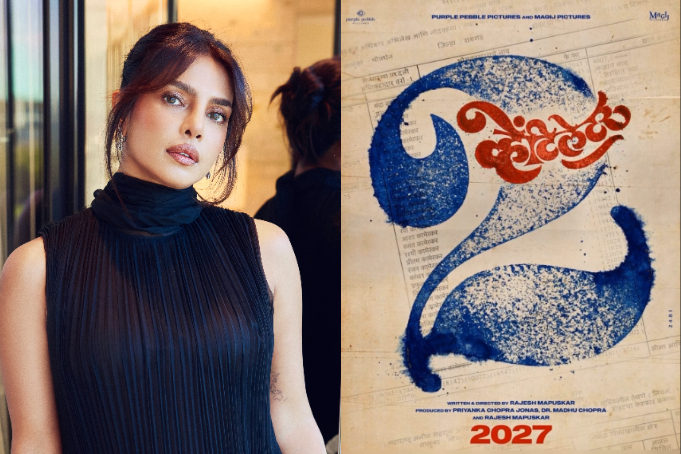
We were fortunate to have Priyanka Chopra Jonas come on board as an executive producer. She has an incredibly keen eye. While making ‘We Were Here,’ I was focused purely on creating a singular feeling, and I think she grasped that immediately. It was an easy connection. The film finds its own people. As a young filmmaker, I’m watching it unfold like everyone else. The film has a dazzling party of accomplished executive producers, and that’s both necessary and surreal.




Comments are moderated. They may be edited for clarity and reprinting in whole or in part in Variety publications.