



Aug 27, 2026 11:00am IST
news-old-title
Nayanthara on ‘Toxic,’ Stardom and Owning Her Narrative: ‘I Don’t Want to Be Present Just to Look Good’


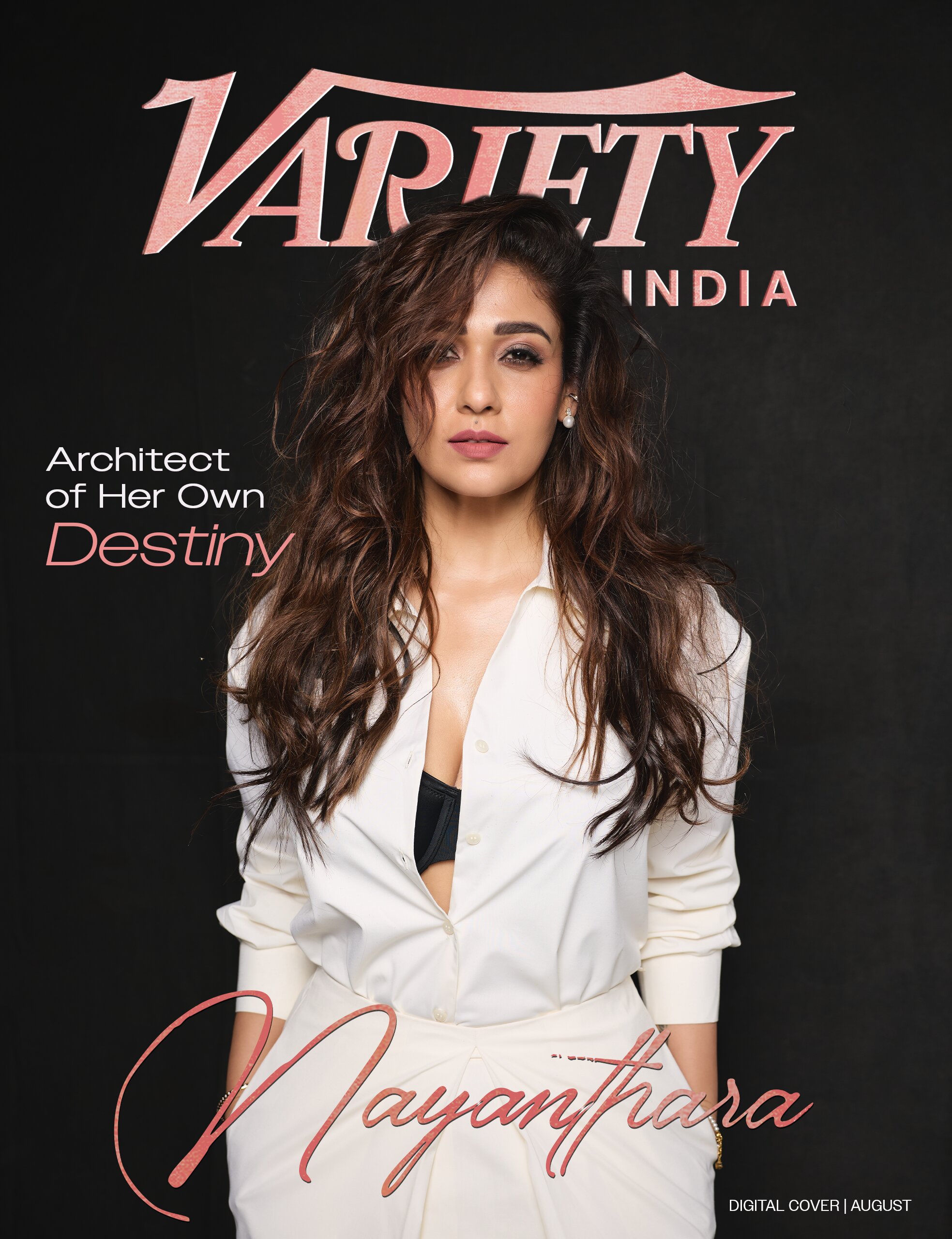
You can’t help but admire ‘Lady Superstar’ Nayanthara. It takes a rare kind of confidence for an A-List actress to walk into a shoot with no make-up on. And by this, literally, a clean bare face, and not the 'no make-up' look that is often passed off as an organic appearance today. Nayanthara is in absolute control, keeping an eye out for bad camera angles and ill-fitting outfits. She poses with the ease of a seasoned professional who has mastered the art of wooing not just the camera but her audience, too.
South India’s ‘Lady Superstar’ commands a staggering fee of ₹10 to Rs 12 crore per film. She charges approximately ₹5 crore per brand, and her current net worth is an impressive ₹200 crore this year.
With more than 80 films to her credit in all South Indian languages, Nayanthara began her career with the Malayalam super hit “Mannasinakare” in 2013. She is probably one of the most successful female stars in Tamil cinema, who continues to reign supreme even in 2026. At her core, the actress is all heart despite the tough external facade she projects. Nayanthara is passionate about every single project that she commits to, giving it her undivided attention. Success has not dulled her drive as the star continues to pursue film after film with the same zeal.
Speaking exclusively to Variety India, the mother, the actor and producer sizes up her journey so far…
Do the expectations from ‘Toxic: A Fairy Tale For Grown Ups’ make you apprehensive?
There’s definitely a lot of excitement around “Toxic.” What I personally found very special about this project was the vision behind the film and the effort that has gone into bringing it together. For me, the focus is always on the character and the honesty of the performance. Once you give yourself completely to the role, you leave the rest to the audience.
Related Stories
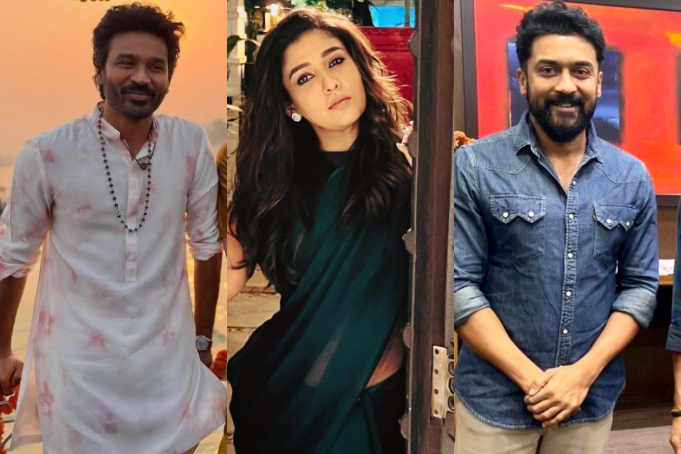
What made you opt for a multi-starrer like “Toxic?”
I’ve never looked at films through the lens of screen space or labels like solo or multi-starrer. For me, it’s always about whether I have something meaningful to contribute. When a story excites me and the character has purpose, that’s reason enough to say yes. Cinema is a collaborative medium. I’ve always believed that if every character is written well, everyone benefits—including the audience. Toxic offered me a role I couldn’t ignore, and that’s what mattered the most.
What do you make of the buzz around the film?
I’m genuinely very happy with the kind of love “Toxic” is receiving. As actors, we spend so much time with a film before it belongs to the audience, so when people start connecting with the trailer, the visuals and the world even before release, it feels special. But for me, the real excitement—and nervousness—always begins when the film finally reaches the audience.
Big-scale films often risk turning women into symbols rather than fully realized characters. What convinced you that this role was different?
That’s a very valid concern, and it’s something I think about before signing any film. I don’t want to be present in a story just to look good or support someone else’s journey. The character has to matter. What convinced me about Ganga was that she has her own voice, her own choices and her own emotional arc. She influences the story instead of merely existing within it. Scale should never come at the cost of substance. I think audiences today recognize that immediately and as actors, we owe them characters that feel real, irrespective of the size of the film.

Do you relate to your character in ‘Toxic’?
Ganga is a character I felt very connected to. Yes, she is fierce and strong, and I think that’s what you see immediately in the promos. But there’s so much more to her than that. Her strength doesn’t come from being loud or trying to prove a point. It comes from everything she has lived through, the choices she makes, and the way she holds her ground even when life tests her.
I’ve always been drawn to women who have that kind of strength— who can be vulnerable, emotional and powerful at the same time. In many ways, I relate to that personally, too. Life teaches you that strength doesn’t always have to announce itself.
Seasoned A-List actors often have a sense of how a film has shaped up even before it releases. How often have you been able to predict a film’s success or its underperformance?
With experience, you do develop a certain instinct about how a film might shape up. But cinema is still very emotional and unpredictable. What we feel while making a film doesn’t always translate the same way when it reaches audiences in theatres. There have been times when I felt extremely confident about a project and it didn’t perform the way we expected. It has happened with “Naanum Rowdy Dhaan,” “Kolamaavu Kokila” and “Raja Rani.” And there have been films where I had quiet doubts that went on to become big successes. Over the years. I’ve learned to accept both outcomes with the same humility.
Do you feel the constant pressure to deliver hits?
Every film has its own journey and its own audience. As actors, we can only focus on telling our story with sincerity. When audiences connect with that story, cinema truly feels magical. For me, the joy is always in being part of films that people remember and carry with them.
Your production company Rowdy Pictures recently won Tamil Nadu State Film Awards for ‘Netrikann’ and ‘Koozhangal’ aka ‘Pebbles’, alongside you receiving a State Award for ‘Aramm’). What do you attribute this success to?
Our production house, Rowdy Pictures, is very close to our hearts. Vignesh [Shivan, Nayanthara’s husband] and I wanted to back meaningful stories and support new talent. The awards are a result of teamwork, trust in good scripts and giving freedom to directors. We are grateful for the recognition. You can expect more content-driven films from our production house. We want to explore different genres and give opportunities to fresh voices. Quality will always be our focus.
You have virtually won every prestigious award for your performances. What do awards mean to you at this stage in your career?
Awards are very special because they show appreciation for your hard work. But at this stage, the biggest award for me is the audience’s love. That is what truly matters and stays forever.
You are a successful A-List star with five releases (“Hi,” “Toxic,” “Patriot,” “Dear Students,” “Mookuthi Amman 2,” “Managatti Since 1960” and “Auto Jani”) lined up. How do you manage the balancing act given that you have two little boys at home?
Balancing work and motherhood is not easy, but my boys Uyir and Ulag are my biggest strengths. I plan my schedules carefully and make sure I spend quality time with them. Family support is very important. When I am with them, I am fully present. That keeps me grounded.
What drives you at this stage of your career, given that you have already achieved so much success?
What drives me today is the love of cinema and the desire to keep growing. Success is beautiful, but growth is more important. I want to do roles that inspire, that challenge me, and that make my children proud one day. I am simply grateful to still be here, doing what I love.
You have a proven track record of more hits than failures. How do you handle the stress of a film underperforming at the box office?
When a film does not perform well, it hurts. But I see it as learning. We are all human, and not every choice will work. I take responsibility, reflect quietly, and move forward with more clarity.
You and your director husband Vignesh have a stable marriage. How do you keep your relationship sane in these crazy times of social media?
Marriage needs understanding and friendship. Vignesh and I respect each other’s space and dreams. We communicate openly. Social media can be loud, but what matters is what we share privately as a family. Keeping things simple helps us stay stable.
Having worked with some of the biggest actors across industries, what have you observed about them as artists and individuals?
One thing that truly stands out to me is that the biggest stars are often the most grounded people. Whether it is Shah Rukh Khan Sir, Rajinikanth Sir, Mammootty Sir, Mohanlal Sir or Chiranjeevi garu — they all carry an incredible sense of discipline and respect for the craft. Beyond their stardom, what you notice is their deep love for cinema and the way they treat every person on set with warmth. That humility is something that really stays with you.
You have acted in all South Indian languages. Do you speak all four languages? How different has the experience of working in each of the industries been?
I grew up learning Hindi because of my father’s Air Force background, while Malayalam was spoken at home. As my career evolved, I learnt Tamil, Telugu, and even picked up Kannada through my work. Each language has opened the door to a different culture and way of storytelling and that has been incredibly enriching for me as an actor.
Vignesh writes lyrics and directs. If there’s a talent of Nayanthara we haven’t discovered yet, what is it?
(Laughs) I don’t know if it’s a talent, but I genuinely enjoy creating. Whether it’s discussing stories, costumes, visual aesthetics or building something from scratch, that process excites me. I’m someone who likes to quietly observe people. Maybe that’s something that helps me as an actor more than people realize. Who knows… maybe one day I’ll surprise everyone with something completely unexpected.
You produced a Gujarati film, “Shubh Yatra” in 2023. Any other script that’s come your way that you’re eager to take up?
Absolutely. As producers, we’re always looking for stories that feel authentic, irrespective of language. India has such incredible storytellers across industries, and language has never been a barrier for us. We’re reading multiple scripts at the moment, and hopefully we’ll be able to announce something exciting when the time is right. The focus has always been on good cinema rather than just expanding for the sake of it.
You’ve played queens, lovers, mothers and action heroes. Which version of yourself has been the hardest to portray?
Honestly, every role has challenged me in a different way. Playing a queen demands dignity and restraint. A mother requires emotional honesty. Action films test you physically, while quieter characters demand a lot internally. The hardest roles are usually the ones where the emotions are subtle. It’s often easier to perform dramatic scenes than to communicate everything with silence. Those are the performances I find the most challenging—and also the most rewarding.
Is there a role you still feel Indian cinema hasn’t written for you?
I’m sure there is. As actors, we always hope to be surprised by a script that completely changes the way people see us. That’s what keeps the excitement alive after so many years. I don’t have a checklist of genres anymore. I’m simply waiting for that one character that’s so unexpected that even I wonder, “Can I actually do this?” Those opportunities excite me the most.
Photographer: Rohan Shrestha
HMU: Namrata Soni
Stylist: Meagan Concessio
Management: Sarvesh Shashi/ ABC Studios
Location courtesy: Nayanthara's office, Chennai.
Comments are moderated. They may be edited for clarity and reprinting in whole or in part in Variety publications.