



Sep 29, 2026 1:30pm IST
‘Dorothy’ Director Karthik Subbaraj Defends His Film Against Homophobia: ‘The Hatred Has Actually Helped the Film’ (EXCLUSIVE)
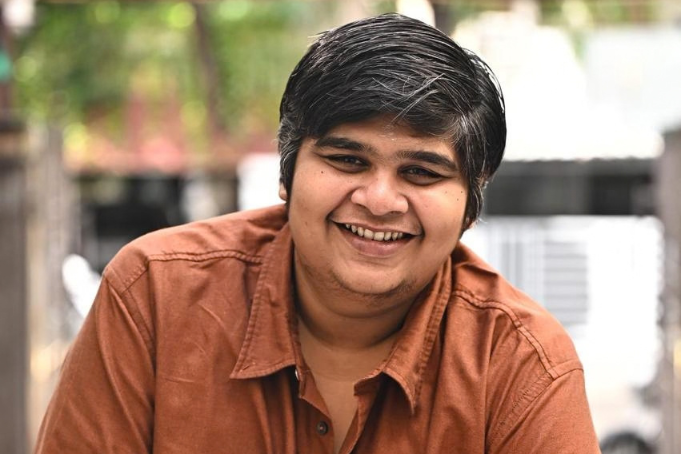
Director, producer and screenwriter Karthik Subbaraj is known for his distinctive, genre-bending and visually striking work, primarily in Tamil cinema. He rose to national prominence with his critically acclaimed directorial debut, the horror thriller "Pizza" (2012), and followed it with the cult classic black comedy gangster film "Jigarthanda" (2014). Karthik directed superstar Rajinikanth in "Petta" (2019) and Dhanush in "Jagame Thandhiram" (2021). His tenth feature film, "Dorothy", is his most audacious and game-changing work to date.
You have had a prolific career but have never received such unanimous praise?
Yes, because I think most of my previous films were commercial and attached to a star. But this is completely based on the story and getting such a huge response is really something.
It is truly path-breaking because in India we rarely make films about the LGBTQ community. How did you decide to make this game-changer?
Actually, I think this story was growing in me subconsciously for years, even before I knew I would be making a movie like this. When I was in school, I think I was affected when I first came across a transgender person. You feel strange. Intimidated, even. But then, thanks to my parents, they explained what it is.
I grew up in Madurai, which is also shown in the film. My grandparents live in a village. I used to visit them and see how women were treated and how that male pride is always put first everywhere.
The transgender community didn’t even have a voice, forget representation, in the 1980s and 90s, when the film is set. They hoped to attain nirvana. When we talked to them, they used to say they were collecting money for their nirvana.
At that time, gender reassignment surgeries were not common. Nobody even thought of a surgery like that in the ’90s, except illegally, and many people lost their lives. During those days, when they expressed what they felt about their gender, they were cast out of their homes.
There are a lot of cases where families themselves have killed transgender babies. Only one person in the family, like a mother or a sister, offered understanding. But mostly the men abandoned transgender babies and didn’t even allow them to go back to their town or village.
Related Stories
Your film about transgender acceptance becomes a road movie midway.
There is a film, "Thelma & Louise" (1991), about two women who want to break the cycle and just go on a road trip. So that bit in my film is inspired by "Thelma & Louise". I was thinking of a road film with an unusual problem or a very intense problem. Like two friends travelling.
So then I felt, okay, what if a friend is accompanying a person, not in a good way, but he is being sent to kill someone? So the road journey starts. Then there’s a conflict between their intentions.
The trans people in your film are happy people.
Yeah, yeah. Most of these people come out of their homes and either live together in a group. They are pushed into begging or prostitution. They have accepted their lives and that this is going to be their life. But still, they also have a life.
Did you expect that there would be such a homophobic backlash?
Actually, I didn’t think the backlash would come even before the film’s release. I think very few people, without even knowing what the story is about, started a cultural conversation. But people were mostly like, “We don’t want this kind of story to be told at all in the mainstream.” They feel threatened.
But over the past few days, I’ve seen a magical turnaround.
On one end, there are trolls. On the other end, the audience is embracing the film wholeheartedly.
Yes, that’s true. They understand the emotions. I visited around 15 to 20 theatres across Tamil Nadu, from Chennai to Madurai. That’s why I’m travelling all over. I am on the road as I am speaking to you.
And in the climax, every theatre ends with huge applause.
Will you be releasing a Hindi version?
Like a Hindi dub, you mean? I think there will be a Hindi dub on Netflix. But for the theatrical release, they said the Hindi dub will be only on Netflix. I think they have released the Tamil version in very few theatres in the North, with subtitles.
The film is doing very well in Kerala, Karnataka and the USA. The hatred has actually helped the film. So much obvious hate was spread even before the film’s release that audiences became protectors of the film. That has been very, very encouraging and very, very overwhelming.
Because “Dorothy” is getting all kinds of viewership. I saw people shedding tears of joy because they were so moved. So all that emotion is there in the theatre in the end.
I made the film exactly as I had written it, without compromise. Also, I didn’t want anything to evoke pity. All we need is to understand the thing. But society just doesn’t want them to exist.
Where did you find your actors?
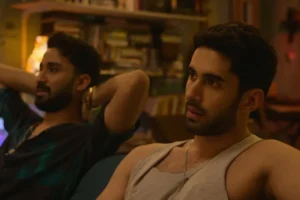
Sananth is an actor who has acted in a lot of my films previously. I know he is very good and passionate about acting and also very sensible. When I wrote the script, I somehow felt Sananth should do one of the roles. He could play either protagonist, Karthi or Subbu.
We were auditioning for both characters. Then I saw Rishikanth’s audition clip. I have also seen him in a lot of short films. He is also a very good actor. When I spoke to Rishi, I somehow felt he should do Karthi. And then Sananth should play Subbu.
So then I asked Sananth, “Will you be able to pull off the transition from a man to a transgender person?”
Why didn’t you cast popular actors as the protagonists?
I was very sure of my casting. I didn’t even think of going and pitching this to any popular actor.
The flashbacks are in colour, while the present is in sepia and black and white. What is the reason for that?
Their past was colourful, in a way, for them. Happy and innocent. And even in the travel portion, once they start a lorry trip, it is colourful for Subbu until a certain point. But the present portion is where the darkness begins.
Thought process-wise, this worked better than having flashbacks in black and white and the present in colour. And also, if you look at it, the whole film is about unconventionality. So flipping the colours from the expected to the unexpected is also part of that unconventional process.
Would you be tempted to do something like 'Dorothy' again? Or will you now go back to making your mass-oriented films?
No. The entire process of me making “Dorothy” was very refreshing for me. I just enjoyed every moment of it. I enjoy making every film, but this one took me back to my roots.
So I don’t know what my next film will be. I’m just enjoying this moment of "Dorothy" coming out in theatres. The two boys are being welcomed as big stars now when they enter the theatre. And everyone is so emotionally attached to the story.
A lot of men are crying in the theatre. When I ask them, “What do you feel about the film?” a lot of men come out openly and say they’re feeling guilty. Because at some point in time, they have behaved like the entitled patriarchal men in “Dorothy”.
So I have achieved what I set out to do.
What did you hope to achieve with ‘Dorothy’?
My main intention was that after seeing this film, the next time you see a trans person anywhere, you feel just a little respect and a little compassion. When a film achieves that, it gives a filmmaker great satisfaction.
Tell me about your title. Are you aware that ‘Dorothy’ used to be a secret term in America for people who were homosexual within the government?
No, I didn’t know that. Initially, when I fixed on the character’s name, I just saw that it is a gift of God. That’s the meaning of the name “Dorothy.” I thought, okay, that is also relevant.
It kind of rekindles a long-forgotten conversation and also sparks an entirely new debate.
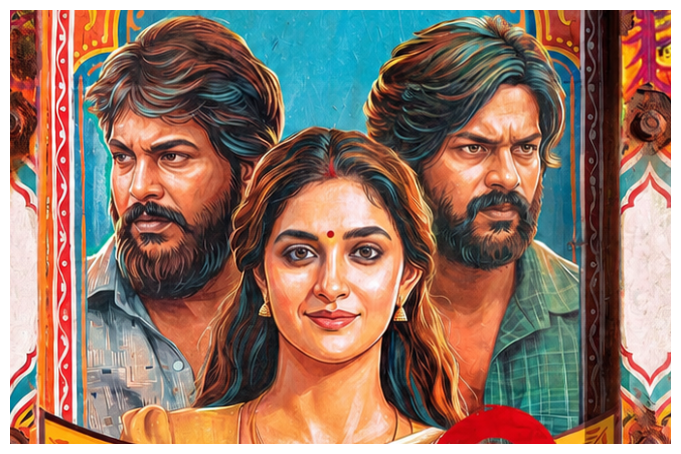
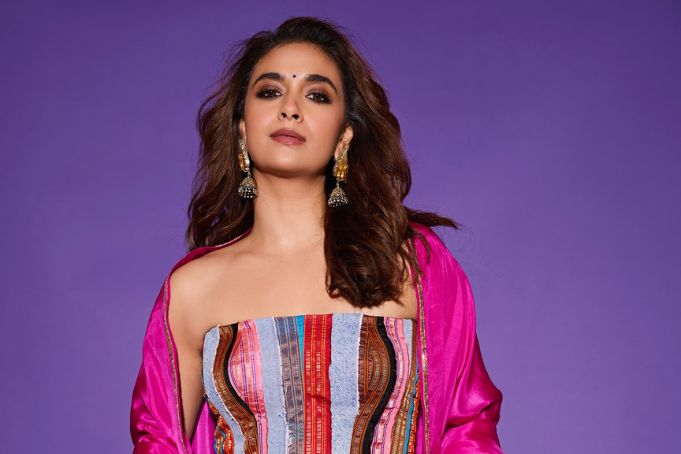
Was Keerthi Suresh the first and last choice to play this pristine, accepting woman?
Because for that particular character, I wanted someone popular. I also wanted a star who could really perform well. I spoke to Keerthi and then I sent her the synopsis. She immediately agreed. She loved the character and what the film is trying to tell.
She was the face of the film before release. She also knows that her role has a very big impact.
Well, this is the film that she will show to her children one day, proudly.
I hope one day every Indian will show this film to their children.

Comments are moderated. They may be edited for clarity and reprinting in whole or in part in Variety publications.