



Nov 11, 2026 5:45pm IST
Johnny Walker Birth Centenary: Son Nasirr Khan Says, ‘My Father Had the Guts to Withdraw From the Rat-Race at His Peak’
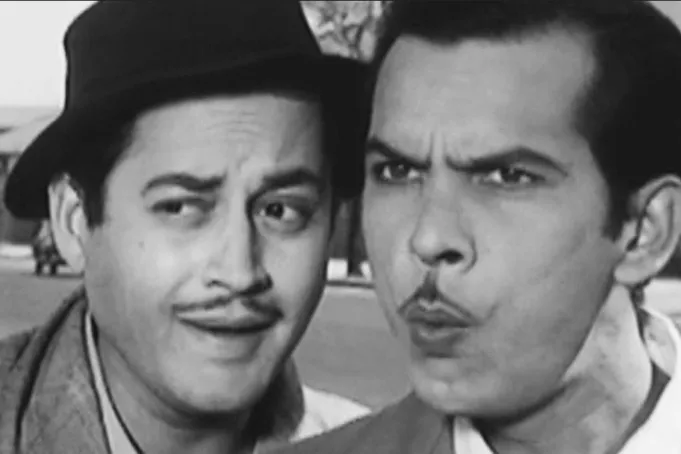
In a deeply personal conversation with Variety India, actor Nasirr Khan takes a nostalgic look back at the extraordinary life, unshakeable principles, and timeless legacy of his father, the legendary Johnny Walker (born Badruddin Jamaluddin Khan Kazi).
Khan fondly recalls the brotherhood between his father and auteur Guru Dutt, Walker’s immense generosity in shaping the industry — including how he selflessly catalyzed the entry of another future comedy icon, Mehmood.
The conversation delves into the legendary actor's profound philosophy on life, fame, and self-respect, shedding light on the rare courage it took for him to willingly step away from the limelight and completely withdraw from the Bollywood rat race at the absolute zenith of his career.
What is it like to grow in the shadow of a legend like your father?
I feel blessed to grow under that shadow. He was very down-to-earth. Very early, I got to learn how to live one’s life, how to be around one’s family, with children and in the professional space. When I went out in life and started doing my own thing, I followed my father’s domestic rules. Most, if not all, were completely correct.
Was he a strict father?
No. His stand was: Your decision has to be your own. You can ask for my guidance, but you have to make your own decisions. He never forgot his roots. For him, name, fame… everything was transient, he cracked that code very early. He was very philosophical. He knew the depth and the meaning of life. He had seen the best of times and the worst of times. So he kept us very normal. I was a very fussy eater. So when I was served food and if I didn’t eat, I was served the same food again later, when I was hungry. He used to say, ‘You are blessed ke tumko khana mil raha hai. (you are blessed to have food on your plate)’ We grew up knowing the value of food.
What's the one striking memory you have of your dad?
Being the youngest, I used to eat with him. My father loved stale rotis. To this day, even if you give me a roti, fresh off the pan, I would rather have a stale one. My father would say, “When I was growing up, we never got fresh rotis. So even after I made money and got famous, I still preferred day-old rotis. I have gotten used to the taste and like it.”
Related Stories
Johnny Walker was funny on screen. Was he funny at home?
His sense of humor was ingrained. He didn't have to be funny. But he was not loud or frivolous. His humor was intelligent.
Do you have your father's sense of humor?
Yes, I do. All of us — brothers, sisters — we laugh at life, just like he would. When my father passed away, Jaaved Jaaferi came home. My father was very close to his father, Jagdeep Uncle. That evening, we shared laughter, not tears. That's what I tell people, the legacy my father has left for me is the smile of the people that I see.
That trademark shrill voice, was that his real voice?
No. What you hear on screen, was not his natural voice. When Abba used to sell tea on a cycle at the always-crowded Mahim Fair, he used to call out in a shrill voice to attract customers. So, when he got the opportunity to work in films — initially as a boozer (sic) — he used that voice only. He used to say: “I charge money to play Johnny Walker, I am not Johnny Walker. It is a character that I play on screen.”
Was your father Guru Dutt’s best friend?
Yes, Abba and Guru Dutt ji were very good friends. He made sure there was always a role for my father in all his films. In “Pyaasa,” everybody goes against the hero except daddy's character. That is because, Guru Dutt ji believed that this friendship has to be respected on screen also. My father lost interest in acting after Guru Dutt passed away. He didn’t even want to talk about their friendship. At one point, after the failure of “Kaagaz Ke Phool,” it was my father and two other close friends, actor Rehman and writer Abrar Alvi who persuaded him to return to films. Abrar had a script and my father got director M Sadiq, with whom he used to work a lot. That is how “Chaudhvin Ka Chand” happened.
Popular on Variety
So how was his relationship with Mehmood, who ruled the comedic space after Johnny Walker?
Again, he had a fantastic relationship with Mehmood uncle. Not many people know that my father got Mehmood uncle into the film industry. Mehmood uncle's father had got him to my dad saying, “My son doesn't do anything, keep him with you.” My father raised him like his own son. And many years later, Mehmood uncle got me into the film industry.
Was it hard for you to carry on your father’s legacy?
No. When I told dad that I want to act, he said, “Do it on your own. I am not going to call anyone. I am your father, I am not God that I can make your destiny.’ He had the hand of God. He used to say that the industry runs on lottery, where luck factors in 99.9%. The remaining 0.1% is your hard work.
He used to say, “God gave me a name, money, respect, fame. And then I got so busy that I didn't have time for myself, for my family, and my friends. So what's the difference between being wealthy and me being poor? I was working like a donkey even then, I am still working like a donkey. So what have I achieved?” Yes, I have a bungalow, a car, and money; but at what price?’
And so in 1966, he decided not to work anymore. He just wanted peace. He said, “You get peace when you stop running after worldly things.” My father had the guts to withdraw from the rat-race at his peak.





Comments are moderated. They may be edited for clarity and reprinting in whole or in part in Variety publications.