



Nov 22, 2026 7:00pm IST
Dinesh Raheja on the Poetry of Longing, a 15-Hour Rekha Interview and Hindi Cinema’s Forgotten Stories (EXCLUSIVE)
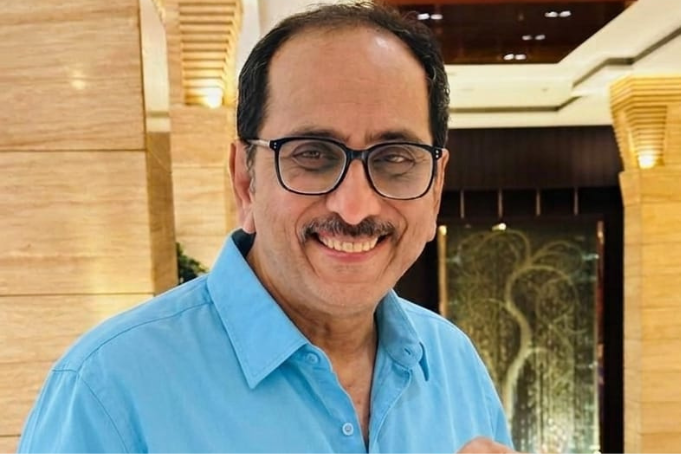
For over four decades, Dinesh Raheja has documented Hindi cinema, its stars and the stories behind its most enduring films. His career spans film journalism, editing "Movie" magazine, television writing and chronicling Indian cinema's history. Alongside this professional journey has been a lifelong relationship with poetry.
Raheja began writing at 12, and his latest collection, "Adhuri Khwahishon Ne … Unfulfilled Desires," brings together his Hindi poetry and shayari. Speaking with Variety India, he reflects on the experiences behind the book, writing about cinema versus himself, his memorable 15-hour interview with Rekha and the unfulfilled desires that continue to inspire him.
You wrote your first poem, "Budhapa," at 12. What prompted you to write about old age so early, and how much of that young boy remains in you today?
My first poem was a spontaneous reaction. Standing on my balcony, I saw my elderly aunt huffing and puffing up the steep incline to her building. Moved, I immediately took out a diary to scribble a few lines.
It's difficult to analyze oneself objectively, but from an early age, compassion and empathy colored my worldview. I felt emotions deeply. Coupled with a desire for creative expression, this led to a penchant for poetry. I wrote to share my thoughts on the human condition and see if they struck a chord.
I do my share of adulting to survive in the material world, so remaining childlike isn't a conscious decision; I just don't know any other way of being.
Related Stories


Your new collection brings together Hindi poetry and shayari. How do unfulfilled desires, lost moments and unspoken emotions shape the book?
The title comes from a ‘sher’ opening the book. Unfulfilled desires, lost moments and unspoken emotions are universal experiences. I have channeled them into my poetry, hoping readers relate and perhaps recognize themselves in these lines. Those feelings are best expressed through poems.
You have explored different poetic forms, including in "101 Haiku." What draws you to Hindi poetry and shayari?
I grew up thinking in English, but watching two Hindi films a week — each boasting seven to eight songs — influenced me to write in Hindi, too. Even today, I am held in thrall by classic film songs.
Poetry is an interpretative art, and language proficiency helps. I don't know Japanese, but I loved the haiku form and penned them in English for "101 Haiku." Writing in both English and Hindi comes naturally to me.
Popular on Variety
Why does your 15-hour conversation with Rekha remain particularly memorable?
I interviewed her for 15 hours — three hours daily for five days straight — for a special supplement commemorating 25 years of her film career. I caught a glimmer of the beating heart beneath the glossy veneer and polished quotes.
Has the shift to digital platforms and social media cost film journalism its literary sensibility? Can long-form writing survive the push for clicks and speed?
I lament the loss of long-form journalism. It's strange when online articles advertise "4-minute read" or "7-minute read" as bait. I love curling up with a good read. Excellent writers still exist, and a well-written article, regardless of length, will find its reader. Still, one must adapt to creating crisp content for today's short attention spans.
Does "Adhuri Khwahishon Ne" mark a culmination or a new chapter? What remains on your creative wish list?
Life is a series of unfulfilled desires, and we must enjoy trying to turn them into reality. Hopefully, life will reward us with many more beautiful chapters.
By year-end, comedian Shubha Khote will release a book she commissioned me to write: "The Funny Girl: Shubha Khote Unscripted." I want to write more biographies capturing untold chapters of our film history, a sequel to "101 Haiku" featuring a section on my twin grandchildren and produce an English short film I've written—plus catch up over dinner with Anil Kapoor, Jackie Shroff, Shah Rukh Khan, Dimple Kapadia and Rekha.
"Adhuri khwahishein" abound in our lives. My book motivates me: there is so much more to create. And celebrate.














Comments are moderated. They may be edited for clarity and reprinting in whole or in part in Variety publications.