



Oct 03, 2026 1:58pm IST
Cue the Encore: Concert Films Are Hitting All the Right Notes
There was a time when it felt like every great musician was getting a biopic. Bryan Singer’s Queen biopic “Bohemian Rhapsody” (completed by Dexter Fletcher) became a phenomenon in 2018, grossing over $900 million worldwide, winning four Academy Awards (including Best Actor for Rami Malek), convincing Hollywood that audiences had an insatiable appetite for stories that riffed on legendary musicians.
Suddenly, everyone was looking for the next Queen. Elton John got “Rocketman.” Baz Luhrmann delivered “Elvis.” Madonna announced plans for her own film. Projects on Michael Jackson, Prince, Britney Spears, The Beatles, Boy George, KISS and countless others entered development. If an artiste had enough hit songs, a turbulent personal life and at least one iconic performance to recreate, Hollywood was interested. The formula became so familiar that you could almost predict the movie before the casting was announced: a young dreamer, an impossible rise, addiction or personal tragedy somewhere in the middle, redemption before the credits and an actor who’d inevitably be discussed come awards season.
Those films aren’t going away. But they no longer feel like the biggest thing happening in music on screen. Concert films do. And I don’t think that’s just because Taylor Swift changed the economics of the business. Though, The Eras Tour certainly did that. It feels like audiences have become less interested in seeing artists interpreted than in seeing them as they actually are. It’s a subtle shift, but an important one.
Related Stories
Stadium energy hits screens
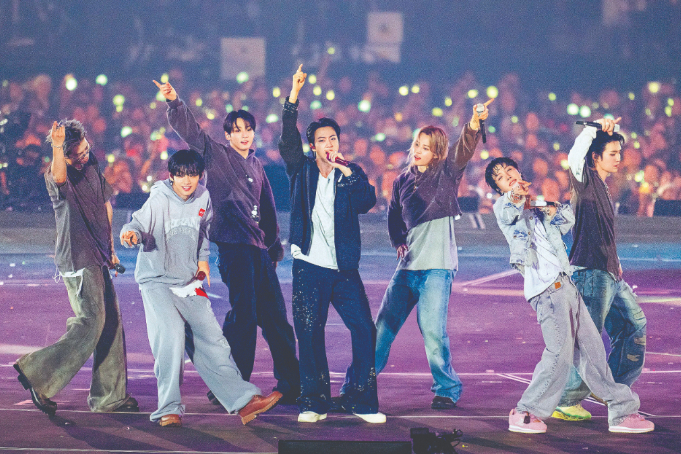
Over the past few years, we’ve seen an unusually strong run of concert films. Taylor Swift and Beyoncé turned theirs into genuine cultural events. David Gilmour’s “Live at the Circus Maximus” and Ed Sheeran’s “ONE SHOT” found enthusiastic audiences. This year alone brought releases like “BTS THE COMEBACK LIVE: ARIRANG,” “Harry Styles: One Night in Manchester,” Apple Music Live: “Lady Gaga – MAYHEM Requiem,” “Billie Eilish – Hit Me Hard and Soft: The Tour,” “Iron Maiden: Burning Ambition” and “EPiC: Elvis Presley in Concert.”
Some arrived in theatres, others on streaming, but together they point toward something bigger than a passing trend. They’re becoming their own category of event. What’s interesting is that the audience for these films isn’t limited to people who missed the tour. Often, it’s the people who were there. They’re going back to relive it. That’s not how we usually think about movies. We don’t typically watch a film because we want to recreate the feeling of opening night. But concerts are different. They’re emotional experiences as much as performances, and concert films have figured out how to bottle that feeling surprisingly well.
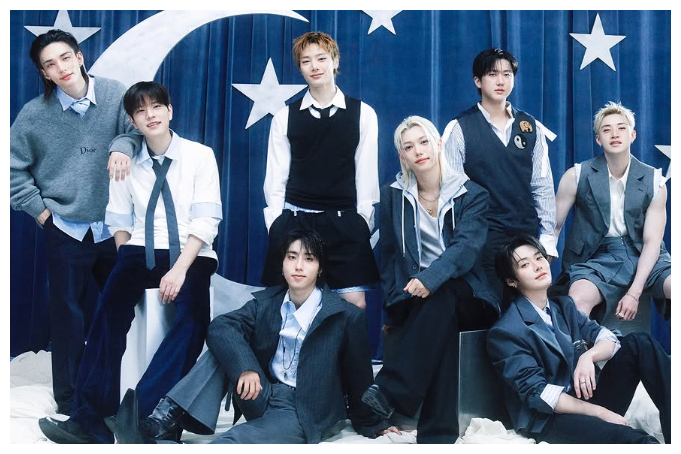
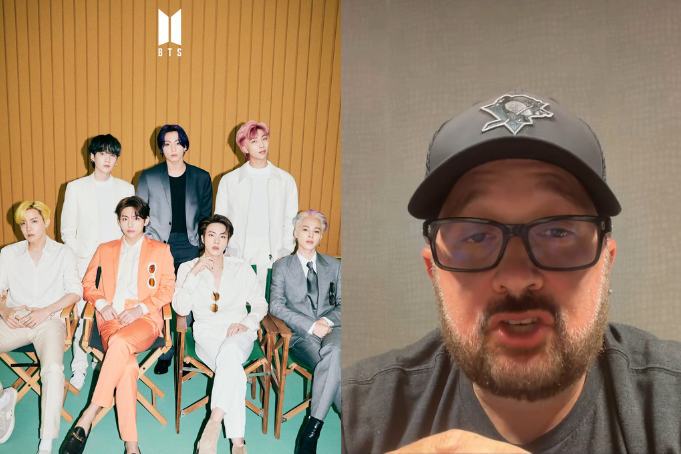
K-Pop understood this years ago. Groups like BTS, BLACKPINK, SEVENTEEN and Stray Kids have long treated concert films as an extension of the live experience rather than an afterthought. Fans show up multiple times, trade photo-cards, sing along and turn movie theatres into temporary arenas. It’s less about watching a film than participating in another chapter of the fandom. Western artists have slowly caught up. Part of this is technological. Concert films don’t look like the grainy DVD recordings that used to show up in the merch section after a tour ended. They’re shot for IMAX. They’re mixed in Dolby Atmos. They often sound and look better than the view many fans had from the upper deck of the actual stadium. But something deeper has changed. We’ve entered an era where authenticity carries its own value.
If one wants to watch Lady Gaga perform, they don’t necessarily want to see an actor trying to capture her energy. They want to watch Lady Gaga. The same goes for Billie Eilish or Harry Styles or BTS. The performance itself has become the story. That may also explain why so many music biopics suddenly feel less urgent. There is, of course, one obvious exception: “Michael.” If any artist can still command the kind of anticipation that once surrounded “Bohemian Rhapsody,” it’s Michael Jackson.
MJ stands alone, again
His life was extraordinary enough, controversial enough and culturally significant enough to justify a sweeping theatrical biopic. Few entertainers have influenced music, dance and pop culture on a comparable scale, and few have a catalogue that spans generations the way his does. That’s precisely why “Michael” feels like an event rather than simply another entry in the genre. But it also underlines how rare those opportunities have become.
Most artists don’t have a story that demands a two-and-a-half-hour dramatic retelling. What fans often want isn’t an actor approximating their favourite performer but rather, the experience of the performer at the height of his or her powers. In a way, that’s what makes concert films so compelling. They’re not asking audiences to suspend disbelief. They’re offering the real thing. Ironically, even Michael Jackson’s legacy makes that point. For millions of fans, Live in Bucharest, Dangerous Tour, HIStory Tour, This Is It and countless restored performances remain just as essential to understanding him as any dramatized version of his life ever could.
His genius was ultimately expressed onstage. That’s where his mythology was built. “Michael”’s success doesn’t reverse the rise of concert films. It actually most likely stands as a reminder, that only the biggest, most singular artists can still make the traditional music biopic feel like a true cinematic event. Everyone else may be better served by letting the music and the performance speak for itself. Think about it, so many projects have been announced, delayed, reworked or quietly disappeared. Madonna’s long-gestating feature, once set up at Universal with Julia Garner attached to play the Queen of Pop, was shelved before eventually evolving into a television series.
A definitive Prince biopic remains elusive despite years of discussion and competing visions from filmmakers and the artist’s estate. Universal’s adaptation of Britney Spears’ bestselling memoir “The Woman in Me” is still taking shape. Projects based on Boy George, KISS and Janis Joplin have, at points, stalled, changed creative teams or disappeared from conversation altogether.
Beyond biopics
None of that means these films won’t eventually happen. But it does suggest that the music biopic is no longer the straightforward proposition it looked like in the wake of “Michael.” The genre has become bigger, more expensive and, ironically, harder to pull off. It’s not because audiences suddenly dislike biopics. It’s because they’re hoping for something different from music stories now. They’re looking for actual presence instead of interpretation. And concert films deliver that almost effortlessly.
They capture artists at a specific moment, on a particular tour, singing songs that mean something to millions of people at exactly that point in time. Twenty years from now, “Hit Me Hard and Soft: The Tour” won’t just document Billie Eilish’s music, it’ll document who she was as a performer in 2026. The same way “Stop Making Sense” now feels inseparable from Talking Heads or “The Last Waltz” has become part of The Band’s mythology. That’s another reason this trend feels durable rather than fashionable. Great concert films age differently. They become historical records. There’s also a business reality that probably isn’t lost on studios.
Concert films are faster to make, don’t require years of navigating life rights and estate approvals, and come with an audience that’s already invested. The marketing campaign begins the moment the tour is announced. That’s an attractive proposition. The next major release, “Twenty-One Pilots: More Than We Ever Imagined,” suggests the momentum isn’t slowing anytime soon. If anything, one would expect more artists to follow this path.
A concert film preserves something neither of those formats can; not the story of an artist, but the experience of being there. For years, musicians looked to Hollywood to define their legacy. Now they’re increasingly doing it themselves. Judging by the crowds, audiences seem perfectly happy with that arrangement. You could say, its music, to their ears.


Comments are moderated. They may be edited for clarity and reprinting in whole or in part in Variety publications.