



Oct 01, 2026 11:30am IST
‘Chandni Bar’: 25 Years On, Madhur Bhandarkar Explains Reluctance to Work On A Sequel, Says ‘I Refuse To Compromise On The Film’s Legacy’ (EXCLUSIVE)
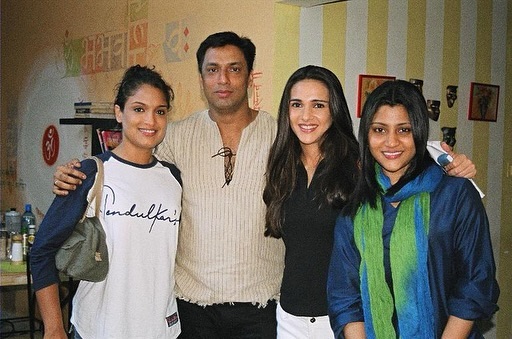
As “Chandni Bar” completes 25 years, director Madhur Bhandarkar looks back at the film that transformed his career. In an exclusive conversation with Variety India, he recalls how Tabu instantly agreed to play Mumtaz, the real-life stories that inspired the film, the film’s disturbing climax and the challenges of making female-centric cinema. He also opens up about the impact of Mumbai’s dance bar ban and reveals why he has yet to move forward with “Chandni Bar 2,” despite writing multiple drafts.
Excerpts…
Why did you approach Tabu for the role of Mumtaz in ‘Chandni Bar’?
I just had a strong instinct that Tabu would be the right fit. At the time, even though she was doing mainstream commercial films, she had also done “Maachis” (1996). I was deeply impressed by her performance in the film. I couldn't believe this was the same actress from the “Ruk Ruk Ruk” song (“Vijaypath,” 1994). When I was narrating the script to her, and we reached the interval point in the story, right then—before I could even finish—she said, “I am doing this film.” It felt like a deep connection, as if she was destined to play Mumtaz. I told my producer right away that we were not approaching any other actress.
What’s your directorial approach?
My process is very organic. In my 25 years of filmmaking, I have never done a workshop or formal script readings with actors. I prefer giving a brief and explaining the character's journey. Everything else happens naturally on set between “action” and “cut.” At that time, I was a new director who had just come off a box-office flop, “Trishakti” (1999). But when I narrated “Chandni Bar,” Tabu recognized my sensibility as a filmmaker. Our production budget was only ₹1.5 crore. We didn't even have a monitor on set and we were shooting on expensive Kodak film reels, where every take counted. Tabu would look directly into my eyes after a shot and ask, “Madhur, what do you think? One more?” In fact, I had my own slang on set: “jalwa” meant great, “jhandu” meant bad. Despite the heavy subject matter, behind-the-scenes, it was all humor and mimicry.
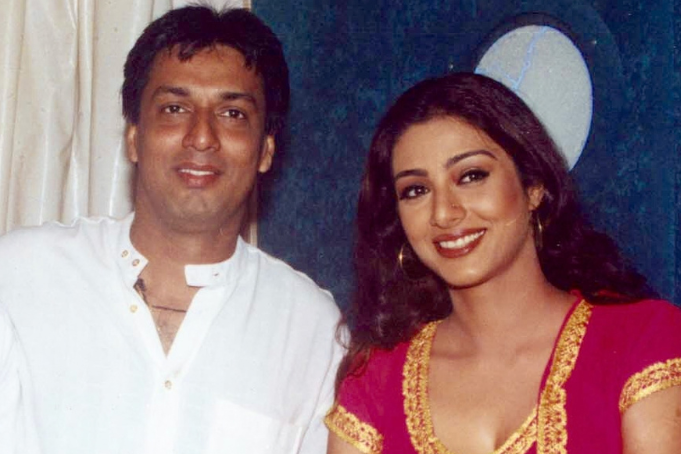
Tabu's performance in ‘Chandni Bar’ is considered an acting masterclass. Is there any scene of hers that stunned you?
The climax sequence. It’s the scene where Rajpal Yadav’s character is soliciting clients over the phone for her while Tabu’s character is subtly weeping in the background. You hear the clients bargaining over her rate, saying she’s grown cold and old.
We shot that scene in a single take. It gave me goosebumps. I couldn't ask for another take because that level of raw, natural emotion couldn't be recreated. When we finished, the entire crew was overwhelmed and numb. It was two minutes before anyone could even start clapping.
How did your initial research into Mumbai’s dance bar culture begin?
It started completely by accident. After “Trishakti” flopped, I was completely broke. A friend of mine who worked in the stock market called me out for a drink and paid for my taxi fare. He took me to a beer bar in Dadar. I thought we were going to a regular neighbourhood quarter bar, but I was shocked when I walked in and saw women dancing to “Muqabla Muqabla” in chiffon sarees, churidars, and ghagra cholis. There was zero nudity, but the music was loud and the atmosphere was unsettling. I felt awkward and left after 45 minutes, worrying someone might spot me and think I had turned to drinking after my movie flopped.
When I woke up the next day, the night before had stayed with me like a “visual hangover.” I wanted to understand the culture more deeply, so I convinced my friend to take me back that night. His first question was, “Did you fall for any girl from that dance bar?” In a single night, we visited four different tiers of bars—from mid-level spots in Dadar, to high-end places like Topaz and Carnival, down to a tiny, dingy orchestra bar in Sion Koliwada catering to truck drivers. Observing how different classes of people spent money according to their status made me decide right then and there to make a movie about this subculture.
Related Stories
How did you gain access to the green rooms and background stories of the bar girls?
An actor from “Trishakti” named Anna owned a bar in Andheri and helped me gain access. Since the dancers were naturally suspicious of outsiders, Anna introduced me as a writer doing research for a book. I went to the bar every evening at 6:30 PM. Being an extrovert, I’d break the ice by joking and doing mimicry of actors like Paresh Rawal, Dharmendra, and Anupam Kher. Over time, the women opened up. I noticed how deeply secular the space was—dancers would bring prasad from Siddhivinayak, flowers from Haji Ali, or come straight from Mahim Church before their shifts. The main protagonist, Mumtaz, was synthesized from real life—primarily inspired by a bar girl whose husband was an underworld operative killed in a police encounter, forcing her back into the dance bars to support her children.
What was the reaction from distributors and the public when ‘Chandni Bar’ was released?
We released in 2001, the same year as massive blockbusters like “Gadar,” “Lagaan,” “Dil Chahta Hai” and “Kabhi Khushi Kabhie Gham.” Our entire budget was equivalent to the costume budget of a star in those films; we had no male lead, no regular song tracks, and minimal marketing.
A day before the official release, we held a morning trial screening at Movie Time cinema in Goregaon specifically for the bar girls. When the film ended, they gave me a standing ovation. Many came up to me crying, saying, “You held up a mirror to our lives.” When I asked what they took away from the film, they said, ‘We realized how vital financial security is for a woman.’ On release day, I walked into a single-screen theatre in Malad around 3:00 PM. As the audience exited, they were completely silent and numb. I initially thought the film had flopped. But within an hour, phone calls started pouring in from distributors across Kolkata, Bangalore, and Hyderabad reporting massive word-of-mouth success. Tabu called me and said, “Madhur, we set the market on fire!”
Popular on Variety
Looking back 25 years later, how do you view the film and the impact of the 2005 dance bar ban?
“Chandni Bar” captures a specific era of Mumbai nightlife that has completely changed. When the government banned dance bars in 2005, it destroyed an entire ecosystem—not just for the dancers, but for waiters, staff, taxi drivers, and auto-rickshaw drivers. Many bar girls maintained dual lives: they lived in respectable societies where neighbours didn't know their profession, and sent their children to English-medium convent schools because they wanted a better future for them. The sudden ban caused severe financial distress; many women were forced to leave the city, move abroad, or face immense hardship. I even have a script based on the repercussions of the dance bars shutting down.
How did ‘Chandni Bar’ shape your identity as a filmmaker who frequently focuses on female-centric narratives?
It was a complete paradigm shift for my career. It gave me an identity, National Awards, and the Padma Shri. It proved that realistic, hard-hitting cinema cantered on female protagonists can succeed commercially without joining industry camps or lobbies. I naturally gravitate toward stories told from a woman's perspective because women face unique struggles in our society. Whether it’s “Page 3,” “Corporate,” “Fashion,” “Heroine,” or my project “Wives of Bollywood,” these narratives allow for deep emotional exploration. Working on female-led projects also allows me to work quickly without waiting endlessly for male superstar dates.
Actresses today still point out that female-centric films face funding and distribution hurdles. What is your perspective on these dynamics?
That reality hasn't changed. Female-centric films remain significantly harder to finance and market. Industry insiders have frequently advised me to direct male-centric action films for much larger budgets, but my priority is telling meaningful stories. Even during the eras of Sridevi and Madhuri Dixit—when female stars could single-handedly pull crowds to theatres—the pay disparity compared to male leads was vast. Today, while pay and subjects have improved, many top actresses still prefer taking roles in big male-dominated star vehicles to ensure box-office safety rather than risking solo female-led projects.
Is there a possibility of ‘Chandni Bar 2’ happening?
I have written eight to 10 drafts for “Chandni Bar 2.” However, I will only move forward with it if the script fully matches or exceeds the quality and emotional weight of the original. I refuse to compromise the film’s legacy.
Comments are moderated. They may be edited for clarity and reprinting in whole or in part in Variety publications.