



Nov 25, 2026 6:56pm IST
Bharat Bala on Nitesh Tiwari’s ‘Ramayana’: ‘Cinema Cannot Simply Be an Act of Reproduction’ (EXCLUSIVE)
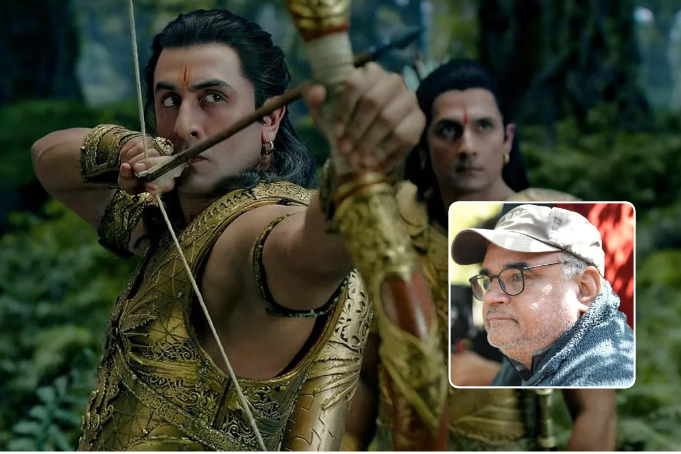
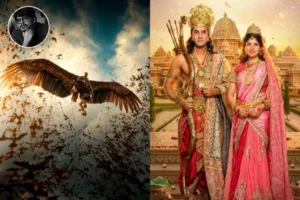
An epic as deeply embedded in India’s cultural imagination as the “Ramayana” comes with an unusual filmmaking challenge: how do you bring a story audiences already know and feel they own to the screen without simply repeating what has been told for generations? For filmmaker Bharat Bala, the answer lies in finding a distinct cinematic language while approaching the source material with humility and respect.
Bala, whose work across films, documentaries and large-scale cultural projects has consistently engaged with India’s identity and heritage, has praised director Nitesh Tiwari, producer Namit Malhotra and their team for their approach to the epic. He feels the duo has managed to take the country’s story to a global audience.
In an exclusive conversation with Variety India, Bharat Bala says, “When you approach something that lives in the collective consciousness of millions of people, I believe the responsibility of a filmmaker is first to approach such material with humility and respect. Kudos to Nitesh, Namit and the entire team for being able to do that so wonderfully. They have taken India to the world.”
Related Stories

His observation, however, goes beyond the scale or ambition associated with an adaptation of this magnitude. The filmmaker believes reverence for a familiar story should not come at the expense of interpretation. “Cinema cannot simply be an act of reproduction. It has to bring its own interpretation, its own visual language and an emotional perspective that allows a new generation to experience the story,” he adds.
That perspective is consistent with Bala’s own body of work. Over a career spanning more than four decades, he has moved between advertising, music films, documentaries, public spectacles and feature cinema. His projects include the A. R. Rahman collaboration “Vande Mataram,” “Jana Gana Mana,” the feature films “Hari Om” and “Maryan,” and Virtual Bharat, his initiative to document India’s lesser-known cultural stories through a proposed archive of 1,000 short films.
Bala believes Indian filmmakers are increasingly confident about telling stories rooted in their own cultural realities, and that this confidence matters when taking them beyond the domestic market. “I think audiences have always had an appetite for stories that are rooted in their own realities. What has changed is perhaps the confidence with which filmmakers are approaching them. I believe that the world is always curious about stories that come from a genuine place,” he says.
For the filmmaker, India’s cultural inheritance remains an enormous, relatively underexplored resource for cinema. “India is a never-ending source of stories. We are a civilization of extraordinary diversity, with thousands of years of history, traditions, languages, music, art forms and ways of life. Yet, I feel we have only scratched the surface of what is possible to explore through cinema,” he said.
He also believes filmmakers need to look beyond established narratives to discover stories that have remained outside mainstream cinema. “I would love to see more filmmakers move beyond the familiar and spend time discovering these worlds and stories. We don’t need to invent extraordinary stories; we just need to look,” Bala shares.
The comments come as Indian cinema continues to explore the potential of culturally rooted stories on a large theatrical canvas. But Bala’s own understanding of scale is not restricted to production budgets or spectacle. It’s about the conviction behind the storytelling. “For me, the size of a film has very little to do with the size of its budget. Scale is a feeling. A film can be intimate and still feel enormous,” he says.
Bala is currently returning to feature filmmaking with “Banaras,” his latest directorial feature and his first since Dhanush-starrer “Maryan” (2013). The father-daughter drama, set against the world of Indian classical music and the Maha Kumbh Mela, features Abhishek Banerjee, Shahana Goswami, Neeraj Kabi, Chhaya Kadam and Indira Tiwari, among others. The film, with music by Rahman, had its India premiere in the Indian Panorama section at the 57th International Film Festival of India.












Comments are moderated. They may be edited for clarity and reprinting in whole or in part in Variety publications.