



Nov 01, 2026 5:00pm IST
Ankur Tewari: ‘Independent Artists Will Always Have to Fight for their Own Square Inch of Space’ (EXCLUSIVE)
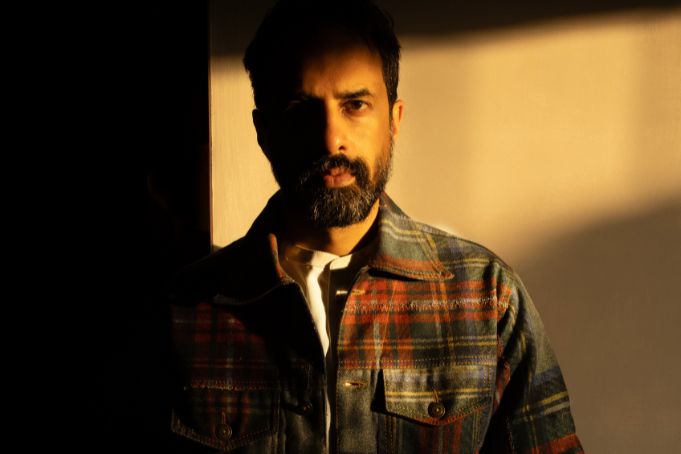
Ankur Tewari has spent nearly two decades building a musical universe that feels deeply lived-in and remarkably soulful. From his early days as an independent singer-songwriter to his work as a lyricist, composer, curator and music supervisor in films, Tewari has consistently chosen to skip the formula and has instead opted to bring forth the feelings. His songs have never seemed to chase the beat. They linger, hold their space and get the listeners to pause amid the chaos. There is an inherent tranquillity to his music — a sense of life traversing at its own pace, while allowing memories, love and solitude to seep into his words and music authentically.
Tewari’s albums such as “Jannat” and “Akela” offered glimpses into different chapters of that journey, while his work in cinema allowed him to inhabit stories beyond his own. Yet, songwriting has remained his most personal language, an open diary where lived experiences become songs and songs, in turn, become memories for others. Now, with “Mr Faarigh,” Tewari has embraced another side of himself: the art of doing nothing, of pausing and allowing ideas to breathe. It is an extension of an artist who has always understood that music need not shout to leave an impression. Sometimes, it simply needs to sit with you.
You have moved seamlessly between being an independent singer-songwriter and working in film. Has working within someone else’s story influenced the way you tell your stories through music?
Working in films means lending your life to someone else’s character; borrowing your truths to qualify their journey. You’re not telling your story, you’re translating it into theirs. Exciting, yes. Challenging, absolutely. It’s a bit like method acting, except you’re the writer, not the actor. But writing your own songs? That’s a different animal entirely. There’s nothing quite like it. The freedom of writing exactly what you feel, first-hand, unfiltered. It’s an open diary left out for the world to read; except written in a language only you fully understand. Everyone gets a page. Only you get the footnotes.
Looking back at ‘Jannat’ (2010), ‘Akela’ (2023), and now, ‘Mr. Faarigh,’ can you hear different versions of yourself across the three albums? What do you hope listeners will understand about you when they look back at your catalog 20 years from now?
My songs are an open diary. Those who know me closely can dissect them line by line, matching lyrics to the life that inspired them. Those who don’t still catch the feeling, even without the footnotes. Music has a way of smuggling emotion past the need for context. And sometimes, an older song plays, and I’m not just listening anymore; I’m time-traveling. Back to the room, the mood, the version of me who wrote it.
Related Stories
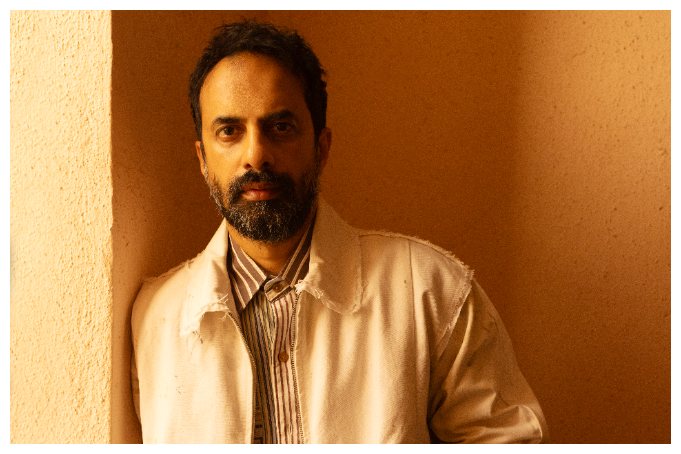

Between creating music, the concert madness and film work, how do you find the time to be Mr. Faarigh?
When I first came to this city, I had exactly two possessions: my time and my ideas. No safety net, just a suitcase of hours and half-formed thoughts. Naturally, I’ve grown protective of time ever since. I respect it equally in both forms: the time I spend working and the time I spend doing gloriously nothing. I’m not a multitasker; I don’t believe in doing five things badly when you can do one thing properly. So when it’s time to be idle, I commit to it fully. No guilt, no scrolling-with-one-eye-open. Just full, unapologetic, championship-level faarigh.
Has your definition of success changed since you started making music?
Success, by my highly scientific definition: a stomach so full it qualifies as a personality trait, a smile that survives even the deepest sleep and a squad of ride-or-die friends who somehow make this adventure called life sound less terrifying and more like the best group chat you never leave.
You’ve written songs that have found an audience across generations. In fact, the younger generation is turning to your songs from a decade ago. Does that surprise you?
Feelings are the whole pitch. Nobody asks “what’s the BPM?” — they ask “why did that lyric wreck me?” And the younger generation isn’t just feeling more, they’re feeling out loud without any filter. No shame, just straight vibes.
Has your approach to songwriting become simpler with experience, or have you become more demanding of yourself?
Bit of both, honestly. I’ve turned the self-critic dial way up, but I’m still fighting to keep that wide-eyed, new songwriter innocence alive, because that’s where the good stuff lives. For me, writing a good song isn’t a strategy session: it’s surrender. You get out of your own way, submit to the moment, and let the lyrics and melody do the driving.
You’re a singer-songwriter, composer, lyricist and curator. How important is each role in expanding your creative universe?
Each of the roles demands a different aspect of your personality. Each helps me understand myself better.
Film music has been part of our pop culture, but with fewer songs in movies, where do you see film music heading?
India doesn’t just like music; it’s basically a national personality trait. And the new wave of directors are not playing it safe with the usual song-and-dance formula. They’re out here taking swings. Sure, we might get fewer songs per film these days, quality over quantity.
You came into the independent music space when there was no career in it. What kept you going?
Somewhere back in the day, I found freedom in songwriting and once you’ve tasted that kind of freedom, you don’t just hand it back. Too special to give up, too honest to fake any other way. Over the years, it’s the one language I’ve never lost fluency in.
Is there a song you wish you had written, because you admire what the songwriter achieved with it?
“Yeh Nayan Darre Darre” by Kaifi Azmi and “Main Zindagi Ka Saath” by Sahir Ludhianvi.
What do you think today’s young musicians have access to that you didn’t and what do you think they’ve lost in the process?
This generation’s got every tool imaginable at their fingertips and somehow that’s exactly the problem. All that tech, and nobody wants to just sit with a song anymore, let it marinate, watch it turn into something you didn’t even plan. Instant everything killed the slow burn and the slow burn was kind of the
whole point.
People are returning to physical music formats, like vinyl records and CDs. What do you make of this? Is this a trend that will die out or do you feel it will find a life of its own?
I think the fast-food era of music is slowly fading and the health-food era is rising ever so strongly. I hope this wave lasts.
The concert scene in India is booming. Do you think the infrastructure matches it?
Concerts and infrastructure are locked in a friendly rivalry, each pushing the other to level up. I’ve played Indian stages that stood shoulder-to-shoulder with the best international setups; genuinely world-class. And then there have been times when the backend was surviving purely on that one word I can’t stand — ‘jugaad’. We’re in a good place now. Room to grow? Always.
Popular on Variety
Do you feel that, despite the concert boom, independent artistes still aren’t supported enough and given the right opportunities?
Independent artists will always have to fight for their own square inch of space; that’s just the job description. But really, you only have one job: be irresistible. Everything else-the algorithms, the audiences, the offers- has no choice but to follow.
Read More About: Ankur Tewari, Ankur Tewari songs
More from Variety

Most Popular




Comments are moderated. They may be edited for clarity and reprinting in whole or in part in Variety publications.