



Aug 19, 2026 7:07pm IST
Anees Bazmee on the Economics of Filmmaking: ‘A Film’s Budget Should Be Visible on the Screen’ (EXCLUSIVE)
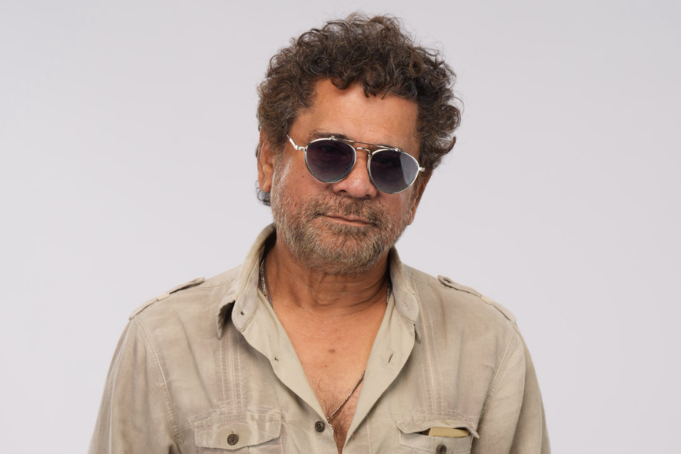
A film's budget has often become its calling card. Take the case of Nitesh Tiwari’s “Ramayana”, for example, whose Rs 4,000 crore (approximately $500 million) price tag is just as much a subject of discourse as its cast and visuals. But with rising entourage costs and the recent trend of every film being mounted on astronomical costs, the question does arise: How much money is too much money? And is it justified? Anees Bazmee, director of films like “Welcome” and “Bhool Bhulaiyaa 2,” offers an alternate approach.
In an exclusive chat with Variety India, the screenwriter and director talks about how the budget of a film is extremely important and must be expended judiciously. The filmmaker, whose film “Pyaar To Hona Hi Tha” clocked in 28 years this July, uses the Ajay Devgn and Kajol starrer as an example to point out that back in the day, films were made not just on smaller budgets but with smaller crews too.
Related Stories
Bazmee reveals an incident during an outdoor shoot. “For 'Pyaar To Hona Hi Tha', about 42 of us went for an outdoor shoot. Everyone, including Ajay Devgn, Kajol, and me, along with all the technicians and spot boys, used to travel in one bus. The bus would stop on the main road, but since it wasn’t very robust, everyone would help carry the luggage up the mountain. Kajol would pick up her bag, and Ajay would pick up the lights or the chairs and take them to the location. It felt like we were a whole family trying to make a good movie, and there was no ‘hero’ or ‘heroine’ or ‘director’ attitude.”
Bazmee then talks about the whiplash he felt when he returned to Mumbai and faced a much larger crew to shoot a song. “When we returned to Mumbai to shoot the song, ‘Aaj Hai Sagaai’, there were some 350-400 people on set. I remember asking my producer, Govardhan Tanwani, why we needed so many people, because we just shot 70% of the film with barely 50 people!”
Popular on Variety
The economics of the Indian film industry are quite volatile right now. With the focus on star-studded spectacles, the mid- and small-budget films are having a tough time, even in the streaming space. The filmmaker’s motto about the economics of filmmaking is very simple. “Even now, I wonder, ‘Why do we need so many people?’ Instead of getting more work done, it reduces the speed! Also, budget is very important, irrespective of the film you’re making. I feel that a film’s budget should be used in a way that is visible on the screen. Everything else is a waste of money,” he concludes.









Comments are moderated. They may be edited for clarity and reprinting in whole or in part in Variety publications.