



Oct 17, 2026 1:11pm IST
‘Amma Ariyan’ Review: A Malayalam Classic About Resistance, Struggle and Hope
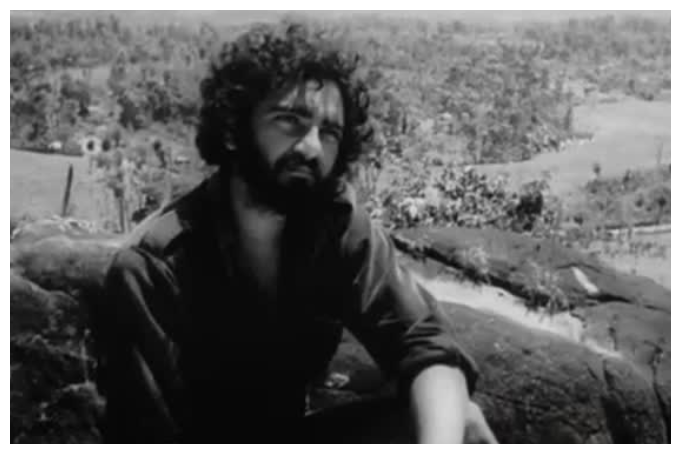
One of the South Asian films at the recent Toronto International Film Festival (TIFF) that most closely reflected the rebellious spirit of today’s India is “Amma Ariyan” (“Report to Mother”), John Abraham’s Malayalam cult classic. A prescient black-and-white film from 1986, made 40 years ago, the film is a cri de coeur, written and directed by John Abraham, the Malayalam director, not the hottie from Bandra. Marvelously restored in 4K by the Film Heritage Foundation, it screened in the TIFF Classics section.
The film, part documentary, part fiction, is about Purushan (Joy Mathew), a young man in Kerala who is about to leave for a job in Delhi, when he encounters the body of a young man who has committed suicide. The film is about how Purushan tries to find out the identity of the young man, who seems familiar, and later travels across Kerala to convey the news of his death to his mother, as a growing band of activists accompanies him.
Related Stories

We later learn that Hari, the deceased, was a tabla player and sympathizer: the police crushed his hand so he could not play. As Purushan travels through the state, the film also chronicles the various struggles of the proletariat in Kerala in the 1970s—a hospital strike, mill and quarry protests, and individual stories of the activists. The police often support the capitalists, accelerating “a long list of defeats” for the movement, as the voiceover concedes. In fact, the voiceover in this road movie of sorts conveys the ‘report to mother,’ filling her—and us—with news of the state and the nation.
John Abraham, who studied at FTII, was a protégé of his teacher, filmmaker Ritwik Ghatak. Abraham directed four films: “Vidhyarthikale Ithile Ithile” (“This Way, Students”), “Agraharathil Kazhutai” (“Donkey in a Brahmin Village”), “Cheriyachante Kroora Krithyangal” (“The Evil Deeds of Cherian”) and “Amma Ariyan” (“Report to Mother”). “Amma Ariyan” was radical enough, but its making was a full-scale revolt, made completely outside the film industry. Crowd-sourced, it was produced by Odessa Movies of the Odessa Collective, with contributions from individuals and film societies, and they traveled through Kerala, also showing other films on a 16mm projector. The film and screenplay were seemingly inspired by Latin America’s Third Cinema, which saw film consumers as active producers of socio-political awareness.
The film is in cinema verité style, and while broadly linear, is fragmentary, also responding to discoveries on the go, rather than led by a bound script, with editing by Bina Paul. The direction has a restless urgency, and the screenplay explores the failures of capitalism, while also admitting failures of the Left. Abraham’s greatest strength is that he resists painting Hari as a martyr to the cause; by plainly revealing his flaws—Hari, despite those posters of Karl Marx, Che Guevara and Mao Zedong, was a confused guy, politically evasive; he took drugs and liked rock music—he could have been one of us. The screenplay also underlines the secularism of their movement, referring to Muslims and Christian activists shot dead by the police as well. The film, shot by Venu, is powerfully kinetic, as we walk with the activists, and it uses many handheld shots, including one of an endless queue of people waiting for foodgrain rations, as well as charming shots of students practicing karate on a beach.
Mathew, on a grim mission, is a man of few words; he brusquely informs his partner he won’t be going to Delhi. Indeed, women, except in a few strike scenes, are largely passive, recipients of bad news, waiting for sons to return. The music has a toss-it-all-in approach, with traditional music, a ghazal, rock, and Church music. The climax shows it is a film within a film, as the Odessa Collective tries to raise social awareness. The film is restored by the Film Heritage Foundation, in collaboration with L’Immagine Ritrovata, the National Film Development Corporation and the National Film Archive of India. Hovering between despair and hope, “Amma Ariyan” is both a sharp reflection and a wake-up call.












Comments are moderated. They may be edited for clarity and reprinting in whole or in part in Variety publications.