



Sep 26, 2026 2:04pm IST
‘A Story Carved On A Tree’ Review: A Marathi Drama That Uses A School Bus To Highlight The Struggle For Dignity
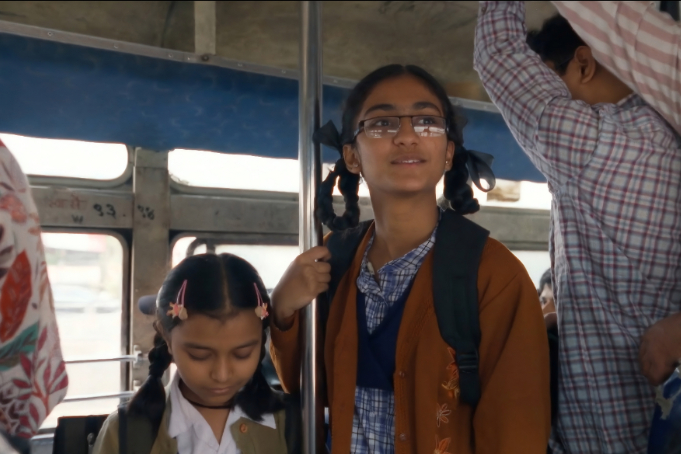
A school bus is rarely the stuff of political cinema. In Sainath Laxman Ganuwad’s “A Story Carved On A Tree,” ("Zadavar Korleli Gosht") it becomes a question of access, dignity and power.
The 21-minute Marathi short follows Nisha and Disha, two girls living on the outskirts of a forest who have to negotiate difficult terrain to reach school. When the absence of a bus leaves them repeatedly struggling to get there on time, Nisha confronts the village Sarpanch with a deceptively simple question: why does the bus not come to their village?
Ganuwad’s film understands that the question is larger than transport. What begins as a story about getting to school gradually exposes the social hierarchy surrounding the girls. Education is available in theory, but access to it is shaped by geography, caste, and the willingness of those in power to acknowledge people living beyond the village’s center.
Related Stories

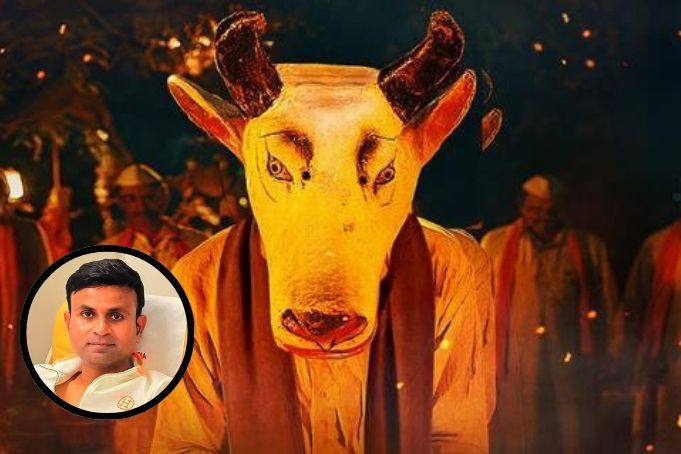
That progression is one of the film’s strengths. “A Story Carved On A Tree” does not need an elaborate plot to establish what its protagonists are up against. The everyday inconvenience of walking to school becomes an accumulation of indignities, while the girls’ attempts to challenge the system bring the violence behind that hierarchy closer to the surface.
The film’s most effective idea arrives through its title. Disha’s connection with her grandmother becomes a bridge between generations, turning the tree into more than a physical object. Stories that have not been recorded in books survive through memory, oral traditions and marks left behind. Ganuwad has spoken about wanting to explore how stories, trauma and lessons are passed from one generation to another, and the film gives that idea a tangible form.
The presence of Dr. B.R. Ambedkar is similarly integrated into the film’s larger argument about education and liberation. Rather than treating education simply as a route out of poverty, Ganuwad presents it as something that gives Disha the vocabulary to question the structures around her. By the closing moments, that idea lands with greater force because the film has spent its brief runtime establishing precisely what has been denied to her.
There is also an uncomfortable turn towards violence. When Disha is confronted by the Sarpanch’s son, her response becomes a moment of self-defense rather than a conventional cinematic triumph. The scene has reportedly divided viewers, and that discomfort is part of what makes it significant. Ganuwad has described the violence as “counter-violence,” arguing that the girl’s reaction comes from survival rather than ideology.
The film is not without rough edges. Ganuwad himself has acknowledged that the technical aspects were not as strong as the progression of the protagonist’s story, a limitation that is more understandable when placed against the film’s circumstances. Made independently with a small Pune-based team and largely self-funded, “A Story Carved On A Tree” was shot near Khed Shivapur on a three-day schedule, with crew members taking on multiple responsibilities.
But the film’s value does not rest on its production circumstances. Its strongest quality is the clarity of its central metaphor: when institutions fail to preserve or acknowledge a community’s history, people find other surfaces on which to leave their stories.
That the film has now won the Indian Competition at the 16th Bengaluru International Short Film Festival adds a significant chapter to its journey. The win makes “A Story Carved On A Tree” eligible for the Academy Awards selection process through the festival’s Oscar-qualifying status. It is important, however, to distinguish qualification from an Oscar nomination or shortlist placement.
Ganuwad’s film has traveled from a self-funded Marathi short made by a small group of filmmakers to an Oscar-qualified title without losing sight of its modest central question. “Why doesn’t the bus come to our village?” becomes, by the end, something much larger: who gets access to education, who gets to speak, whose history survives and what it takes for the next generation to be heard.
“A Story Carved On A Tree” does not offer easy answers. It leaves behind a more uncomfortable proposition: sometimes the first act of resistance is simply refusing to accept that a basic right was never meant for you.










Comments are moderated. They may be edited for clarity and reprinting in whole or in part in Variety publications.