



Sep 30, 2026 6:31pm IST
‘Verity’ Review: A Campy Anne Hathaway Performance Anchors This Pulpy Psychological Thriller That’s Occasionally Better Than The Book
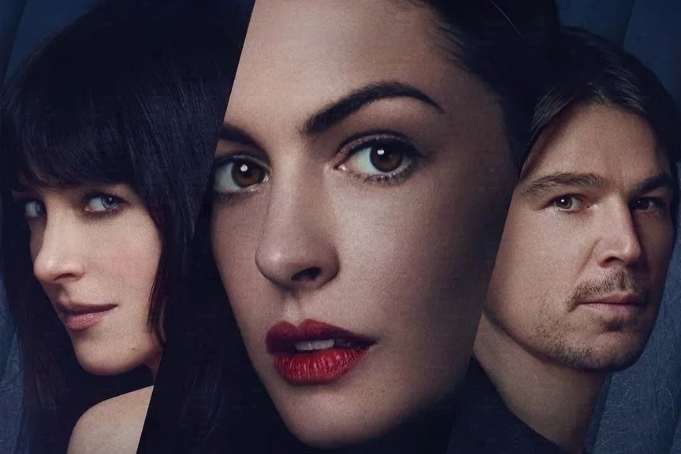
In a year of Anne Hathaway films galore, “Verity” arrives as the final entry. Directed by Michael Showalter and starring Dakota Johnson, Josh Hartnett and Ismael Cruz Cordóva alongside Hathaway, it’s a sexy, pulpy thriller with sharp edges that’ll satisfactorily tickle fans of the genre, despite some lulls in the middle. The film is carried by its setting, atmosphere, the many twists and Anne Hathaway’s campy portrayal of the complicated titular character.
Lowen Ashleigh (Johnson) is an author whose books don’t exactly draw excited fans to readings. She has just lost her mother and is on the brink of eviction from her home when a publishing giant offers her the deal of a lifetime. She must help Verity Crawford (Hathaway), an internationally loved author of pulpy thrillers written from the villains’ POV, to finish her book series after the latter met with an accident that rendered her incapable of writing the three remaining books in her contract. Verity’s husband, Jeremy (Hartnett), invites Lowen to their secluded home in Vermont to go through his wife’s notes so she can get into her mind and channel her voice. At the house, Lowen meets a catatonic Verity and feels sorry for the couple who has undergone multiple tragedies. But soon, she uncovers a manuscript by Verity that shocks Lowen to the core about Verity’s truth.
Related Stories

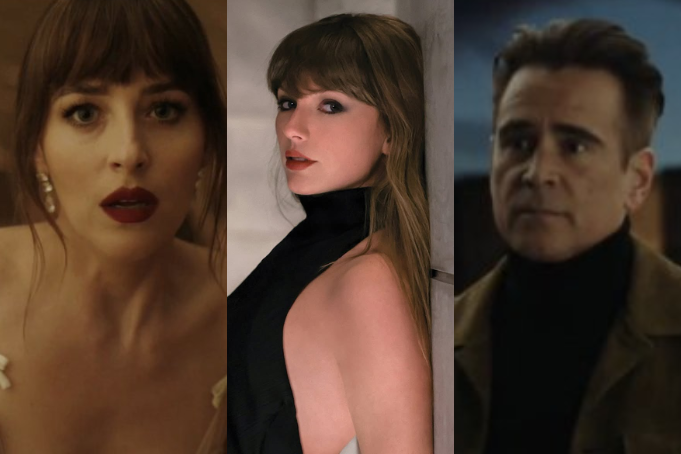
In a scene early in the film, Dakota Johnson’s Lowen Ashleigh, an “undiscovered” author, tells her agent Corey (Cordóva) that she hasn’t read Verity Crawford because she doesn’t pick up airport reads. It almost feels like a meta nod to the general criticism around Hoover’s writing. Like most Colleen Hoover book adaptations so far, “Verity” is mostly better than the book because it borrows the premise, not so much the actual writing. The dialogue is still rather cheesy, almost as if borrowed from a 70s or 80s thriller. But it's a vibe that director Michael Showalter channels well, though screenwriter Nick Antosca pulled it off much better in the Apple TV series he created, “Cape Fear”, both an adaptation of a 60s psychological horror thriller novel and the remake of a 1991 Scorsese film. Here, it can often feel predictable and, in some instances, funny.
The film’s setting, too, is pretty much an ode to that era, even if the eerie house at the edge of a frozen lake in snow-covered Vermont is essentially a modern glass-façade fused with an exaggerated wooden lake cabin. The road snakes up to the cabin, as if a maze taking Lowen deep inside Verity’s life. And when the house first comes into view, it’s the cold, sharp, pointed edges of its inverse-V-shaped roof that are its most prominent feature. The film often employs an interplay of cold and warm colors and accompanying score to set the atmosphere, but red is the prominent theme here, through recurring instances of blood, Verity’s red outfits and her lip color. “Verity” is as much a product of its atmospheric setting as it is of the twists and turns in its story.
At the same time, by the sheer virtue of being an adaptation with a limited runtime (1 hour 45 minutes), “Verity” does lose out on the nuances found between the pages that dilute every character’s greyness. The film’s second act also loses momentum as it tries to build the relationship between Lowen and Jeremy, especially because, unlike the book, we aren’t privy to Lowen’s inner dilemma of reading Verity’s manuscript and falling for a married man who doesn’t know his wife might be a psychopath. Book Lowen has complex issues that explain why she’s drawn to Verity and Jeremy’s darkness, and this loss of nuance also makes the climax feel a bit rushed and silly, leaving non-readers with questions they might seek the readers out to explain.
Popular on Variety
“Verity” retains every twist from the book, with a few changes. The Crawfords’ tragedy is much more painful in the book since they lose both their twin daughters, Chastin and Harper, and have a third child, their son Crew. In the film, the twins are a girl, Harper, and a boy, Crew, and the Crawfords lose only one daughter. For readers, one of the only surprise elements would be which one of Verity’s horrible acts has made it to screen. The book's Verity Crawford is definitely a worse villain than the one in the film, and readers might be a mix of disappointed and relieved that a particularly gory self-abortion scene didn’t make it to the screen. But it does dilute the true extent of Verity Crawford’s darkness and leaves you wondering how Hathaway would’ve carried those scenes.
Anne Hathaway’s performance is the blood-red lifeforce in “Verity”’s veins. Evidently, every time Hathaway arrives on the scene, with her perfect blowout, raspy voice, red lipstick and delicious villainy, the film comes alive. Case in point: The nightmare scene from the trailer, in which Lowen dreams she’s kissing Verity and the latter delivers a haunting smile. Josh Hartnett’s Jeremy is exactly how this writer, who has read the book, pictured him, and plays the charming, grieving husband well. However, Dakota Johnson as Lowen feels too sexy, confident, self-assured and one-dimensional to be the multi-layered Lowen we meet in Hoover’s book.
Nevertheless, “Verity” is still an entertaining watch. A trashy, pulpy airport read adaptation headlined by delicious twists and a cast that can bring in the audience. It’s bound to usher in a new demographic of fans into the Reddit forums to decode the ending and debate Verity’s truth by declaring whether they are Team Manuscript or Team Letter.









Comments are moderated. They may be edited for clarity and reprinting in whole or in part in Variety publications.