



Nov 20, 2026 8:28am IST
‘The Hunger Games: Sunrise on the Reaping’ Review: Joseph Zada Anchors a Brutal, Heartbreaking Prequel
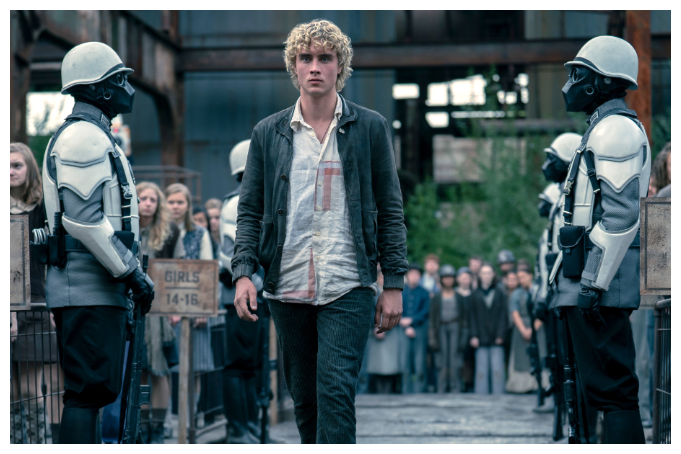
There is a reason “The Hunger Games,” based on Suzanne Collins’ books, continues to hold a special place in the hearts of audiences. Beyond its spectacle and deadly arenas, the franchise has always been about power, oppression, rebellion, the human cost of standing up to an unjust system and the tenacity to carry on in the face of defeat. “Sunrise on the Reaping,” the origin story of Haymitch Abernathy, revisits these themes with conviction, delivering a prequel that feels both relevant and worthy of the legacy it builds on.
Directed by Francis Lawrence, the film takes viewers back to District 12. Set 40 years after “The Ballad of Songbirds & Snakes” and 24 years before the first “The Hunger Games” film, it unfolds during the 50th Hunger Games, also known as the Second Quarter Quell. For this special edition, the Capitol doubles the number of tributes, selecting four contestants from each district instead of the usual two. Joseph Zada plays a 16-year-old Haymitch Abernathy, who initially escapes the reaping on his birthday but is forced into the competition after one of the chosen boys attempts to flee and is killed by the Peacekeepers. His departure leaves behind his widowed mother, younger brother and girlfriend Lenore Dove Baird (Whitney Peak), a descendant of Lucy Gray Baird, played by Rachel Zegler in the previous prequel.
Haymitch is selected alongside the fiery Maysilee Donner (Mckenna Grace), odds-maker Wyatt Callow (Ben Wang) and young Louella McCoy (Molly McCann). In the Capitol, he begins to see the possibility of turning its own spectacle against it. But with President Snow (Ralph Fiennes) watching his every move, his defiance is bound to come at a massive personal cost. Once inside the arena, the fight for survival becomes increasingly brutal, with the Capitol unleashing genetically engineered creatures, or mutts, to eliminate the contestants. Two particularly ferocious Career tributes stand out: Silka (Laura Marcus), armed with her axes, and the muscle-flexing Panache (Jhaleil Swaby). As Haymitch begins to challenge Snow and the system, the Games become a larger battle.
Related Stories


Though Zada doesn’t bear much physical resemblance to Woody Harrelson, who essayed the character in the first four films, he perfectly captures Haymitch’s vulnerability and convictions. His performance balances youthful idealism with a growing sense of defiance, giving the character a moving origin story. He is ably supported by Grace, who brings considerable fire to Maysilee. Peak lends emotional depth to Haymitch’s personal life,
The film also revisits several familiar characters, now played by a new set of actors. Ralph Fiennes takes over as the menacing President Snow, previously portrayed by Donald Sutherland and Tom Blyth. While Fiennes brings his trademark authority to the role, he doesn’t quite evoke the chilling menace that Sutherland brought to the character. Jesse Plemons plays Plutarch Heavensbee, the Capitol official secretly working against the establishment, a role earlier essayed by the formidable Philip Seymour Hoffman. Plemons makes a strong impression as Plutarch, navigating his character’s double life with ease. Elle Fanning steps into Elizabeth Banks’ shoes as a younger Effie Trinket, bringing warmth and humanity to the character’s flamboyant persona. Maya Hawke and Lili Taylor appear as former victors Wiress and Mags, respectively. Though they are welcome additions, their roles offer limited scope, while Kelvin Harrison Jr. plays Beetee.
Glenn Close clearly relishes playing Drusilla Sickle, the flamboyant and vicious Capitol escort assigned to the District 12 tributes. Billy Porter makes a brief appearance as her husband and the extravagant Capitol stylist, Magno Stift, who is initially assigned to dress the District 12 contestants before Effie eventually takes over. Kieran Culkin takes on the role of television host Caesar Flickerman, originally played by Stanley Tucci. He is perhaps the one who glaringly falls short, failing to bring the over-the-top charm, mischief and flamboyance that Tucci infused into the character. His portrayal leans more towards sarcasm than the playful theatricality that made Flickerman so entertaining.
Rather than relying solely on nostalgia, the film establishes its own emotional and narrative weight. It gradually draws viewers into the political machinations, the growing resistance against the Capitol and the desperate attempts to challenge a system designed to crush any form of dissent. It doesn’t hesitate to “edit” the narrative to suit its agenda. It would be fair to call the film, like the books, the saddest and most heart-wrenching installment in the franchise because, even though you know the outcome of this tale, you just can’t look away.
One of the film’s biggest strengths is the way it balances its larger-than-life spectacle with the personal stakes of its characters. The narrative finds its rhythm as plans to challenge the Capitol take shape, making the political tension and threat of rebellion increasingly compelling. The familiar themes of submission, defiance, sacrifice and loss are explored with the intensity that made the original films so effective.
On the technical front, Francis Lawrence, who has directed all but the first film in the franchise, delivers a film that is both brutal and beautifully mounted. After the comparatively restrained, post-war visual landscape of “The Ballad of Songbirds & Snakes,” “Sunrise on the Reaping” returns to the lavish production design, vibrant costumes and larger-than-life visual world that audiences associate with the franchise. The arena is particularly striking, creating an unsettling contrast between its visual beauty and the violence lurking within it. The production design adds scale to the proceedings without losing sight of the danger that defines the Hunger Games.
Lawrence also understands the importance of building tension rather than relying on action alone. There is a palpable sense of dread running through the narrative, making the violence feel consequential rather than a trope.
That said, the film isn’t without its shortcomings. At 158 minutes, it occasionally struggles with pacing. Some portions feel overstretched, while others feel rushed. Yet these flaws do little to undermine the overall experience. The presence of Jennifer Lawrence (Katniss Everdeen), Josh Hutcherson (Peeta Mellark) and Woody Harrelson, who returns as the older Haymitch, is bound to delight fans.
Ultimately, “Sunrise on the Reaping” is a compelling addition to “The Hunger Games” universe and a worthy prequel that captures what made the franchise resonate with audiences in the first place. It brings back the scale, political intrigue and emotional intensity that fans have come to expect, while offering a story that stands on its own. Brutal, visually rich and often moving, the film is a welcome return to form for the franchise and a reminder of why Panem remains such a fascinating cinematic world.















Comments are moderated. They may be edited for clarity and reprinting in whole or in part in Variety publications.