



Oct 04, 2026 4:00pm IST
Wimbledon’s Creator Crackdown: Where Does Etiquette End And Content Begin?
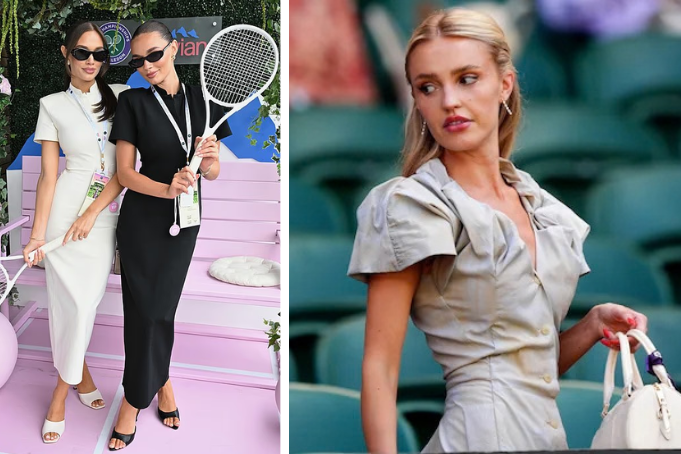
Wimbledon has always been about rules. White clothing, strawberries and cream, hushed Centre Court stands and an almost sacred respect for the game. Now, as content creators become an increasingly important part of how younger audiences experience sport, the All England Club is drawing another line. Wimbledon will not introduce a dedicated accreditation category for influencers and content creators at next year's tournament and plans to enforce existing rules against equipment such as ring lights if they are considered disruptive. The move comes after a turbulent US Open, where filming, noise and bright lights around matches sparked a wider debate about where content creation ends and sporting etiquette begins.
And that debate is far more complicated than simply "creators versus tradition."
Old rules meet new media
For creators, the frustration is not necessarily about being allowed to film every second of a tennis match. It is about being recognised as part of the modern media ecosystem. Lifestyle content creator Sonam Chhabra encapsulated the issue at the heart of the debate, noting "As a creator, I don't think it's fair. I think it's like you're putting a wall, you know, in the name of protecting tradition." She argues that the way audiences consume sport has changed and traditional broadcast alone cannot capture the entire experience anymore. "Modern media doesn't work that way and I think digital coverage doesn't work that way and creators are the other basis of modern coverage."
A creator at Wimbledon is not necessarily trying to replace a broadcaster or turn Centre Court into a studio. Often, the appeal is everything around the match: the atmosphere, fashion, food, fan culture, celebrity sightings and the feeling of being inside one of the world's most recognisable sporting events. That is precisely the part of the experience creators believe they can take to audiences who may never sit through a three-hour broadcast.
Drawing a line
This is where the creators themselves acknowledge that Wimbledon has a point. The US Open controversy brought the issue into sharp focus when activity around Naomi Osaka's match against Anastasia Zakharova prompted intervention from the chair umpire. Bright lights and filming setups also became part of the wider criticism around spectator behavior. Importantly, the USTA said those responsible for the disruption during Osaka's match were not among its officially accredited content creators.
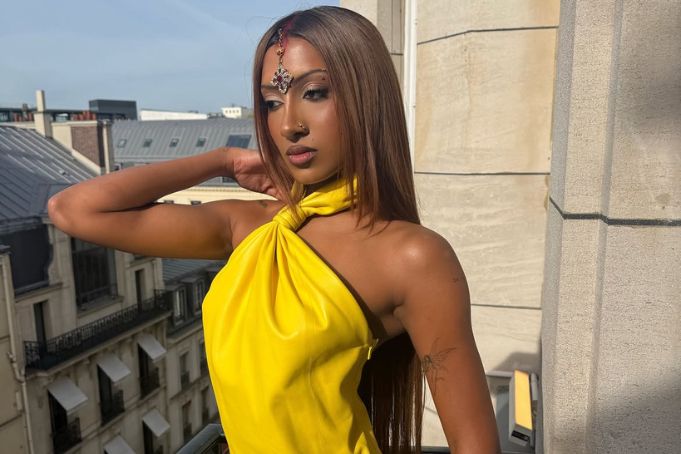
For fashion influencer and entrepreneur Diipa Büller-Khosla, the answer lies somewhere between the two extremes. “I understand why certain spaces need to remain special, but I’ve always loved the content that comes out of major sporting events. It gives you a little window into the atmosphere, and the experience beyond what you see on the court or on broadcast."
But she also believes there has to be a line. "At the end of the day, Wimbledon should be about tennis. These athletes have dedicated their lives to the sport, and this is their moment to own that much deserved centre stage."
That may be the most important distinction in this debate. The argument isn't really about whether creators belong at sporting events. It is about whether the event remains the main character.
Related Stories

‘Both things are true’
Comedian and impressionist Saloni Gaur puts the contradiction rather bluntly. She points out that creators did not simply storm into Wimbledon. They are often invited because sporting events want the visibility and audiences they bring. "Wimbledon being prestigious is fine. Nobody is asking them to turn Centre Court into a content house. But let's be honest. Creators didn't force their way in. They were invited and given tickets because Wimbledon needed visibility beyond the stadium."
At the same time, Gaur does not dismiss the behaviour that triggered the backlash. "In this particular case, some creators genuinely crossed the line getting Osaka's match paused and the ring lights and all of that is indefensible. So it's not a clean scapegoat story; both things are true at once." That "both things are true" argument may be the most useful way to understand the entire controversy.
Creators can be valuable to sporting events. Creators can also disrupt sporting events. One does not cancel out the other.
Blanket bans, not the answer
Chhabra believes creators have a responsibility to understand the spaces they enter. "I think it's a mix of both. First, our community of creators. We also need to self-check, and respect the environment that we are covering. That's basic professionalism and honestly in my career as a creator, I have not seen creators disrupting any environment personally."
Gaur similarly calls for self-regulation but believes organisers need to provide clearer boundaries rather than relying on blanket restrictions.
"Creators absolutely need to self regulate. Know your limits. Follow etiquette. Don't be the reason the next creator gets banned. But events need to meet us halfway. Hand us a clear code of conduct instead of a blanket ban. Tell us the rules and enforce them."
Büller-Khosla arrives at a similar middle ground. She believes creators should be part of the changing sports ecosystem, but without allowing content creation to overpower the sport itself. "I think there’s a way to marry those two worlds tastefully."
That may ultimately be the challenge for Wimbledon and other legacy sporting institutions. The question is not whether the internet is going away. It is how much of it they want inside the gates.
Figuring out co-existence
There is also a generational question underneath all of this. Chhabra believes excluding creators risks creating distance between legacy institutions and the audiences they hope will carry their traditions forward. Where does Wimbledon stand as a legacy when you want to pass on its legacy to young people? The future is all about creators. If you ban them today, you're locking out your audience tomorrow.""
Gaur makes a similar argument through sport's own history. "Tradition survives by including the new generation, not by locking them out."
For Wimbledon, the task may therefore be less about choosing between tradition and creators and more about figuring out how the two can coexist. Because the irony is that creators are not necessarily the enemy of tradition. They may be one of the ways tradition travels into the future.
The court can remain quiet. The players can remain the centre of attention. The etiquette can remain intact. And somewhere outside Centre Court, a creator can still tell millions of people why they should care about Wimbledon in the first place.








Comments are moderated. They may be edited for clarity and reprinting in whole or in part in Variety publications.